

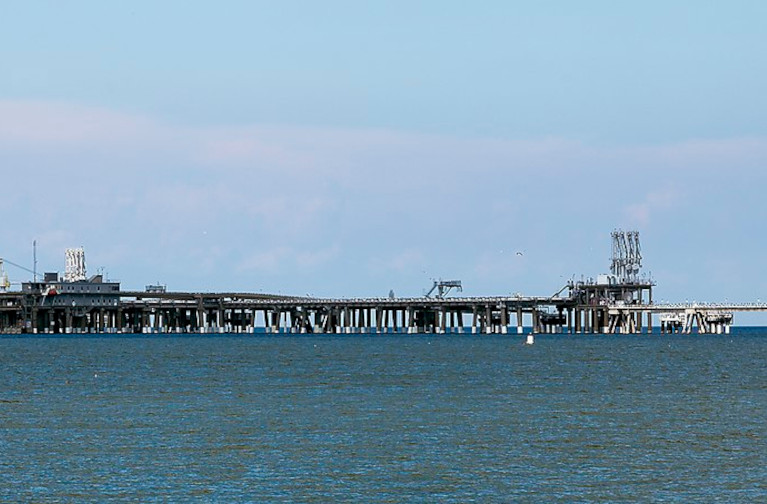
I wrote you a few days ago with provisional good news—it looked as if the long and deep fight to rein in runaway LNG export growth had scored a huge victory. The succeeding hours have been full of joy, because that news turned out to be entirely true. As the White House confirmed with the official release of its policy, all new licenses for LNG export terminals are hereby halted, until the policies used to figure out if they’re in the “public interest” can be updated to include modern economics and science.
That this is a huge victory can’t be said strongly enough—for the people in the Gulf who have fought so long and hard (it was such fun to join Roishetta Ozane et al in a press conference), and for the planet. This is the biggest check any president has ever applied to the fossil fuel industry, and the strongest move against dirty energy in American history. And if you have any doubts, check out the tears of outrage from Big Oil. (Fox News coverage here, if you’re experienced in handling schadenfreude).
But our job is to look ever forward, and hence are some thoughts about what this means for the fight in the hottest year humans have ever seen
I’d say there are several clear and crucial take-homes:
- The pledge to “transition away from fossil fuels” that John Kerry and the rest of the world’s governments signed in Dubai was given actual meaning by Biden’s move. He’s thrown down the gauntlet to other world leaders: the world’s biggest hydrocarbon producer has said we’ve reached a limit.
- There’s finally an actual climate test in place for American fossil fuel expansion plans. This is what we failed to win in the Keystone XL fight; though Barack Obama indicated in his rejection of that plan that we should build new stuff if it “only if it does not significantly exacerbate carbon pollution,” we’ve had to wait ten years for that to be turned into policy. It now needs to be formally expanded to every decision we make!
- That climate test must also be a test about the impacts on communities. The Gulf South leaders who fought this fight so hard need resources to monitor the next stages of this battle; I think that there’s been a lot done this fall to help Americans realize what a sacrifice zone the Gulf has become. But if you have any doubts, read this remarkable report, from Antonia Juhasz and Human Rights Watch outlining the “dire health crisis from the government’s failure to rein in fossil fuels.” The DOE spokesman David Turk said on a conference call that they are “actively going out and soliciting” input from frontline communities. Key to watch: those leaders deserve to sit down with DC honchos sooner rather than later.
- The days of thinking of natural gas as a “bridge fuel” are waning—this fight has brought the science (particular thanks here to Cornell’s Bob Howarth) out into the open, and we now understand it’s a bridge to nowhere. Since natural gas has been the Democratic vice (coal is the Republican kink), it took Biden to really drive this point home. And it’s huge!
- Because of that, Biden deserves to reap the benefits of powerful environmental backing in his re-election. He had to make sad compromises to get the IRA passed, and he made a dumb decision about the Willow oil complex in Alaska; the scale of this, in climate terms, is far larger. Here’s what Roishetta Ozane told the newspapers yesterday: “I’m super excited and ecstatic.” And also, “we know that if this administration is not re-elected, then everything he’s done on climate is going out the window.” That’s about as bottom line as it gets.
But I’d also say—over and over—such profound thanks to all who fought for this. That means you guys. You can feel the balance in the climate fight starting to tip; it comes too late for so many things and so many people, but it’s the nature of this fight that we have to constantly push forward with everything we’ve got because so much is still at stake.
Oh, and there’s no need to come to DC for the sit-in next month, which has been called off. The best actions are the ones you don’t have to do! But don’t worry, there will be other chances. Stay tuned!






Comments
Welcome to the new Resillience commenting system!
We have moved from the former Disqus commenting system to a new system as of September 10, 2026.
We made this change because of privacy concerns regarding Disqus. It's also part of a set of changes to bring more services to the Resilience community under a single login: commenting, (coming September 2026), and online courses (coming 2027). Unfortunately, your old Disqus comments may not reliably link to your account in this new system. Please contact us if you have any questions or concerns.
That is amazing news from the USA! The real temptation begins in a few years as EV’s start to impact world oil prices and drive them down. A return to “cheap” oil will cause some to falter. But I fully expect the price of EV’s to continue to drop faster than the price of oil drops. We need to highlight that big oil and gas and coal cost the global health community $5 TRILLION a year! The more we can encourage the exponential growth of solar and wind, the sooner we claw some of that money back into our public coffers.