


Click on the headline (link) for the full text.
Many more articles are available through the Energy Bulletin homepage
Local gardeners do their part to record possible ‘global weirding’
Tim De Chant, Chicago Tribune
When Tom Koulentes is not advising students at Highland Park High School or chasing after his own kids, he spends time behind his small Des Plaines home researching climate change.
Koulentes is recording his garden’s natural history, from the weigela’s first leaf to the butterfly bush’s last bloom, for Project BudBurst, a new nationwide research program based on the observations of ordinary people. He is looking for local signs like an early bloom or a late-falling leaf that stem from planetwide changes.
Only a handful of researchers study plants to chronicle global warming, but millions of gardeners quietly keep watch on their plants. BudBurst seeks to tap that potential, asking “citizen scientists” to monitor plants alongside trained scholars.
“If just scientists were working on this, there’s no way we could obtain a data set of this size,” said Kay Havens, director of plant science and conservation at the Chicago Botanic Garden, and one of the project’s organizers…
(5 August 2008)
Climate-change program to aid poor nations is shut
Andrew C. Revkin, New York Times
The National Center for Atmospheric Research, an important hub for work on the causes and consequences of climate change, has shut down a program focused on strengthening poor countries’ ability to forecast and withstand droughts, floods and other climate-related hazards.
The move, which center officials say resulted from the shrinking of federal science budgets, is being denounced by many experts on environmental risk, who say such research is more crucial than ever in a world with rising populations exposed to climate threats.
(6 August 2008)
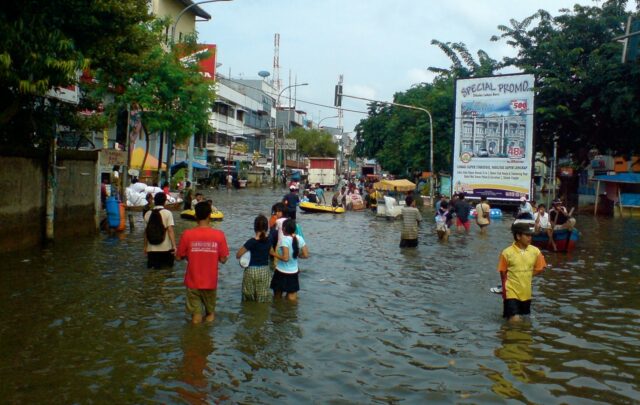
Environment: Intense rainfall due to global warming could raise flood risk
Ian Sample, The Guardian
Climate scientists have issued a fresh warning over the future risk of flooding after research showed heavy rainstorms are likely to become even more intense than predicted.
Rainfall is expected to increase with global warming because the atmosphere can hold more water as it heats up, but the extent to which rainfall patterns will change in the future has been unclear.
Writing in the US journal Science, researchers warn regions that are already vulnerable to flooding will be hit hardest by rainstorms in the future, and that previous predictions may have underestimated how intense these rainstorms will be.
(8 August 2008)



Comments
We changed commenting systems on September 10, 2026 as part of a site-wide functionality and security upgrade. Your past comments have not disappeared, and you can still log in with your old Disqus account credentials if you wish. Contact us with any questions.