


Click on the headline (link) for the full text.
Many more articles are available through the Energy Bulletin homepage.
Bill McKibben: “Let’s imagine…”
Policy Reform to 350
Bill McKibben, Local Solutions Journal
Let’s imagine for a moment that we’re at 2100, and the atmospheric CO2 level is slowly subsiding back toward 350, and the worst is over. Let’s try to figure out how we got there—reverse-engineer a century of halting but ultimately decisive progress.
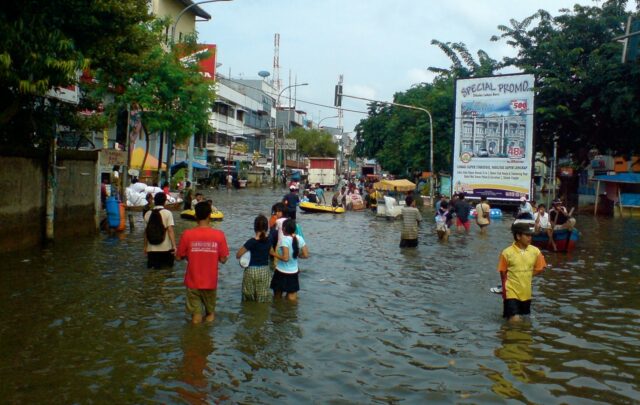
The first decision, clearly, was the most important. In 2011, after 22 years of hemming and hawing and circling, the world’s governments—moved by a series of devastating floods on every continent that galvanized the already growing climate movement around the globe—grudgingly took the initial steps toward imposing a cap on carbon emissions. The fight was by no means easy: developing countries insisted, with reason, that the cap couldn’t hit them yet, and China insisted that it was still a developing country. Still, the climactic political battle with big oil and bigger coal ended decisively—it would be many years before they ceased to be powerful parts of the economy, but the fossil fuel era began to end on that day when the parties signed on at the Nairobi conference center.
A few things happened, and more quickly than anyone but the economists had dared hope. For one, anyone looking at a spreadsheet quickly figured out that future investment had better be green—that coal-fired power was going to get steadily more expensive until it made no sense at all. And so the trajectory of the future began to shift: money started to fall in the direction of the new economic gravity. It started to pool around railroads, and insulation manufacturers, and all the other businesses that featured relatively low energy costs as a selling point.
The effect on consumers was not quite as strong, since few households had CFOs charged with plotting the bottom line return of future expenditures. Still, every family was now getting a rebate check each month for its share of the permits for putting CO2 into the atmosphere, which meant a steady flow of capital. Some of it went for flat-screen TVs, but a nontrivial amount ended up buying solar hot-water heaters, plug-in hybrids, and local tomatoes.
Meanwhile, governments started figuring out where the future was headed too, and the political demand for greater investment in basic research began to grow.
… That this is a good news scenario should give us pause. It would be easier, and perhaps more plausible, to write a much uglier forecast. A few things worth noting here: First, action to change the price of carbon comes very early in this scenario, in 2011. It’s pretty clear we need to tip this system quickly in another direction. Second, the decisive interventions aren’t technological as much as political—in many ways, the outcome will be decided by whether people pull together or are pulled apart as a result of the forces we’re unleashing in the atmosphere. There are many variables we can’t predict, including that one. But at least we can have an influence—by building a political movement right now, across borders, faiths, ideologies, and languages, that allows us to understand our novel global predicament.
(4 October 2010)
EB contributor Bill Henderson writes:
First of all, we shouldn’t assume that this is Bill McK’s complete vision of getting to 350 – the space is short and he was probably asked for a more utopian vision. So I’m just commenting on his vision in this essay.
Climate change has a spectrum of dangerous consequences spread over centuries into the future but Bill McK doesn’t address the specific danger of runaway warming Hansen warned of in first suggesting that we had to get back under 350 before the Arctic icecap melted iriversibly. If we are trying to get below the 350 atmospheric target before 2100 or even 2050 then the many decade transition from fossil fuel use within a pretty much continuing world economy as we know it makes sense.
Hansen warned of tipping points and a point of no return. No mention of non-linear climate change in McK’s gradual warming. His catastrophes are local and survivable; surpassing 2C doesn’t lead to 6C or higher. From what I can see according to the science I read the Arctic icecap is melting even faster than the estimates even several years ago – maybe no summer ice at all in 30 years. The increased heating feeds Arctic amplification. Methane from melting permafrost and shallow ocean bottoms may then be released to the degree that it is a powerful positive feedback. Might not. The icecap melt could also lead to global climate shifts, eg, the slowdown of ocean currents transporting heat is the primary but not only possible consequence. Might not. But 350 was initially a bright line, a precautionary ceiling, a call to get back under a lower level then the present forcing which was melting the Arctic dangerously plain as day; 450 was the target if yours was a gradual, bathtub catastrophe in 2100 climate change danger.
We would all like there to be a climate solution that would be possible while not forcing us out of the particular world we love, are co-evolved with. This is particularily true if we have been made insecure by past threats to our continuing progression through life. Our particular socio-economy which is a very complex organization that must dampen down flux in protecting evolving diversity has a strong bias for gradualism and incremental change. It is not surprising then that there is tremendous pressure to formulate climate solutions as a subset of continuing BAU and this is what is possible and what we do if you choose to focus on the long term climate change dangers and don’t quantify and act accordingly to the immediate and urgent tipping point danger.
We could focus upon and build a much more informed scientific consensus on whether we need to get back under 350 as quickly as possible but we don’t cause we just don’t want to go there. This is society wide denial. What if we are near or over that tipping point and the resulting climate dislocation and degradation and destruction of ecosystems is (possibly or to varying degrees probable) civilization or even humanity threatening because of our emissions today and our inability to take appropriate action?
-BA
Coming Now to a Job Near You! Why Climate Change Matters for California Workers
Jeremy Brecher, Brendan Smith and Lisa Hoyos, CommonDreams.org
What will be the impact of climate change on California workers if the US and other countries around the world fail to significantly reduce green house gas emissions? In other words, what happens in a “do nothing” scenario?
Climate scientists have established that climate change is caused by “greenhouse gasses,” especially carbon dioxide, which trap the sun’s heat and therefore raise the earth’s temperature. Average California temperatures are already rising; they are expected to rise by 2-5 degrees Fahrenheit by 2050 and — in a do-nothing scenario — rise 4-9 degrees Fahrenheit by the end of the century.
The rising temperature of the earth has all kinds of serious effects that are plaguing us now and will do so even more over the course of this century if we just continue at our present course. In California:
* Sea level rise: San Francisco Bay’s sea level rose by 7 inches in the 20th century. New scientific findings indicate that in a do-nothing scenario California sea level may rise by as much as 55 inches this century, and that the amount could be much higher. A twelve inch rise in sea levels would mean that ocean flooding that now occurs once a century will occur once a decade, risking breach of levees, flooding of agricultural land, and contamination of fresh water. The U.S. Geological Survey classifies much of the area around Los Angeles and San Diego and around the Humboldt, San Francisco, and Monterey Bays as at “very high” risk.
* Droughts: Precipitation is expected to grow more irregular, with greater risk of both flooding and droughts. Droughts have already increased and are expected to increase dramatically, with critically dry years three times as frequent. As more precipitation falls as rain rather than snow, an 80% decline in the Sierra snowpack is predicted, creating statewide water shortage in late spring and summer. Average annual water availability in Southern California may decrease by 40%.
* Forest fires: Intensified dry seasons are leading to larger and more frequent forest fires. The 2006 wildfires forced the evacuation of more than 900,000 people, the largest evacuation for fire in US history. In a do-nothing scenario the number of wildfires could increase by up to 169 percent by 2085.
… What climate change means for California workers — some examples:
What will happen to California workers if we do nothing to reduce greenhouse gasses? We will look at the projected impacts climate change — in a do nothing scenario — will have on the following sectors over the course of this century: Agriculture, Construction, Government, Recreation, Tourism, Ports, Airlines.
… [This piece was prepared for the Labor Network for Sustainability by LNS staff members Jeremy Brecher and Brendan Smith in collaboration with LNS board member Lisa Hoyos of the UC Berkeley Labor Center and the California Apollo Aliance. It is based on a longer discussion paper that includes full references, available here.]
(16 October 2010)
Climate Talks Tank, Global South Sinks Further
Michelle Chen, ColorLines
The latest round of climate talks, in Tianjin, China, did nothing to break the stalemate of last year’s failed Copenhagen meeting—an outcome that was as predictable as it is maddening. The reality is that the most powerful delegates had nothing to lose from prolonging the standoff. But the one point of consensus, sadly, was a mutual disregard for the fate of millions of the world’s poorest people, who have the most to lose as the planet melts down.
The insular debate in Tianjin exposes the divide between the powerful states steering climate politics and the poor communities, concentrated in the Global South, at the front lines of the crisis. The gridlock also reflects a growing gulf within the so-called developing world between the have-nots and the have-lesses, as “emerging” economies like China and India diverge politically from the interests of poorer nations, even as they antagonize the wealthier nations that have long been the biggest emitters. While Chinese envoy Su Wei, invoking a Chinese idiom, likened the U.S. to “a pig preening itself in a mirror,” tiny island nations, indigenous peoples in South America, and farmers in drought-ravaged Kenya were out at sea, far from the inner sanctum of UN diplomacy.
Person for person, China and India are obviously poor countries compared to the countries that have historically churned out the bulk of cumulative emissions. But climate-justice activists point out that the developed-developing dichotomy doesn’t tell the whole story of the environmental injustice driving climate change. While the governments of relatively prosperous developing nations like Brazil and China have gained clout, the hardest-hit communities remain all but invisible.
(16 October 2010)



Comments
We changed commenting systems on September 10, 2026 as part of a site-wide functionality and security upgrade. Your past comments have not disappeared, and you can still log in with your old Disqus account credentials if you wish. Contact us with any questions.