


Click on the headline (link) for the full text.
Many more articles are available through the Energy Bulletin homepage
Debunking the meat / climate change myth
Elliot Coleman, Grist
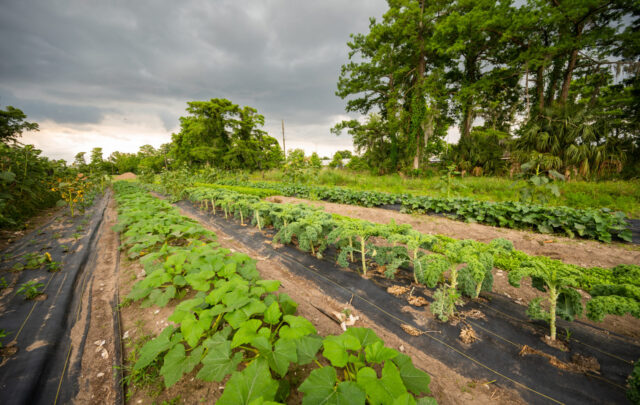
The pasture-raised animal eating grass in my field is not producing CO2, merely recycling it (short term carbon cycle) as grazing animals (and human beings) have since they evolved. It is not meat eating that is responsible for increased greenhouse gasses; it is the corn/ soybean/ chemical fertilizer/ feedlot/ transportation system under which industrial animals are raised. When I think about the challenge of feeding northern New England, where I live, from our own resources, I cannot imagine being able to do that successfully without ruminant livestock able to convert the pasture grasses into food. It would not be either easy or wise to grow arable crops on the stony and/or hilly land that has served us for so long as productive pasture. By comparison with my grass fed steer, the soybeans cultivated for a vegetarian’s dinner, if done with motorized equipment, are responsible for increased CO2.
…If I butcher a steer for my food, and that steer has been raised on grass on my farm, I am not responsible for any increased CO2. The pasture-raised animal eating grass in my field is not producing CO2, merely recycling it (short term carbon cycle) as grazing animals (and human beings) have since they evolved. It is not meat eating that is responsible for increased greenhouse gasses; it is the corn/ soybean/ chemical fertilizer/ feedlot/ transportation system under which industrial animals are raised. When I think about the challenge of feeding northern New England, where I live, from our own resources, I cannot imagine being able to do that successfully without ruminant livestock able to convert the pasture grasses into food. It would not be either easy or wise to grow arable crops on the stony and/or hilly land that has served us for so long as productive pasture. By comparison with my grass fed steer, the soybeans cultivated for a vegetarian’s dinner, if done with motorized equipment, are responsible for increased CO2.
…My interest in this subject comes not just because I am a farmer and a meat eater, but also because something seems not to make sense here as if the data from the research has failed to take some other human mediated influence into account. But even more significantly, if we humans were not burning fossil fuels and thus not releasing long-term carbon from storage and if we were not using some 90 megatons of nitrogen fertilizer per year, would we even be discussing this issue?
(7 August 2009)
Suggested by EB contributor billhook, who writes:
The author is renowned as an exemplary farmer and thus writes from a deep knowledge of the subject, unlike the shallow speculation of those duped into pushing the fashionable anti-meat hype.
A further aspect worth noting is that as a decline in meat purchasing caused the US & EU market prices to fall, two things would occur –
there would be increasing CAFO-meat exports to the growing middle class in Asia (already larger numerically than that of the US)
and the farms producing higher cost pasture-reared meat would be pushed out of business.A consumer boycott of meat in general would thus be really counter-productive, while one targetted on CAFO-meat would simply be inneffective.
What is urgently needed is the global climate treaty that will put a price on the GHG output from CAFO production worldwide, making sustainable livestock-farming competitive.
With regards from a hill farm,
Billhook
I agree that grass-fed animals are an important part of sustainable farming cycles. I don’t think too many people concerned about these issues are going to argue that there is a place for these types of livestock operations and that large factory farms are the real culprits in this scenario for the reasons mentioned above and elsewhere. In my opinion, however, using phrases like “Debunking the meat / climate change myth” and “shallow speculation of those duped into pushing the fashionable anti-meat hype” is not useful as there is a valid and important debate here. There are genuine issues around meat heavy diets and sustainability. Many people also have understandable concerns about the health and animal welfare aspects of eating meat and avoid it due to lack of access to alternatives to industrially-farmed supermarket meat products. -KS
Grow your own sausages
Virginia Matthews, The Guardian
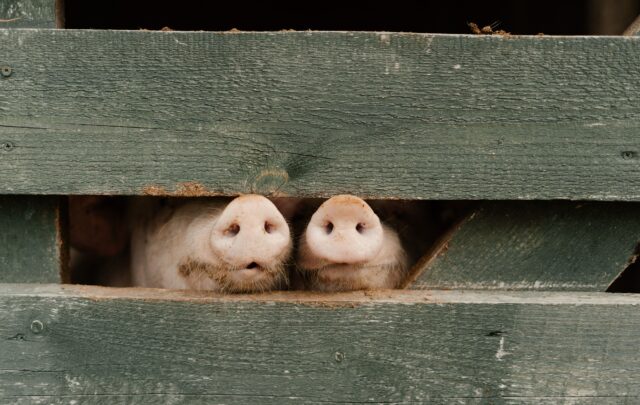
Ruth Lees’s large town-centre garden in Wilmslow, Cheshire, was, until recently, home to four young porkers. “The pigs looked very excited when we walked them out of the garden; it was almost like they were expecting to be taken on a lovely trip,” she says.
“I felt a bit mean knowing that their destination was the local abattoir. But they’d gone by the Tuesday, were back in pieces by the Friday and, to be honest, the homemade sausages tasted so good that none of us – not even the boys – felt in the slightest bit squeamish when we sat down for supper.”
It’s a toss-up whether the next batch of animals to be ushered through the back gate will be more weaners – “We’ve already got a pile of advance orders from neighbours” – a pair of goats, or even a couple of sheep. But what they won’t be, says Ruth, are dogs, cats or anything else unable to pay its way.
The Lees family took their first steps towards self-sufficiency via the vegetable patch, a new national obsession that has seen council allotment waiting lists soar to 40 years in some areas and sales of vegetable seed finally overtake those of flowers.
Next on the grow-your-own list must come livestock.
Industry estimates suggest that more than 750,000 households up and down the UK now keep chickens – mostly for eggs, but a growing number for meat. In the view, though, of Linda McDonald-Brown, whose Bidgiemire Pig Company is a one-stop-shop for pig keepers, the urban farming trend will not stop with grow-bags, chicken houses, beehives and, for really small gardens, quail coops…
(5 August 2009)
Related: http://www.guardian.co.uk/environment/2009/aug/05/affordable-beekeeping-…
Metro Detroit Goes Slow And Tastes The Difference
Nicole Rupersberg, Metromode
As the auto industry crumbles around us, Michigan is slowing down…for the better.
What many don’t realize is that the state is at the forefront of an international phenomenon: the Slow Food Movement, which owes its existence in no small part to Michigan’s status as one of the largest agricultural regions in the country. Agriculture is our second-largest industry, with an annual economic impact of $63.7 billion (and growing). The Michigan Department of Agriculture estimates that if every household spent just $10 per week on locally grown foods, we would keep more than $37 million each week circulating within Michigan’s economy.
“Michigan [is] an agricultural mecca,” states Michael Peters of Detroit-based Indi Edibles. “We have the water, the climate and the location to be the farming community of this country.”
Peters started his unique video blog business “to promote, support and educate people about the dynamic benefits of locally grown food and the powerful connection it has to our happiness, financial well-being, and fulfillment as human beings.” The firm achieves this by filming and self-publishing videos which discuss local food, growing techniques, and a particular farm-contractor business model designed by Peters.
It is these kinds of ideas that are at the heart of the Slow Food movement. The slow food ideology espouses the ideals of fresh, local, seasonal produce; sustainable farming; artisanal production; and also preaches the ethics of “eco-gastronomy”—the notion that eating well can, and should, go hand in hand with protecting the environment. By further extension, eating well also goes hand-in-hand with health and wellness.
..Slow food has not been without its dissent, though. There are many naysayers who have accused the movement of being “elitist.” There is no doubt that the person paying $45.00 for a 500mL bottle of French olive oil is experiencing a far different aspect of slow food than the urban communities planting gardens so families in need will have access to fresh, healthy food.
“This is exactly why I personally got involved in the revitalization of the Slow Food Detroit chapter earlier this year,” says Membership Chair Valerie Clayton. “I had heard this idea before – that Slow Food is elitist and that local organically produced food is expensive – and it’s still a shocking and confusing idea to me.” She grew up on a farm, raising and slaughtering chickens and canning fruits and vegetables.
“These are not expensive ways to obtain your food!” Clayton exclaims. “Slow Food seeks to expose alternatives to mass production AND the elite foodstuffs available at the gourmet food markets. If you cannot spend the time to grow your own livestock and vegetables, you can buy produce from farmers’ markets, almost always at more economical prices than your local chain supermarket. …We want to show you how you can make a chicken & vegetable soup from fresh ingredients at a lower cost per serving than you can purchase it ready-made from a can… Ultimately, the $45 olive oil is delicious, but really, a very small part of what Slow Food is about.”
…And Metro Detroit has been doing this whole “Slow Food” thing long before it was a “thing.” Take, for example, the current urban agriculture trend. While cities like Chicago and New Orleans like to proudly tout their urban agriculture efforts, the term “urban farming” is not only considered synonymous with Detroit, but the nonprofit organization of the same name was even started here.
Urban Farming, an international non-profit headquartered in Detroit, was founded in 2005 by Detroiter Taja Sevelle with just $5,000 and a tremendous amount of community support. She saw the roughly 60,000 vacant lots in the city as an opportunity to transform this trash-strewn, abandoned land into community gardens to provide families with fresh, nutritious produce and to help build a stronger sense of community…
(6 August 2009)
thanks to kalpa once again



Comments
Welcome to the new Resillience commenting system!
We have moved from the former Disqus commenting system to a new system as of September 10, 2026.
We made this change because of privacy concerns regarding Disqus. It's also part of a set of changes to bring more services to the Resilience community under a single login: commenting, (coming September 2026), and online courses (coming 2027). Unfortunately, your old Disqus comments may not reliably link to your account in this new system. Please contact us if you have any questions or concerns.