Click on the headline (link) for the full text.
Many more articles are available through the Energy Bulletin homepage
Personal Responsibility
Jason Godetsky
If you look for “personal responsibility” on the internet, you’ll find endless pages of editorials, blog postings, forum discussions and rants on how nobody believes in it anymore. And yet, amongst all that, you’ll find no one questioning it. It seemed ironic to me; amidst all that outrage, try to find someone who genuinely doesn’t believe in it, and you’ll come up short.
Personally, I have become skeptical of “personal responsibility.” It only seems to come up in response to one excellent point or another about systemic problems and the people those problems afflict. “But what about personal responsibility?” I always hear then. Native Americans bear the responsibility for alcoholism rates on reservations; blacks bear the responsibility for their poverty rates; Mexican immigrants bear responsibility for the antiquated, racist immigration laws they break. As if, backed against a wall, the last resort before admitting that systemic problems affect people’s lives, we resort to blaming the victims. The fault lies not in the system that perpetuates problems like poverty, discrimination, or injustice, but with the people victimized by that system.
…But all too often, in reality, it works the other way. Our responsibility cripples us to do anything about it by making us complicit. In a sense, we find a desperate need to defend those crimes because we’ve made them our crimes; we need to defend ourselves. We cannot fully face the horrors of genocide, slavery, racism, invasion, or other atrocities, because we feel our personal responsibility for those crimes.
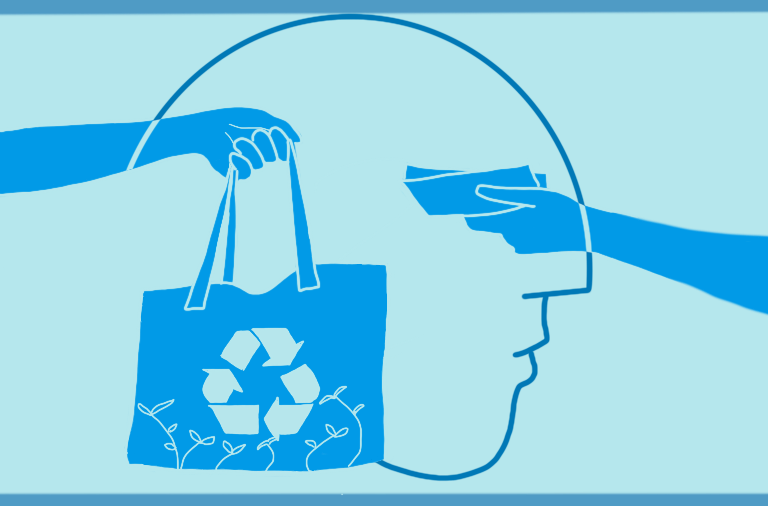
Consider the modern environmental movement. We take personal responsibility; we accept the role we, individually, have played in destroying the environment, so we focus on the things we can do, individually, to at least not participate in it anymore. You know the litany as well as I do: eat organic, reduce, reuse, recycle, use incandescent light bulbs, take shorter showers, carpool, drive a hybrid, ride a bicycle, et cetera ad infinitum.
(25 July 2009)
From the website:
About Toby
People keep asking us, “Who’s Toby?” The Lenni Lenape called him Tuppeek-hanne, a name that means “river that comes from a large spring.” The European settlers had a hard time pronouncing that, so for them, it eventually came out as, “Tobeco Stream.” That became Toby Creek or, after all the logging left the land all around naked and desolate, Stump Creek. In 1817, surveyor Daniel Stanard camped near it and thought it sounded like “a distant clarion,” so he decided to call it “the Clarion River.” People living far away in places like Harrisburg and Pittsburgh thought this sounded classier than “Toby Creek,” the way those hicks living there called it. For a while, it stood as a matter of local pride to keep calling it “Toby,” but as usually happens with these things, the tastes of rich people from far away eventually won out.
We love the name “Toby” for our home. It comes from Europeans trying to understand the native name, just like us trying to understand how to become native. And just like them, it also contains the admission that we’ll screw it up, at least a little bit. And even better, it has such personality to it! The name “Toby” makes you think of the river as a person. Which, of course, we should!
About Us
Right now, just one couple calls itself Toby’s People. But if you want to rewild and you call Toby home, tell us! Maybe you belong to Toby’s People, too!
Thinking the Unthinkable
Tim Jackson, adbusters
Every society clings to a myth by which it lives. Ours is the myth of economic growth. For the last five decades the pursuit of growth has been the single most important policy goal across the world. The global economy is almost five times the size it was half a century ago. If it continues to grow at the same rate, the economy will be 80 times that size by the year 2100.
This extraordinary ramping up of global economic activity has no historical precedent. It’s totally at odds with our scientific knowledge of the finite resource base and the fragile ecology we depend on for survival. And it has already been accompanied by the degradation of an estimated 60% of the world’s ecosystems.
For the most part, we avoid the stark reality of these numbers. The default assumption is that – financial crises aside – growth will continue indefinitely. Not just for the poorest countries where a better quality of life is undeniably needed, but even for the richest nations where the cornucopia of material wealth adds little to happiness and is beginning to threaten the foundations of our well-being.
…Today we find ourselves faced with the imminent end of the era of cheap oil; the prospect (beyond the recent bubble) of steadily rising commodity prices; the degradation of forests, lakes and soils; conflicts over land use, water quality and fishing rights; and the momentous challenge of stabilizing concentrations of carbon in the global atmosphere. And we face these tasks with an economy that is fundamentally broken, in desperate need of renewal.
In these circumstances, a return to business as usual is not an option. Prosperity for the few founded on ecological destruction and persistent social injustice is no foundation for a civilized society. Economic recovery is vital. Protecting people’s jobs – and creating new ones – is absolutely essential. But we also stand in urgent need of a renewed sense of shared prosperity. A commitment to fairness and flourishing in a finite world.
(16 July 2009)
Professor Tim Jackson authored the recent UK Sustainable Development Commission report Prosperity without Growth.
Evaluating Decisions and the Long Term Perspective
Jim Brumm, Dissident Voice
Here are three major considerations that we must keep in mind when we evaluate a decision with a long term perspective.
The first is sustainability. The best plans and ideas, no matter how profitable, or altruistic, or wonderful they may be, are doomed to eventual failure if the processes driving them are not sustainable over time. Long-term thinking and sustainability inexorably go hand in hand; they are the two sides of the same coin, and it’s the coin we should be using to fund our future. In practice, however, the question of sustainability rarely comes up when making decisions. Governments and elected officials rush into new policies and pass laws that will temporarily please their constituents and earn them some votes, or will give momentary upper hand in some political situation. Often they find that what they put into motion comes back to bite them, as when we trained and armed the Taliban to fight the Soviets in Afghanistan, only to find them years later using their training and weapons on us. We typically only question the sustainability of a situation when we realize—too late—that’s it’s not in fact sustainable.
…The next consideration we need to have at the forefront when making decisions is this: How will what we’re planning affect everything else? There is a desperate need for whole-system thinking in our world. Naturalist John Muir pointed out that “When we try to pick out anything by itself, we find it hitched to everything else in the universe.” Thinking beyond the boundaries of the immediate situation is vital. Like good chess players, we must do our best to think many moves ahead when altering any part of our environment, and try to create room for and ways to mitigate the inevitable cascade of collateral change which will occur. Often we behave like the man in the fable who climbs a tree and begins sawing off the limb on which he’s sitting. A passerby calls up, “If you keep sawing that limb you’re going to fall.” The man in the tree ignores this and continues to saw until he cuts through the limb and falls with a crash, thinking to himself, “That guy must have the gift of prophesy.” As you read this we are blithely sawing away at the limbs which support our entire culture and environment, and it doesn’t take a prophet to tell us that if we keep it up, we’re going to come crashing down. Many of our best ideas have turned out to be huge problems in the long run. A little foresight may have helped a lot to offset much of what we face today.
A third consideration is to be sure, when we’re problem solving, that we’re actually solving the problem, not just hiding the symptoms. We often can see the problems and the bad results we’re getting but instead of trying to fix the root causes of the problems, which would often cost more, take longer, or require deeper thinking, we take the easier, short-term route and chase the symptoms instead. This sort of thinking permeates our society. Commercials on television show people suffering from terrible indigestion from eating poorly, then push antacids to relieve the symptoms, never for a moment suggesting that, I don’t know, maybe less pizza is in order? Insects are eating too many of our crops? Don’t promote biological diversity. Douse them with pesticides. Dissatisfied with your life? Don’t try to discover the underlying cause of your dissatisfaction, buy this new car or this new gadget instead. Can’t cope? Take this drug called COPE. It’ll fix the symptom, at least for a while. Nearly all over-the-counter drugs treat symptoms instead of causes. But, as my sister used to say, you don’t have a headache because of a lack of aspirin. When I was a kid there used to be commercials for a type of detergent that was supposed to be great at cleaning men’s shirt collars. These commercials showed distraught housewives upset and ashamed because their husband had “ring around the collar” and they were so happy to have this new detergent that would end their shame. When these commercials came on, my mother would yell at the TV (really), “Hey lady, try telling your husband to wash his neck!” Now that’s getting to the root of the problem.
From the website:
Dissident Voice is an internet newsletter dedicated to challenging the distortions and lies of the corporate press and the privileged classes it serves. The goal of Dissident Voice is to provide hard hitting, thought provoking and even entertaining news and commentaries on politics and culture that can serve as ammunition in struggles for peace and social justice.
Jim Brumm lives in Santa Rosa, CA and has a blog about long-term thinking. He can be reached at: [email protected]. Read other articles by Jim, or visit Jim’s website.
(28 July 2009)
Why Civilisations Collapse
Prof. Peter Saunders, Institute of Science in Society
As the world faces the challenge of climate change, it is instructive to recall that this is by no means the first time humans have had to cope with similar problems. Many societies have found themselves in serious trouble because of an unwelcome change in their environment. It may have been something over which they had no control, like the onset of the Little Ice Age in the 15th century, or they may have brought it upon themselves, all too often by clearing forests, or perhaps a combination of the two. Some societies survived, others did not.
Long before the Spanish arrived, the Mayans of Central America had already abandoned their magnificent cities because of drought. Deforestation destroyed the Easter Island society that erected the famous statues, though a very much reduced population continued to live on the island. Others, like the Norwegian settlers in Greenland, and the original inhabitants of Pitcairn Island, died out completely.
On the other hand, the Inuit who arrived in Greenland while the Norse settlements were flourishing are still there. The 18th century Tokugawa Japanese reversed the deforestation that had threatened their way of life. The inhabitants of Tikopia, a tiny island in the Pacific, have adopted a whole series of measures that allow them to survive in a difficult environment; one of the most striking 400 years ago was to kill all their pigs – high status animals in Melanesia and at one time a major source of protein on Tikopia – because they were too inefficient for feeding humans.
…There are many reasons why societies have failed to cope. They may not have anticipated the problem, and so neither tried to head it off, nor made sure they were ready when it came. The Mayans might have been better able to deal with the great drought of the 9th century if they had known such things could happen in their part of the world. Unfortunately, the last great drought was in the 3rd century, and had been forgotten. The Mayans did keep careful records, but only of things they considered important such as the exploits of their kings, not trivia like climate data.
..Why would a society that knows it is in danger not do all it can to survive? There are a number of possible reasons, most of which arise from the fact that a society is not an individual but a collection of human beings. There can be significant conflicts of interests, and these often lead to decisions that suit one faction but are not in the best interests of the society as a whole.
The most obvious source of conflict is that the interests of the ruler or the elite are not always the same as those of the rest. It is easy to think of examples, from the chiefs who devoted so much of Easter Island’s resources to building the famous statues (squandering large amounts on prestige projects is a common failing of rulers) to the owners of the companies that are clearing the rain forests and the politicians who are allowing that to happen. Even a group that does not have much intrinsic power may be given what it wants because it is more determined to get it than the majority are to refuse it. That is essentially why we continue to subsidise fishermen when the seas are already overfished.
There is also the “tragedy of the commons”: a fisherman lands more fish than he knows he ought to because he fears that if he holds back in the hope of preserving stocks, others will take them instead.
(29 July 2009)
From the website:
The Institute of Science in Society (ISIS) is a not-for-profit organization founded in 1999 by Mae-Wan Ho and Peter Saunders to work for social responsibility and sustainable approaches in science. A major part of our work is to promote critical public understanding of science and to engage both scientists and the public in open debate and discussion. ISIS has been providing inputs into the GM debate that would have been conspicuously lacking otherwise.