


Click on the headline (link) for the full text.
Many more articles are available through the Energy Bulletin homepage
‘Zero Mile Diet’ Blooms in BC
James Glave, The Tyee (Canada)
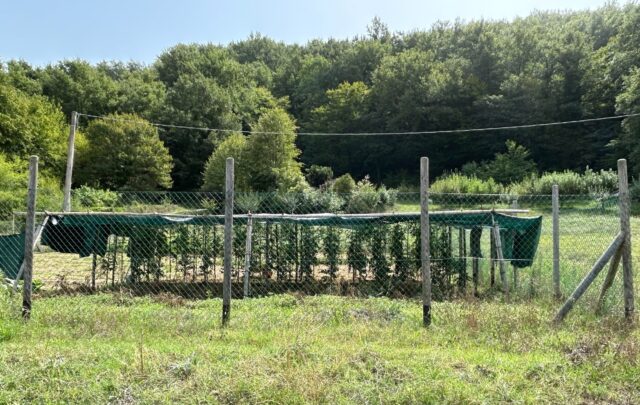
Against a backdrop of global food shortages and the spectre of five dollar lettuce at the checkout, there are signs that more Western Canadians are tearing up their lawns this spring to plant vegetable gardens.
It’s still early in the planting season, but the region’s organic-seed distributors report a dramatic increase in business.
“We put out the catalog at the beginning of January, as we always do” says Jeanette McCall, a sales representative at West Coast Seeds, based in Delta, B.C.
“Then, boom. We had many, many, many more orders than we anticipated. [Our computer system] simply couldn’t handle the load,” she adds. “It just sort of crashed.”
It’s the same story at Salt Spring Seeds, which specializes in heritage and heirloom vegetable varieties.
“I’ve never seen the likes of this in over 20 years of selling seeds,” confirmed owner Dan Jason.
“The phone calls, e-mails, letters, seed orders are relentless. Everyone wants to grow food now. So many people are attempting gardens for the first time.”
(5 May 2008)
City Neighborhoods Loss of Supermarkets Puts Health at Risk
David Gonzalez, New York Times
… A continuing decline in the number of neighborhood supermarkets has made it harder for millions of New Yorkers to find fresh and affordable food within walking distance of their homes, according to a recent city study. The dearth of nearby supermarkets is most severe in minority and poor neighborhoods already beset by obesity, diabetes and heart disease.
According to the food workers union, only 550 decently sized supermarkets — each occupying at least 10,000 square feet — remain in the city.
In one corner of southeast Queens, four supermarkets have closed in the last two years. Over a similar period in East Harlem, six small supermarkets have closed, and two more are on the brink, local officials said. In some cases, the old storefronts have been converted to drug stores that stand to make money coming and going — first selling processed foods and sodas, then selling medicines for illnesses that could have been prevented by a better diet.
The supermarket closings – not confined to poor neighborhoods – result from rising rents and slim profit margins, among other causes. They have forced residents to take buses or cabs to the closest supermarkets in some areas. Those with cars can drive, but the price of gasoline is making some think twice about that option.
(5 May 2008)
Billions at risk from wheat super-blight
Debora Mackenzie, New Scientist
“This thing has immense potential for social and human destruction.” Startling words – but spoken by the father of the Green Revolution, Nobel laureate Norman Borlaug, they are not easily dismissed.
An infection is coming, and almost no one has heard about it. This infection isn’t going to give you flu, or TB. In fact, it isn’t interested in you at all. It is after the wheat plants that feed more people than any other single food source on the planet. And because of cutbacks in international research, we aren’t prepared. The famines that were banished by the advent of disease-resistant crops in the Green Revolution of the 1960s could return, Borlaug told New Scientist.
The disease is Ug99, a virulent strain of black stem rust fungus (Puccinia graminis), discovered in Uganda in 1999. Since the Green Revolution, farmers everywhere have grown wheat varieties that resist stem rust, but Ug99 has evolved to take advantage of those varieties, and almost no wheat crops anywhere are resistant to it.
The strain has spread slowly across east Africa, but in January this year spores blew across to Yemen, and north into Sudan (see Map). Scientists who have tracked similar airborne spores in this part of the world say it will now blow into Egypt, Turkey and the Middle East, and on to India, lands where a billion people depend on wheat.
(3 April 2008)
Contributor CP writes:
First corn, then rice, now wheat. This is starting to get scary.
See also: Ug99 Research (South Dakota Wheat Commission)
The World Food Crisis: Sources and Solutions
Fred Magdoff, Monthly Review
An acute food crisis has struck the world in 2008. This is on top of a longer-term crisis of agriculture and food that has already left billions hungry and malnourished. In order to understand the full, dire implications of what is happening today it is necessary to look at the interaction between these short-term and long-term crises. Both crises arise primarily from the for-profit production of food, fiber, and now biofuels, and the rift between food and people that this inevitably generates.
‘Routine’ Hunger before the Current Crisis
Of the more than 6 billion people living in the world today, the United Nations estimates that close to 1 billion suffer from chronic hunger. But this number, which is only a crude estimate, leaves out those suffering from vitamin and nutrient deficiencies and other forms of malnutrition. The total number of food insecure people who are malnourished or lacking critical nutrients is probably closer to 3 billion-about half of humanity.
… Conclusion
Food is a human right and governments have a responsibility to see that their people are well fed. In addition, there are known ways to end hunger-including emergency measures to combat the current critical situation, urban gardens, agrarian reforms that include a whole support system for farmers, and sustainable agriculture techniques that enhance the environment. The present availability of food to people reflects very unequal economic and political power relationships within and between countries. A sustainable and secure food system requires a different and much more equitable relationship among people. The more the poor and farmers themselves are included in all aspects of the effort to gain food security, and the more they are energized in the process, the greater will be the chance of attaining lasting food security.
Fred Magdoff is professor emeritus of plant and soil science at the University of Vermont in Burlington and a director of the Monthly Review Foundation.
(May 2008 issue)
Biography of Fred Magdof at USDA Agricultural Research Service (ARS).
The world’s food insecurity
Paul Rogers openDemocracy
… What is extraordinary about the current situation is that it echoes in so many respects an earlier world food crisis: that of 1973-74 (it also remains fresh in the memory, as I worked in tropical-agricultural research in the late 1960s and attended the world food conference of 5-16 November 1974 as an observer for Britain’s World Development Movement). In comparing the two moments, what is truly astonishing is that – despite all the supposed progress of the globalised world economy, all the much-lauded economic growth, and all the scientific and technological developments in the interim period – so little has changed
… What makes the current crisis even more worrying is the presence of two trends that were either absent or less pressing in the 1970s. First, the role of the now-globalised financial sector, where hedge-fund and other forms of speculation in the food-commodity markets have fuelled the price rises and in effect, intensified hunger, poverty and instability. This is an unexplored aspect of the world’s food problem that demands to be on the agenda of those attempting to solve it.
Second, the crisis of 2007-08 is unfolding in an era when the effects of climate change are intensifying – but where the full range of the impact of global warming is yet to be felt
(29 April 2008)



Comments
We changed commenting systems on September 10, 2026 as part of a site-wide functionality and security upgrade. Your past comments have not disappeared, and you can still log in with your old Disqus account credentials if you wish. Contact us with any questions.