


Click on the headline (link) for the full text.
Many more articles are available through the Energy Bulletin homepage
Getting Power to the People (19-page PDF)
Matthew Wald, Bulletin of Atomic Scientists
Nuclear energy? Carbon capture? Solar power? As the debate over climate change heats up and the demand for energy grows, what is the best alternative? The answer lies in the marketplace.
—
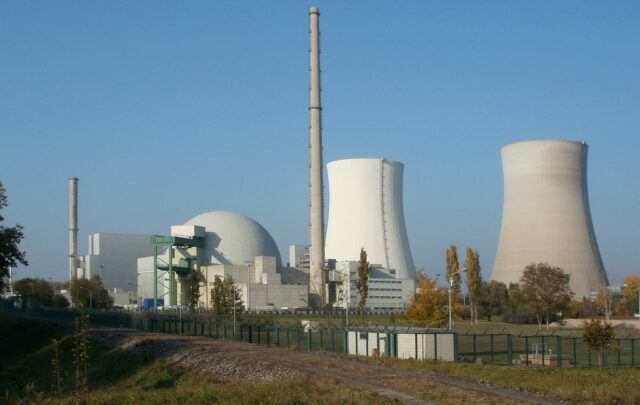
Climate change has the nuclear power industry buzzing that it is poised for a worldwide renaissance.
This by itself is not news; the industry’s publicists are notorious optimists, and they have been predicting a spurt in construction since long before the threat of rising global temperatures became a priority issue.
But fundamental shifts in the world energy marketplace make the talk a little more serious now-and, paradoxically, a lot more speculative.
The subject is hot because climate change is becoming a fixation. Some of the most dire predictions come from analysts who sound like they are channeling Thomas Malthus, who wrote in 1798 that food supply increased arithmetically while population, geometrically….
The success of any of these renewable energy forms is contingent on cold, hard economics. So is the fate of a host of smaller “renewable” competitors that exist in niche markets, in prototype, in the demonstration stage, or just in the imagination of entrepreneurs, such as geothermal power, tidal power, or reactors running on plutonium recovered by reprocessing spent nuclear fuel. Governments can build anything they want to, but in a globalized marketplace, no technology will dominate without at least a patina of economic advantage.
…There is intermittent talk of “peak oil” but none of “peak coal.” The United States, the world’s biggest energy user, has hundreds of years’ worth of coal in the ground, so much that it makes very little economic sense to bother looking for more. Other countries also have huge coal deposits.
…The world hunts for a silver bullet, but nuclear’s caliber is too small.
There is a future on the grid for almost everything. . . . What remains is to determine the proportions.
Matthew L. Wald is a reporter at the New York Times, where he has been writing about energy since 1979.
(September/October 2007)
A long article that deserves critical scrutiny. Peak oil is not considered. -BA
Review: Zoom: Great awakening ahead for gas guzzlers
John Reed, Financial Times
As Americans surveyed the damage wrought by hurricane Katrina in 2005, Bill Ford Jr, then Ford Motor’s chief executive, made a dramatic speech declaring a national energy crisis. With much of the Gulf of Mexico’s oil infrastructure knocked out, he called for a White House summit of oil and automotive bosses for a national dialogue on energy security.
Politicians and industry, in spite of graphic evidence of the costs of the US’s carbon-intensive economy to human life and their own profits, did not respond, least of all to calls for a petrol tax. Two years later, gasoline remains the cheapest liquid on sale at most American filling stations, costing less per gallon than milk, coffee or mouthwash.
Zoom, an ambitious and timely book, presents an in-depth diagnosis of America’s addiction to oil and oil’s symbiotic partner, the petrol combustion engine. Although focused on the US, it also studies the role of rising economies such as China, now the world’s second-largest source of carbon dioxide emissions and vehicle sales.
The authors, journalists for The Economist, argue that, since Katrina, public and political opinion around the world has coalesced and the widely held view is that the status quo on oil, the environment and the car industry must change. The “Axis of Oil” is poised to be replaced by the Great Awakening, which they claim “could be the most important political force of this new century”.
(3 October 2007)
Innovation cheaper than oil
Dan Gardner, The Ottawa Citizen
One of the greatest failures of leadership in the modern era can be summed up with two numbers: In the United States, public funding for energy research and development came to $8 billion in 1980; in 2005, it was $3 billion.
To understand how dramatic — and tragic — those numbers are, they have to be read in an historical context that starts in January, 1968.
That month, British prime minister Harold Wilson, struggling to cope with another economic crisis, announced that British forces would be withdrawn from the Persian Gulf. By November, 1971, the evacuation was complete — and the Gulf was thrown into turmoil.
For more than a century, the British military had guaranteed peace and security in the region. It had also — not coincidentally — safeguarded the flow of vast quantities of oil through the Strait of Hormuz to the economies of the developed world.
The United States was not happy with the British decision to withdraw.
…More than his predecessors, Jimmy Carter believed security would be compromised as long as the industrialized world remained addicted to oil. Promising the “the moral equivalent of war,” Carter called for the development of nuclear, coal and other energy sources, greatly increased conservation standards, and research into alternative and renewable energy sources such as solar and wind power.
And that gets us to the first of the numbers mentioned at the top of this column: In 1980, public funding for energy research and development was $8 billion. Relative to overall spending, and what was at stake, it was a piddling amount, but it was something.
It didn’t last. Ronald Reagan saw nothing wrong with the status quo and, with oil prices falling, pressure for change evaporated. And so cheap oil and booming economies returned. The world went full circle back to the 1960s.
That pleasing lull was brought to an end several years ago by soaring oil prices and the deepening quagmire in the Middle East. Today, even the oilman in the White House has said America must break its addiction to oil.
Which brings us to the second number at the beginning of this column: In 2005, public funding for energy research and development was $3 billion.
Compare that to the cost of policing the Persian Gulf. The first Gulf War alone cost at least $61 billion. Estimates for the current war in Iraq range from $500 billion to two trillion dollars.
So the U.S. has spent spectacular amounts securing oil supplies but it has given only pocket change to the development of energy alternatives. And as the U.S. goes, so goes the world.
(5 October 2007)
It’s not just Alberta, it’s the whole country
Andrew Nikiforuk, Globe & Mail
I live in oil-addled Alberta, a sort of modern Deadwood complete with self-possessed con men and blighted landscapes. Every day, the whole province looks and acts more and more like a profane gold-mining camp. Ask newcomers, and they will tell you they are here for the money. The invasion makes most of my rural friends feel like outnumbered Sioux in the Black Hills.
Even the news reads like an outrageous dime novel. One day the premier, a man with no sense of irony, praises the tar sands as a car without brakes; the next day the energy regulator gets caught illegally spying on citizens who want brakes installed on the car, and then lies like Richard Nixon about the spying. Alberta could sure use a Roberto Bolaño or Kurt Vonnegut about now.
With these cheerful thoughts in mind, I picked up Stupid to the Last Drop (new book by William Marsden) with a mixture of curiosity and caution
(6 October 2007)


Comments
We changed commenting systems on September 10, 2026 as part of a site-wide functionality and security upgrade. Your past comments have not disappeared, and you can still log in with your old Disqus account credentials if you wish. Contact us with any questions.