


Click on the headline (link) for the full text.
Many more articles are available through the Energy Bulletin homepage
Where Has All The Oil Gone?!
Ann Davis, Wall Street Journal
After Sitting on Crude, Speculators Unload It.
The World’s Eyes Fall on Cushing, Oklahoma
—
Cushing, Okla. – Since summer, one of North America’s most important oil towns has witnessed a disappearing act.
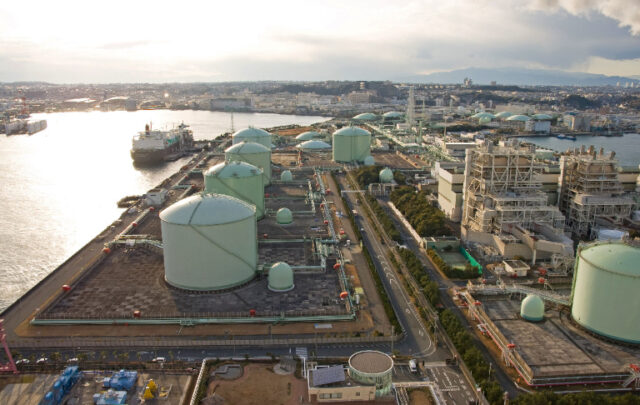
The mammoth storage tanks that blanket the rolling grasslands around this remote prairie town had been filled to the brim with crude oil. They aren’t anymore. Since May, millions of barrels of crude have been sold off, and Cushing’s inventory has fallen by nearly 35%.
Oil traders around the globe obsess about inventory. Storage levels have fallen, not just in Cushing, but in other oil depots as well. Fearful that the U.S. cushion of spare fuel could hit a low by year-end, traders drove prices to a record of nearly $84 a barrel last month. On Friday, oil closed at $81.22 on the New York Mercantile Exchange, up 33% this year.
The reasons Cushing’s crude has been disappearing are surprisingly complex, and shed light on the growing involvement of speculators in the global oil market.
(6 October 2007)
Ecuador Unveils Plans to Extend Control Over Oil Industry
Mercedes Alvaro, Dow Jones Newswires
Ecuador’s government surprised private-sector oil companies late Thursday by unveiling dramatic plans to tighten its grip on the oil sector.
President Rafael Correa late Thursday signed an executive decree raising the state’s share of oil revenues, while the country’s top energy official said the government wants to take back full ownership of oil resources and production.
(5 October 2007)
Russian Oligarchs Go on Safari (PDF of entire magazine issue)
Owen Matthews, Newsweek International
Russians take their place alongside the Chinese in a battle for resources to fuel their growing empires.
—
Late on a Friday night at the Simba Saloon in downtown Nairobi, music by the Kenyan pop sensation the Boomba Clan is playing, and the ties are coming off. At the bar, banker types in expensive suits swap news of the latest bank IPOs and mineral concessions, the must-have gossip in Africa’s biggest boomtown. Some of the conversations are in English. Some are in Chinese. And increasingly, many of them are in Russian, as Moscow begins to give both the West and Beijing a run for their money in the race for Africa’s riches.
Today, emerging-market giants are fighting for oil, gas and metal ore in Africa as energetically as 19th-century European colonialists grabbed land on the continent. Recently, the Chinese have been the most aggressive, with more than 700 companies active in 50 countries, according to Standard Bank of South Africa. China is now Africa’s second largest aid donor and trading partner, behind the United States, with trade up fourfold to $40 billion since 2000. But Russia, the second most active emerging-market power in the area, is gaining.
… Pushed by the profit motive, and by a Kremlin eager to build economic empires, Russian businessmen are heading south. Africa, like Russia in the early 1990s, is full of basket-case economies with great mineral wealth-and the Russians reckon they know how to deal with those conditions.
Russia has strongly encouraged its companies to buy assets around the world because it suits President Vladimir Putin’s philosophy of restoring his country’s international position.
(15 October 2007 issue)


Comments
We changed commenting systems on September 10, 2026 as part of a site-wide functionality and security upgrade. Your past comments have not disappeared, and you can still log in with your old Disqus account credentials if you wish. Contact us with any questions.