


1. The Motive
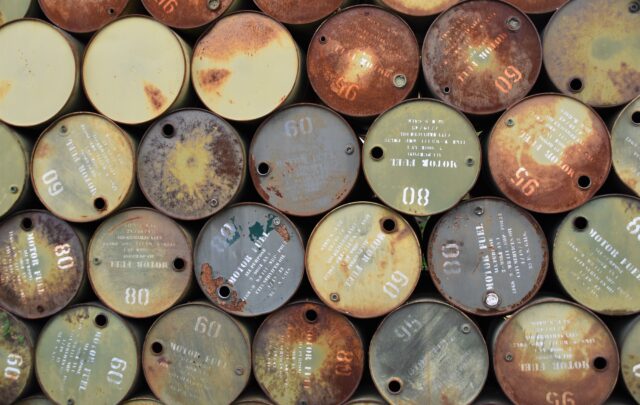
Henry Kissinger’s famous declaration that, “Oil is too important to be left to the Arabs” best expresses the experience of the Middle East over the last century. The region possesses the largest known reserves of petroleum in the world—2/3 of the world’s oil reserves and 1/3 of its natural gas reserves. Concentrated only in a handful of countries, the oil is cheap to extract and refine, making it among the most profitable to exploit. Oil exports from the Middle East account for over half the world’s total.
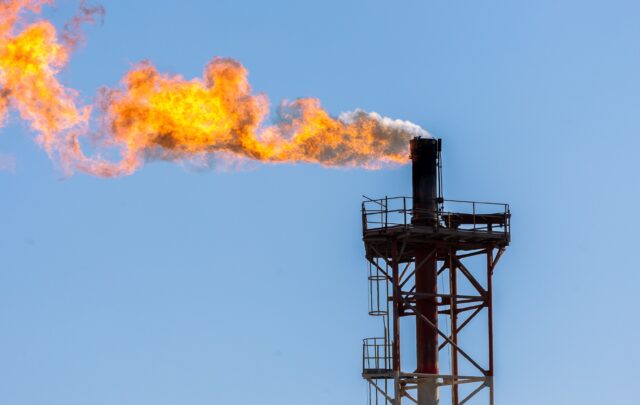
Petroleum is by far the most widely consumed source of energy—it is literally what fuels the daily functioning of the capitalist system. When you consider all energy sources available—including coal, wood, nuclear, hydro, geothermal, solar, and wind power—oil and gas make up 60 percent of the world’s total energy output. Everything from home heating and transportation to industry and office buildings would come to a halt if the flow of oil is disrupted. Although this is an unlikely scenario, substantial or sudden fluctuations in oil prices can do serious damage to the world economy.
The most advanced capitalist economies tend to be the most heavily dependent on stable oil prices and supply. The United States, for example, uses 1/4 of the world’s energy output with only 5% of the world’s population. While it is able to produce most of this, it still imports nearly a third of its energy. In oil, the U.S. is even more vulnerable—it imports two-thirds of what it needs.
Although less than half of this oil comes directly from the Middle East, the region remains the key to moderate prices and steady supply—Saudi Arabia alone can substantially influence the price of oil by either cutting production or using its full capacity to compensate for any sudden interruption in supply. Known as the world’s largest “swing” producer, Saudi Arabia sits on top of 1/4 of the world’s proven oil reserves and has all the extraction and transportation equipment needed to quickly increase production to offset a spike in oil prices.
Saudi oil was the primary motivation behind the first forays of U.S. commercial interests into the region dating back to the late 1920s when Standard Oil of California began to explore for oil in the country’s Eastern Province. The waning British Empire then controlled the established wells of Iraq and, in effect, dominated the Gulf region militarily with British troops in Iran, Iraq, Bahrain, and Kuwait. When the U.S. emerged as the dominant western power after the Second World War, the Middle East increasingly came under its sphere of influence.
Oil became the central concern of the U.S. in the region as the world’s energy consumption skyrocketed with the protracted post-World War II economic boom. The main threat to Washington came from Arab nationalist regimes aligned with the Soviet Union who sought to nationalize key sectors of the economy. Even though it suffered many setbacks, including the nationalization of most of the region’s oil industry and the loss of prize countries like Iran, the U.S. has managed to maintain its hold over the crucial oil reserves of Saudi Arabia, Kuwait, and much of the Gulf. And with the collapse of the Soviet Union, the U.S. came to be the unquestioned master of the Middle East in the 1990s.
The constant thread of modern Middle Eastern history—regardless of what political or ideological coloring it may have assumed—is the sustained tug of war over who will control and therefore benefit most from the massive wealth present in the region. It remains to be seen whether oil is a blessing or curse for the people of the Middle East. On the one hand, it has allowed for rapid development and, at times, rising living standards for sections of the population but it has also produced countless oil wars and unimaginable waste through corruption, thus wiping away the region’s modest gains.
The importance of oil to the world’s superpowers has meant that globalization in the Middle East has taken the form of indirect control of the region’s resources through client states and repressive regimes punctuated by direct military intervention by the U.S. and its western allies. Today, virtually every regime in the region owes its survival to some combination of U.S. military and economic assistance. And those nations, like Iraq, who do not abide by the rules set by Washington, are mercilessly punished.
2. The Order
The physical carve-up of the Middle East may have been committed by the old colonial powers, but today it is the U.S. that lords over the region. American hegemony is almost complete—most countries, some sworn enemies, are armed to the hilt by U.S. weapons while American multinationals and their products dominate the region economically. Saudi Arabia and other Gulf countries have been virtual outposts of U.S. military and commercial interests for the past 70 years.
Yet, with another assault on Iraq lurking on the horizon, the region remains a great source of trouble for the U.S. Faced with waves of resistance to its rule from a wide array of forces—ranging from secular nationalists to deeply conservative fundamentalists—Washington has had to develop a constantly evolving foreign policy to maintain control of the region. However, it has never been able to fully establish a stable order. Worse, decades of U.S. meddling and overbearing scrutiny have created a widespread sentiment against the region’s overlord.
This is particularly true in the case of Israel. Israel is the single greatest source of instability and friction in the Middle East. Yet it is a critical component of U.S. imperial rule, not only in the immediate region but globally, assisting U.S. operations throughout Latin America and Africa during the Cold War. Seen by the U.S. security establishment as a far more important asset than the network of pro-American Arab regimes, Israel is an enduring cornerstone of American policy in the region. Even though Washington supported the founding of Israel (at great cost to nearly a million Palestinians) as far back as 1948, substantial flows of U.S. aid and military support to Israel began in earnest only after Israel confirmed itself as the region’s unquestioned superpower in 1967 when it crushed the forces of several Arab countries in the course of one week.
Not that the numerous Arab regimes, ranging from military men to reactionary monarchs, have not dutifully served the White House over many decades—they too form an important part of Pax Americana. With U.S. government support, they have built up formidable security forces that only seem to be effective against domestic unrest. They have fended off, again with U.S. and even Israeli help, many challenges to their rule. But they remain fundamentally unstable—and therefore unreliable—allies because they are vulnerable to being overthrown by their own people. The regimes must sustain an almost impossible balancing act between the conflicting demands of their own populations and U.S. interests.
One of Washington’s top deputies in the region for many years, the Shah of Iran, is perhaps the most important example of the vulnerability of local rulers. His overthrow in 1979 unleashed a wave of anger against U.S. imperialism across the whole region that still reverberates to this day. In contrast, Israel not only possesses an awesome military force, it is immune to such internal upheaval. Its population, far from chafing under the yoke of U.S. imperialism, directly benefits from it—Israel is completely dependent on the good graces of Washington for critical political, military, and economic support, as well as for its long-term survival.
But the two prongs of U.S. strategy—the Arab regimes and Israel—make for a turbulent policy as the two often clash over the key question of the region—Palestine. During the 1991 Gulf War, Israel for the first time became a liability to the U.S. and was sternly warned by Washington not to retaliate even as the Iraqi military fired Scud missiles at Tel Aviv. The fear was that Israel’s involvement would inflame the Arab street and break apart the coalition that Washington had painstakingly put together to attack Iraq. Since then, the U.S. has pursued a minimal solution for the Palestinians that would not cramp Israeli interests, but to no avail. So the Palestinian question continues to be a persistent and central irritant in American plans for the region.
The 1991 Gulf War presented the U.S. with a golden opportunity to further consolidate its hold on the area’s oil deposits. Using Iraq as a regional boogey man, the U.S. aggressively established a substantial military presence in and around Saudi Arabia. The small island of Bahrain was already home to the Fifth Fleet and Saudi Arabia hosted some army and air force “advisers” and support personnel. Today, the Pentagon enjoys a new air strip and an advanced army base in Qatar; a large air base in the middle of the Saudi desert (from which the air campaign over Afghanistan was conducted); and thousands more troops in Kuwait, Oman, Jordan, and the United Arab Emirates. A massive build-up of US troops can be accomplished relatively quickly as most of these bases are stocked with pre-positioned military equipment—the Qatar base contains all the armor necessary for a full brigade and hundreds of U.S. aircraft in the area can be airborne at a moment’s notice.
Economically, even the richest of the oil economies are entering a protracted crisis. The combination of low oil prices and rapidly growing populations are draining the once-generous budgets of the Gulf States. And, in effect, the region as a whole has been stagnant or losing ground over the past two decades—it had the lowest rate of growth of any region in the world in the 1980s and grew at an average of 2% in the 1990s. To revive their economies, the Arab regimes have been turning to market solutions and structural adjustment programs. The oil-rich states, in need of more foreign investment, are hesitantly moving toward inviting foreign oil companies to play a greater role in their oil sector.
Countries that don’t depend on oil such as Egypt, Jordan, Morocco, and Tunisia have all turned to the IMF and World Bank with disastrous results. One does certainly see a lot more luxury cars zipping around the center of Cairo, but the city is ringed with misery belts where millions barely eke out an existence—a slight increase in the price of bread by the government can spark mass rioting. As far back as 1972, Egypt led the Arab world in the process of infitah (“opening” in Arabic) by aligning itself with the west and liberalizing its economy. Recognizing the importance of Egypt to the stability of the Middle East, the U.S. pumped billions of dollars of aid into Egypt. But Egypt today is in its third year of recession with no end in sight. The most recent Arab Human Development Report found that Egypt had the third lowest GDP per capita, ahead of only Syria and Yemen.
The future of the region promises to be explosive as the 40% of the population that are under 17 today enter the labor market. Many will be well educated but with double-digit unemployment in most countries, their future is bleak. The combination of increased U.S. military intervention and Israeli provocations against the Palestinians will radicalize this new generation. The Arab regimes with U.S. backing will respond with desperate repression to defend their rule. And as we’ve seen on a number of previous occasions, one successful revolution can ignite the whole region for many years. Undoubtedly, the U.S. has considered this scenario and is today scrambling to secure alternative sources of oil, most notably in western Africa and the Andes region of South America. For the foreseeable future, however, Middle East oil will remain too critical to the world economy for Washington to ignore.
3. The Resistance
U.S. hegemony has faced two major oppositional forces in the Middle East—Arab nationalism and political Islam—both of which have been repeatedly repulsed but never fully defeated. The two movements rightly see the U.S. as key to the region’s problems: the U.S. is the unstinting backer of Israel, it props up the conservative and corrupt regimes of the Gulf, and most importantly exercises undue influence over how the resources of the region are used. Arab nationalism and political Islam have sought the same objective by different means and ideology—wresting the region from U.S. control, both politically and economically, and determining its course themselves.
Arab nationalism grew directly out of anti-colonial struggles in places like Egypt, Syria, Iraq, and Algeria immediately after the Second World War. Like most national liberation movements, it enjoyed a long period of support from the overwhelming majority of people—even by 1970, when the leader of Arab nationalism Gamal Abdul Nasser died, millions from Morocco to Iraq mourned his passing in the streets. Throughout the 1950s and ‘60s, Nasser and his supporters nationalized their economies and sought an independent course of development modeled after the Soviet Union under Stalin which at the time appeared to be an effective short-cut to rapid industrialization and economic growth.
Nasser however met stiff resistance from the U.S. by way of Israel and its Gulf allies in the region. Eisenhower even landed troops in Lebanon in 1958 in a turbulent year that saw the pro-western Iraqi king overthrown by Arab nationalists and a Syrian-Egyptian union in the name of Arab unity. But the union was short-lived, and the economic promise of Arab nationalism was never fulfilled. In the 1967 war with Israel, Arab nationalism suffered a defeat from which it never really recovered. Nasser died soon after and his successor, Anwar Sadat, turned to U.S. patronage and made his peace with Israel in 1979.
Political Islam was articulated as early as the end of the 19th Century in response to two developments: the collapse of the Ottoman Empire which governed most of the Middle East and its replacement by British and French colonialism. Early versions of political Islam were no more than attempts to modernize traditional and often conservative interpretations of Islam to fend off the rapid spread of western capitalism into what was seen as the geographic center of Islam. (This is the reason why the more common term “Islamic fundamentalism” can be misleading and “political Islam” or “Islamism” are preferable.) After being eclipsed for several decades by Arab nationalism, new, more radical, versions of political Islam began to emerge as an alternative course for many in the region.
By the 1980s, in the slums of most Arab, Iranian, Pakistani and even Turkish cities, the Islamists were busy building a mass base on a number of levels: through a vast network of Islamic charities and clinics, by building mosques and Islamic universities, and the formation of political and sometimes armed revolutionary organizations. Although the Arab nationalist governments persecuted the Islamists, they came to be seen by the dominant powers of the region—including the U.S. and Israel—as a counterweight to radical nationalist elements that posed a more immediate threat to the existing order. Thus, the U.S. backed the deeply reactionary brand of Wahhabi fundamentalism of the Saudi monarchy to break Nasser and Israel allowed Hamas to establish an Islamic university in Gaza while refusing to recognize the existence of the secular Palestine Liberation Organization (PLO). This strategy reached its peak in the U.S.-fueled Islamic jihad against the Soviet invasion of Afghanistan in the 1980s.
Today Washington is waging an endless global war to eradicate the very same forces it cultivated for so many years. But the demise of political Islam began well before America’s current assault—the moderate electoral wing of the movement was denied access to power even when it won government-sanctioned elections and the radicals isolated themselves by turning to a terrorist strategy, allowing the authorities to wage a ruthless campaign of repression against them. The 1997 Islamist massacre of dozens of European tourists in Luxor allowed the government to round up thousands of Egypt’s activists in desert concentration camps where many were then speedily condemned to death by military courts. This year, Egypt’s radical Islamists in effect surrendered after their leadership issued an apology to the Egyptian people for their past transgressions.
Today it is the Palestinian intifada (“uprising” in Arabic) that forms the central axis of resistance in the region. It is on one level a specifically Palestinian struggle against 50 years of Israeli dispossession and occupation, but on another more regional level, it symbolizes the people’s yearning for political and economic self-determination. In April 2002, when Ariel Sharon sent his tanks to destroy the rebellious cities of the West Bank, the Arab world erupted in an unprecedented show of solidarity for the besieged Palestinians. Most demonstrations would begin with slogans against the U.S. and Israel, but then would quickly turn against the Arab leaders and governments, questioning not only Israel’s policies toward the Palestinians but the whole U.S.-imposed order in the region.
In this way, the Palestinian struggle acts as a catalyst for all the smoldering grievances of the region, in some cases igniting similar rebellions against structural adjustment and globalization. The first intifada which broke out in 1987 quickly found echo in similar popular uprisings, most significantly in Algeria (October 1988) and later in Jordan (April 1989). In Algeria, as students and workers were striking, millions of poor people rioted in the street in response to an economic crisis brought on by mismanagement and corruption as the government sought to liberalize the economy. Jordan’s intifada came in direct response to IMF and World Bank demands to eliminate subsidies on essential items—making it one of the first explicit struggles against the agents of globalization in the area.
A dilemma lies at the heart of U.S. attempts to tame the Middle East—the more it intervenes, the more it antagonizes the people of the region. Then, faced with widespread opposition to its policies—in some cases full-scale rebellion—the U.S., along with Israel and the hated Arab regimes, cracks down, citing a threat to its security or to its national interests as the reason. This, in turn, provokes yet more hostility and the vicious cycle continues.
Israel’s key role in domesticating the region for U.S. interests only serves to magnify the anger of the population. Israel’s crimes against the Palestinians are shown daily on the region’s many satellite stations to millions of viewers. And soon, the very same viewers will be subjected to yet another U.S. war on the people of Iraq in the name of deposing their despotic leader. This will surely unleash another wave of opposition that may very well sweep away the Saudi monarchy or the Mubarak regime in Egypt. But as long as the Middle East remains a key source of oil, the U.S. will feel obliged to maintain its vice-like grip on the region.
Bilal El-Amine
www.leftturn.org



Comments
Welcome to the new Resillience commenting system!
We have moved from the former Disqus commenting system to a new system as of September 10, 2026.
We made this change because of privacy concerns regarding Disqus. It's also part of a set of changes to bring more services to the Resilience community under a single login: commenting, (coming September 2026), and online courses (coming 2027). Unfortunately, your old Disqus comments may not reliably link to your account in this new system. Please contact us if you have any questions or concerns.