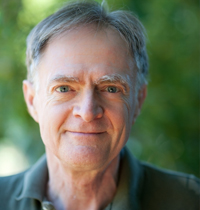
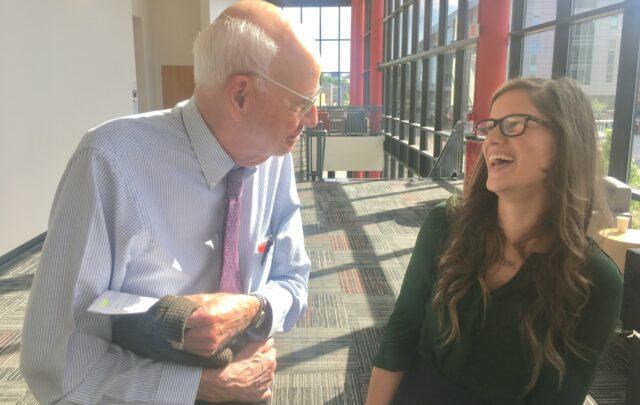
Richard Heinberg joins Julia Jacobs at BFM radio to discuss realistic avenues for transitioning to renewable energy, the environmental implications of economic growth, and how we can build more resiliency into the sustainability movement.
Richard Heinberg was regarded as one of the world’s foremost advocates for a shift away from our current reliance on fossil fuels. He was the author of fourteen books, including some of the seminal works on society’s current energy and environmental sustainability crisis. Richard was Senior Fellow of Post Carbon Institute for nearly twenty years.
Richard authored hundreds of essays and articles that have appeared in such journals as Nature and The Wall Street Journal; delivered hundreds of lectures on energy and climate issues to audiences on six continents; and was quoted and interviewed countless times for print, television, and radio. His monthly MuseLetter was published for 400 consecutive months starting in 1992, and was included in Utne Magazine’s annual list of Best Alternative Newsletters.
Tags: building resilient communities, limits to growth, renewable energy transition
Related Articles
'SELECT SQL_CALC_FOUND_ROWS wp_posts.ID
FROM wp_posts LEFT JOIN wp_term_relationships ON (wp_posts.ID = wp_term_relationships.object_id)
WHERE 1=1 AND wp_posts.ID NOT IN (3467561) AND (
wp_term_relationships.term_taxonomy_id IN (1,5,8988,8995)
) AND wp_posts.post_type = \'post\' AND ((wp_posts.post_status = \'publish\'))
GROUP BY wp_posts.ID
ORDER BY wp_posts.post_date DESC
LIMIT 0, 3'
Wendell supported the writers, scholars, farmers, and activists who shared his interest in the fate of good farms, strong communities, and healthy ecosystems, helping us become more than we ever could have without his wisdom and support.
Drawing on the insights of more than 1,000 groups worldwide, here is a compilation of stories, guides, webinars and an ongoing discussion course to help communities drive long-term change.
How did humans go from living in small-scale communities where everyone knew each other to building a massive civilization filled with billions of strangers? Philosopher C. Thi Nguyen, author of “The Score,” joins the odyssey to explore the strange relationship between games and large-scale society.