As America’s corn and soybean crops wither in the current drought, it is time to reconsider our policy of mandating the conversion of a large percent of those crops into ethanol for our gas tanks. Even in a bountiful crop year, there is little sense in a food for fuel policy which takes nearly half of our corn crop for less than 10 percent of our gasoline supply. It can be sustained only by subsidies and mandates which increase prices for grains and the beef, poultry, and other products which depend on grain supplies.
In 2007, Congress passed the Energy Independence and Security Act (EISA) which established a Renewable Fuel Standard(RFS). The RFS required increased production of biofuels on a schedule which reached 36 million gallons of biofuels by 2022, including 16 billion gallons of ethanol from non food sources like cellulose and algae. There is no effective production process for biofuels from cellulose and algae, and actual production of those biofuels is now at less than 5 percent of the current EISA schedule.
As a result, Congress asked the National Research Council (NRC) to investigate our entire biofuel program. The NRC convened a committee of 16 experts to provide an independent assessment of the economic and environmental benefits and concerns associated with achieving the mandated RFS. The committee drew on its own expertise and solicited input from many experts in federal agencies, academia, trade associations, stakeholders’ groups, and nongovernmental organizations. Their report has just been published in the Proceedings of the National Academy of Scientists. Its conclusion notes that absent major technological innovation, the RFS schedule for cellulosic biofuels is unlikely to be met. A combination of an oil price above $191/barrel and technological breakthroughs would be needed for any biofuels to be cost competitive with petroleum-based fuels.
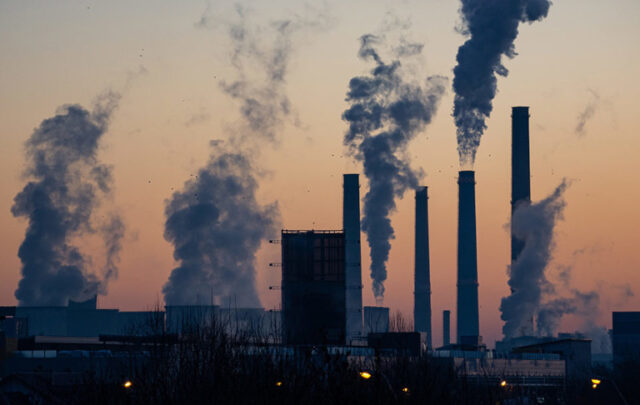
The report also states, “Air quality modeling suggests that production and use of ethanol as fuel to displace gasoline is likely to increase such air pollutants as particulate matter, ozone, and sulfur oxides. Published studies projected that overall production and use of ethanol will result in higher pollutant concentration for ozone and particulate matter than their gasoline counterparts on a national average.”
Another study led by Nobel chemist Paul Crutzen reported that growing some of the most commonly used biofuel crops releases around twice the amount of the potent greenhouse gas nitrous oxide (N2O) than previously thought – wiping out any benefits from not using fossil fuels. Molecule for molecule, N2O has 300 times the global warming effect of carbon dioxide.
The California Air Resources Board(CARB) has reached similar conclusions.
Its report notes that “Ethanol production has the potential to create starvation and destabilize local food economies. The Amazon Rainforest is being bulldozed to create sugarcane crops for fuels—the net effect of this activity is to destroy the tropical sinks for carbon, destabilize local indigenous populations, and could create food insecurity. Using corn based ethanol to meet the requirements of California’s Low Carbon Fuel Standard(LCFS) could have far reaching effects on national security due to the destabilizing nature of starvation on national governments. Since corn is such a critical food staple, corn based ethanol would have significant impacts. The LCFS, on an ethanol path, could create backsliding on air quality issues since ethanol looks like it increases ozone levels.”
As Professor Tad Patzek of the University of California puts it, “In terms of renewable fuels, ethanol is the worst solution. It has the highest energy cost with the least benefit.”
ROLF WESTGARD is a professional member of the Geological Society of America and the American Association of Petroleum Geologists. He teaches classes on energy subjects for the University of Minnesota Lifelong Learning program.