Agroecological techniques are among the most environmentally sustainable methods for addressing food insecurity and offer promising climate change adaptation and mitigation pathways. Such systems support weed suppression, help break pest life-cycles, and provide essential ecosystem services like soil enhancement, nitrogen fixation, and carbon sequestration. The Intergovernmental Panel on Climate Change (IPCC) has determined that agroecological food systems not only create opportunities for food security, but ‘also benefit land-based ecosystems, water, poverty and livelihoods, and human well-being’. Research has suggested that such approaches help restore equitable community, family, and gender relations, encourage dignity in farm work by recognising local specialised knowledge, and establish new power relations through its participatory methods that put producers first. On gender, the IPCC has stressed that agroecology strengthens adaptive capacities and enables “more resilient food systems by increasing leadership for women and their participation in decision making”.
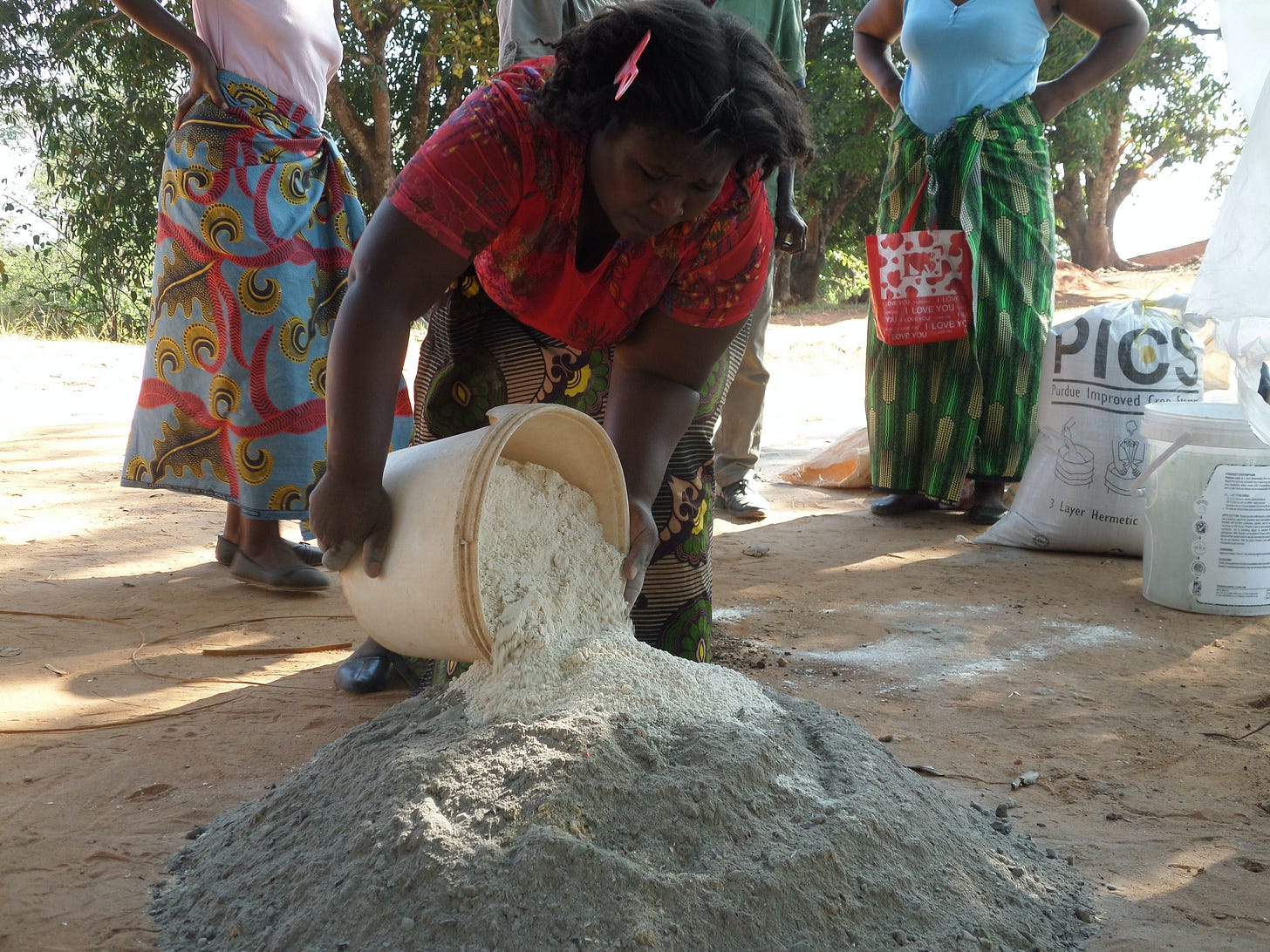
The agroecological way is not, however, ubiquitous in Malawi, nor in Africa. In fact, the food system is dominated by massive, corporate-led agribusiness, which aims to ‘modernise’ African agriculture through industrial, high-output monocultures; hybridised or genetically modified seeds provided by multinational corporations; investments in digital technology; and government subsidies for fertilisers and agrichemicals, which are often fossil-fuel-based. Mainstream giants include the New Alliance for Food Security and Nutrition (NAFSN), the Alliance for a Green Revolution in Africa (AGRA), and the African Green Revolution Forum (AGRF), among others. Such organisations involve governments, large multinational agribusinesses such as Monsanto and Corteva Agriscience, and philanthrocapitalist enterprises such as the Gates Foundation and the Rockefeller Foundation, who have funded the organisations to the tune of upwards of a billion dollars.
The organisations promote a new ‘Green Revolution’ in African agriculture with the purported objectives of ‘building resilience, and enhancing market and sector competitiveness’ along with increasing the export of target crops for economic growth through agricultural intensification. This aligns with the World Bank’s emphasis on the importance of overall economic development, which it says, “provides a strong basis for strengthening resilience” and is “one of the most powerful forms of adaptation” to the impacts of climate change.
In its Vision 2063 action plan, the Malawian government has set out to achieve an annual GDP growth rate of 6%, aiming to make Malawi an upper-middle-income country by 2063. Its primary driver of this growth involves a ‘productive, commercialised, and diversified agricultural sector’, along with infrastructure improvements across the country. Initiatives on broader economic and infrastructural development and ‘market-based instruments’ to build resilience to climate challenges in Malawi have been encouraged by the World Bank.
Green Revolution organisations such as Alliance for a Green Revolution in Africa (AGRA) are heavily involved in Malawian agricultural policy, with ‘productivity and market access’ being AGRA’s ‘strategic focus’ in the country. Malawi has pushed for industrialised agriculture, state subsidies for commercial fertilisers and hybridised seeds, and high rates of maize production as principal solutions to the aforementioned challenges. In fact, Malawi’s political economy has been described as a technocratically-driven “politics of maize,” with state legitimacy predicated on its “ability to make maize… available to the people,” a system that has its roots in Malawi’s colonial era. Maize is embedded in Malawi’s ‘dietary, cultural and economic patterns’ and has long been the country’s most-produced food crop, representing about 90% of cereal production and 50% of calories consumed by Malawians. Consequently, Malawi has consistently produced surplus maize above its annual food requirements of about 2.1 million metric tonnes.
But despite this largely top-down drive to ramp up economic growth and commercial agricultural production (primarily of maize), 4 million Malawians were expected to face ‘crisis’ levels of acute food insecurity between October 2025 and March 2026, while 2 million Malawians are at risk from falling into poverty due to climate shocks over the ten years from 2022. An extreme reliance on intensified maize production – despite the surpluses – has not led to substantial improvements in food security or climate resiliency in Malawi.
Furthermore, while economic and infrastructural development is crucial for building climate resiliency generally, the conversation has remained fixated on commercial productivity and industrialised agriculture in the pursuit of economic growth. Agroecological approaches focusing on soil health, diversified cropping systems, and regenerative, sustainable practice are largely ignored, or are even worked against. While the World Bank has recognised the importance of immediately addressing climate impacts with low-cost and high-impact methods, including land restoration through practices such as agroforestry and community conservation, the words agroecology or even ecology do not feature in its latest Country Climate and Development Report for Malawi. The same is true for AGRA’s recent annual report, while countless references to economic growth were made. In sum, agroecological methods are among the most accessible, affordable, and impactful ways to address climate and food insecurities – including land degradation – yet they are sidelined by mainstream actors involved in Malawi’s climate and agricultural development.
Proponents of the intensification of the production of selected crops argue that the strategy has successfully increased the availability of food and has improved caloric intake in the countries that have incorporated such industrialised systems, such as in Rwanda. Indeed, AGRA’s president, Agnes Kalibata, has suggested that caloric intake is of principal importance when in comes to food security, going as far as calling dietary diversity a “luxury” for the world’s hungry. In other words – let them eat cake. Former assistant director general of the United Nations Food and Agriculture Organisation (FAO), Jomo Kwame Sundaram, lamented this approach as addressing “malnutrition with food insecurity”, pointing to the “hidden hunger” and plethora of health problems associated with macronutrient deficiencies which are otherwise directly “addressed by dietary diversity, supported by crop diversity in farming”. The focus on caloric intake has failed to substantially lower food insecurity in AGRA’s target countries, with undernourishment actually increasing by 30% between 2006 and 2018. In Malawi, which is ‘cited as a Green Revolution success story’, the national poverty rate increased in the same period, and despite fairly high yield growth, the country achieved “only a small reduction in undernourishment”. By 2020, as much as 82% of Malawians were still experiencing moderate to severe food insecurity.
Million Belay, general coordinator of the Alliance for Food Sovereignty in Africa (AFSA), as well as Mariam Mayet, executive director of the African Centre for Biodiversity (ACB), denounce the Green Revolution’s ‘neocolonial logic.’ Belay argues that commercial “outside actors” are putting a “knee on the neck of Africa”, defining agricultural policy that suits their needs by “creating a market for themselves” at the expense of family farmers – who, globally, produce 80% of the world’s food. Mayet similarly condemns the approach as designed for the “profits of mostly Northern multinational corporations.” Indeed, research has suggested that Green Revolution technologies are too expensive for smallholder farmers to adopt on their own, and many have become dependent on government subsidies to afford them, which puts serious strains on government budgets. In Malawi, as ACB estimated, commercial seeds and fertilisers cost three times what farmers could earn from a small yield increase in maize production. All the while, Malawi has devoted up to 60% of its agricultural budget on its Farm Input Subsidy Programme. The problem is compounded by the environmental damage to soil health and biodiversity caused by synthetic fertilisers and monocultures over time, which only augments the cost of farm inputs since increasing amounts are needed by smallholders to maintain consistent productivity levels.
Under these circumstances, the Green Revolution’s ambitions for poverty reduction are unrealistic and unattainable. The prevailing view is that poverty alleviation will be achieved through ‘trickle-down effects from an agricultural boom’ and wider economic growth. Yet for the majority of smallholder households, the system has exacerbated poverty, disrupted subsistence practices, impaired local knowledge, trade, and labor, and curtailed land tenure and autonomy. This has been described as ‘imposed innovation’, whereby local traditional polyculture and knowledge systems are undermined in favour of modernised technological and industrial practices. In Malawi’s Northern Region in particular, indigenous knowledge about the importance of polyculture and the benefits of particular crops has ‘faded’ from collective memory.
The sidelining of local knowledge in favour of technocratic, top-down decision-making underscores the neocolonial logic of the Green Revolution’s modernisation campaign; as Raj Patel, author of the book Stuffed and Starved, explains, the “production of knowledge” is central to neocolonialism, whereby power must “dominate in the field of ideas as well as in dominance of the land.” Technocratic approaches contrast with the increasing calls pointing to agroecology as a restorative, more inclusive, and decolonial solution to food and climate insecurities, including from AFSA, ACB, AgroecologyNow, the international peasant and Indigenous movement La Vía Campesina, and countless grassroots movements across the globe. This supports Moseley’s claim that agroecology is a “decolonial paradigm” for reimagining African agriculture by working “across the formal-informal knowledge divide”, with researchers working alongside “farmers and their experiential knowledge”.
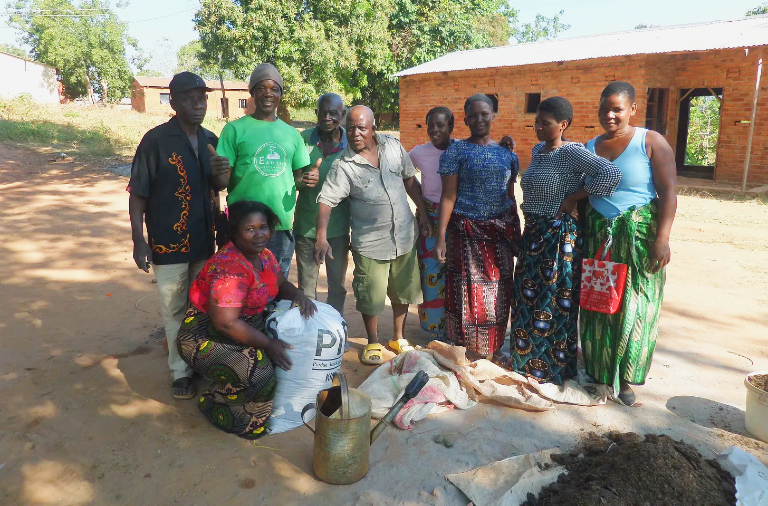
Agroecology helps to reverse patterns of neocolonialism by reintroducing indigenous specialised knowledges, revaluing traditional farming practices, and restoring dignity in farm work through championing community participation. At EARTH, the team of local experts in agroecology are helping to reintroduce once-prevalent practices of intercropping and polyculture to Northern Malawi, while re-incorporating indigenous legumes, vegetables, and cereals into local diets and growing patterns for nutritional diversity and climate resiliency.
Agroecology has begun to gain traction in the mainstream as a viable alternative paradigm to the ‘corporate food regime’, including in the FAO and the IPCC. Growing grassroots organisations across Malawi and the continent, like EARTH, along with regional and international civil society groups, are testaments to the restorative promise of agroecology. Corporate groups have launched backlash against the tide with mounting public relations and marketing campaigns to discredit, and even defame, the agroecology movement, while dressing up their own narratives in ‘nice sounding language’, as Belay conveys. Mayet, however, sees this as “evidence of desperation”, while she affirms that the solutions, as an increasing number of farmers and researchers identify, “lie with people on the continent and the world that are building systems grounded in justice, and human and ecological wellbeing.”
Missed Part One? Read it here.