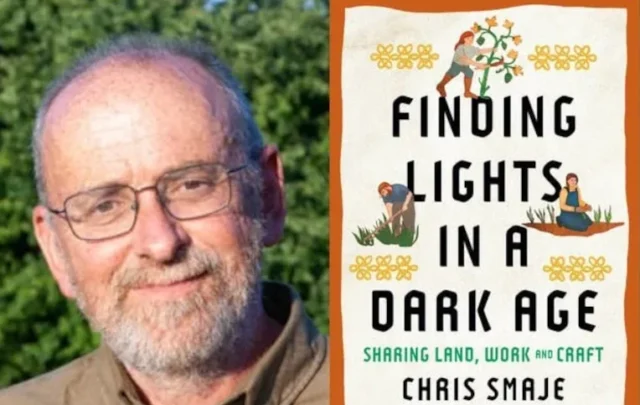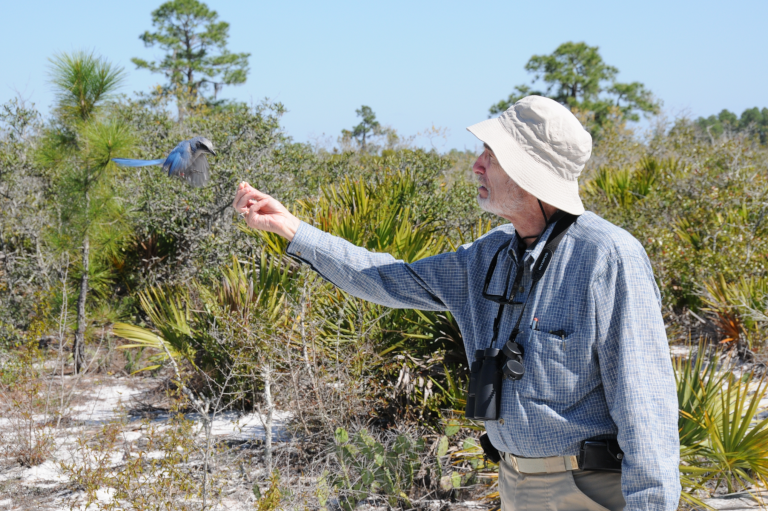
I was a teenager when I first heard and saw Paul Ehrlich (who died on March 13th at the age of 93) when he was interviewed on national television by Johnny Carson. Ehrlich’s message that overpopulation poses an existential crisis to humanity made a deep impression on me. I then read his best-selling book, The Population Bomb (1968), which shaped the trajectory of my life (my wife and I decided not to reproduce) and career (I became an environmental writer working for a nonprofit). In more recent years it was an honor and pleasure to meet Paul and his wife Anne, and to find them both still exploring, still finding ways to make a difference, and still holding the big picture in mind. Paul’s contribution to our collective understanding was and is enormous.
Most of the obituaries in prominent publications dwell on what Ehrlich seemingly got wrong. In his 1968 book he wrote that, if then-current trends continued, hundreds of millions would die of starvation in the 1980s. There are several reasons why this prediction, thankfully, didn’t come to pass, and part of the reason is the influence that Paul and Anne and others had among many different groups, including: environmental activists who made population and women’s empowerment their issue (and created educational organizations like Zero Population Growth); policy makers who funded programs to make birth control widely accessible; and among conscientious young people who decided to have fewer or no children. In the 1960s, the world fertility rate had hit its all-time high of 5 children per woman. If that rate hadn’t halved during the next few decades, today we would have 12 billion people in the world instead of 8.3 billion, and humanity would have hit environmental and resource limits sooner and harder than is now likely to happen later this century. Thank you, Paul.
Overpopulation has become a forbidden topic even in some environmentalist circles. Concern over the impacts of human population is sometimes equated with racism—white people telling brown people to have fewer babies—but that criticism ignores home-grown population activists in high-fertility countries who recognize that fast population growth is almost a guarantee of continued poverty and environmental degradation (see, for example, Population Media Center). Unfortunately, starting in the 1980s some anti-immigration advocates and white supremacists did also pick up overpopulation as an issue, twisting it to serve their own goals.
I won’t recount the personal allegations of racism against Paul and his repeated repudiations of them, as they are easily available online. It should suffice to say that Paul made it abundantly clear, especially over the last couple of decades, that overconsumption and inequity are serious components of humanity’s sustainability problem, noting in a co-authored 2022 paper that birth rates needed to be reduced “especially among the overconsuming wealthy and middle classes.”
Today fertility rates in many countries have fallen to below the replacement rate. Mainstream economists are horrified, because population growth is one of the factors leading to economic growth. Who will pay to support an aging society if there are fewer young workers?
What those economists miss, however, is that the world is already seriously overpopulated with 8.3 billion humans. Climate change, resource depletion, biodiversity and habitat loss, and pollution are driving us toward a cliff, and rising population makes the foot on the accelerator heavier. Yes, we could do things differently (use different energy sources, do agriculture more ecologically, recycle more, and so on)—but those solutions have been around for decades and the crises threatening us are, on the whole, still worsening. And yes, we all know the only way to reduce carbon emissions is to burn less coal, oil, and gas—but the economy still depends on those fuels, so just burning less would be an economic burden. However, if we have fewer people rather than more, then on a per capita basis that burden is lessened.
We should welcome a shrinking population. Just two centuries ago, prior to the fossil fuel revolution, there were only one billion humans. For the human population to be sustainable on our finite planet, our population may eventually need to revert to roughly that level.
Paul understood all of this largely because he was a biologist. He was able to tune out political noise and observe humanity as one species among many, subject to the same basic needs and limits as the rest.
While The Population Bomb is the book with which Ehrlich is most closely identified, he wrote dozens of others, including important and fascinating works on birds, human ecology, and conservation biology. He was as insightful as he was prolific, and his work deserves continued attention. We need more like him. But he was a man of his time, and the time for warnings is drawing to a close as the age of consequences dawns.