Iran – National Security Tested by Water Scarcity
Introduction: A Strategic Warning
In November 2025, Iranian President Massoud Pezeshkian issued a warning whose significance extends far beyond usual diplomatic agendas: Tehran, a metropolis of 15 million people, may have to consider rationing measures, followed by a partial evacuation of its population. The cause is neither an external military threat nor an insurrection, but a more structural factor that will ultimately prove more decisive for the country’s stability: the depletion of its water resources.
This statement, far from being a specialist’s hypothesis, acknowledged a measurable reality: the reservoirs supplying the capital stand at 12% of their capacity. Groundwater tables, subjected to intensive pumping for decades, are subsiding by up to 30 centimeters per year in some urban areas—a geotechnical phenomenon with direct consequences for infrastructure integrity and population safety.
The summer of 2024 had already sounded the alarm: daily water cuts, temperatures exceeding 40°C, millions of Iranians simultaneously facing heat and drought. A few months before his death in May 2024, President Ebrahim Raïssi had issued a desperate appeal, promising a one-million-dollar reward to anyone proposing a viable solution to save Tehran from thirst. This offer, which remained unanswered, illustrated the inadequacy of conventional approaches in the face of such a challenge.
This article offers a systemic analysis of Iran’s water situation, situating it within its historical, technical, and geopolitical context. It examines the internal and external factors that have contributed to this situation, compares them with strategies deployed by other regional actors facing similar constraints, and draws lessons for the long-term stability of arid zones.
Part I: Iran’s Water Crisis – Structural Origins and Manifestations
A Millennial Hydraulic Heritage Under Pressure
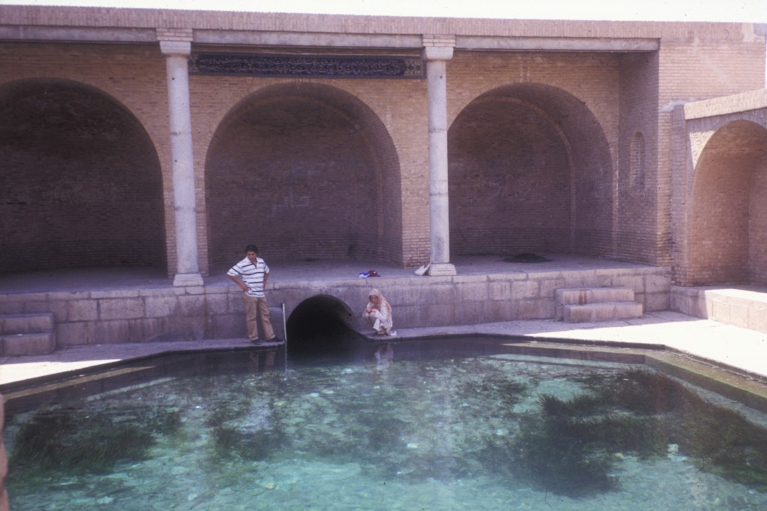
Iran, the birthplace of qanats—underground tunnels over 2,500 years old enabling sustainable gravity-fed water capture—possessed a technical heritage adapted to its arid environment. The country still has approximately 70,000 of these structures. Their operation, which only mobilizes water naturally renewed by precipitation, earned them the description of “eternal springs.”
However, available data indicate a profound transformation in this relationship with the resource. According to estimates, about half of these structures have seen their flow diminish or dry up due to the widespread decline of water tables. As the director of the Kerman Qanat Center notes: “History will not forgive us what deep wells have done to our qanats.”
Development Choices and Hydrological Consequences
The development policy initiated in the 1950s favored large-scale infrastructure. The dam construction program, which equipped the country with over 600 structures—often on rivers with modest flow—responded to agricultural modernization and food security objectives. Simultaneously, more than one million wells equipped with powerful pumps were drilled.
The cumulative effects of these choices are now quantifiable. Over twenty years, Iran has lost more than 210 cubic kilometers of water stored in its aquifers. A recent study identified that 32 of the world’s 50 most overexploited aquifers are located in Iran. Agriculture, which accounts for approximately 90% of total consumption, has seen its withdrawals increase while extraction point yields have decreased: the number of wells has doubled since 2000, but extracted volumes have dropped by 18%.
Physical and Territorial Impacts
Aquifer compaction, a consequence of overexploitation, leads to land subsidence that now affects more than 3.5% of the national territory. Historic cities such as Isfahan and Yazd are recording cracks in their buildings. Hydrologists warn that this loss of storage capacity is largely irreversible: “Once significant subsidence occurs, much of the storage capacity is permanently lost.”
Meanwhile, the country’s emblematic ecosystems are undergoing major transformations. Lake Urmia has lost more than 90% of its surface area. The Hamoun wetland has transformed into salt marshes. The Zayandeh Rud, Isfahan’s historic river, regularly runs dry.
Part II: Comparative Strategies for Managing Scarcity
The Israeli Case: Technology and Planning
For comparative purposes, examining the water policies implemented by Israel offers an instructive contrast. Facing similar arid constraints, this state has developed a strategy articulated around several axes:
- Maximum resource valorization: Over 90% of wastewater is treated and reused for agriculture, constituting one of the highest recycling rates in the world.
- Desalination development: Five major facilities now provide nearly 75% of drinking water, using reverse osmosis technologies whose industrial applications were locally perfected.
- Agricultural efficiency: Over 90% of cultivated land is equipped with drip irrigation systems, a technology industrialized locally as early as the 1960s.
This technological mastery, the fruit of constant investment and rigorous planning, has transformed a natural constraint into a comparative advantage, with the sector exporting over two billion dollars worth of water technologies annually.
Geopolitical Dimensions of the Resource
Water management in this region cannot be dissociated from its territorial context. As early as 1919, the founding documents of the Zionist movement integrated water resource control into the definition of the “economic frontiers” necessary for the state project. The Golan Heights, conquered in 1967 and annexed in 1981, reportedly provides between one-quarter and one-third of Israel’s water supply according to various estimates.
On the Lebanese border, the Wazzani and Hasbani rivers, tributaries of the Jordan, have been the subject of recurring diplomatic incidents. Official Israeli statements have evoked the idea of a buffer zone extending to the Litani, which would de facto place this resource under Israeli influence.
The 1994 Jordanian peace treaty contained substantial water provisions, committing Israel to annually supply 50 to 75 million cubic meters of water to the Hashemite Kingdom. In 2025, threats to suspend these deliveries were formulated by Israeli officials, illustrating water’s potential as an instrument of diplomatic pressure.
In the West Bank, Military Order No. 92 of 1967 declared that “all waters in the region are public property,” placing resources under the control of the Israeli authority. Consumption disparities are documented: according to data from B’Tselem, an Israeli human rights organization, average per capita consumption in Israeli settlements is approximately 247 liters per day, while the Palestinian population has less than 80 liters daily, a figure that can fall below 30 liters in some rural areas.
Part III: Strategic Lessons
Hydrology and Political Stability
Observation of recent regional dynamics suggests a correlation between water stress and instability. In the years preceding the Syrian conflict, precipitation had decreased by approximately 25%, leading to crop failure and livestock losses. The resulting massive rural migrations contributed to social tensions and the country’s political fragility.
This mechanism is not unique to Syria. Across the Middle East and North Africa, water resource scarcity acts as a fragility multiplier: it accentuates economic pressures, fuels rural exodus, and can exacerbate existing tensions.
Limits of Non-Structural Solutions
One observation stands out: political transitions, whatever they may be, have no mechanical effect on hydrological cycles. A regime change does not reverse land subsidence, does not desalinize agricultural land, does not increase precipitation. A territory’s sustainable security depends less on its political label than on its capacity to retain, infiltrate, and regenerate its water resources.
Tensions on transboundary basins illustrate this dimension. The commissioning of the Pashdan Dam by Afghanistan in August 2025 enables that country to control up to 80% of the Harirud’s flow, directly threatening the water supply of Mashhad, Iran’s second-largest city.
Part IV: Elements for a Water Resilience Strategy
Reorienting Investment Priorities
Hydrologists recommend a significant reallocation of funding, hitherto concentrated on large dams and inter-basin transfers, toward smaller-scale solutions with higher hydrological returns. Artificial aquifer recharge using floodwaters—a technique whose effectiveness was demonstrated by Iranian researchers as early as the 1990s—could redirect up to 80% of currently lost runoff water toward aquifers.
Low-Cost, High-Autonomy Technical Solutions
A range of techniques, inspired by agroecology and ancestral know-how, can be deployed without external technological dependence:
- Half-moons: Crescent-shaped excavations two to four meters in diameter on sloping terrain, capturing runoff and enabling planting.
- Stone lines: Simple stone alignments perpendicular to the slope, slowing runoff and promoting infiltration.
- Small earthen dams: Structures a few meters high in wadi beds, retaining floods and recharging alluvial aquifers.
- Strategic reforestation: Planting local species adapted to aridity (wild pistachio, almond, juniper) on deforested foothills.
- Fog harvesting: Installing nets in mountainous areas where fog is frequent, a technique proven in Morocco, Chile, and Peru.
These solutions offer rapid implementation (visible results within two to four years), low cost, and rural job creation.
Wastewater Reuse Potential
The untapped potential of wastewater is estimated at 1.2 to 2 billion cubic meters annually. Technical solutions exist, from artificial wetlands to phytoremediation, including controlled aquifer recharge after appropriate treatment. Their major strategic advantage is their low import dependence and resilience to external constraints.
Conclusion
Analysis of Iran’s water situation leads to several structuring observations.
First, the current crisis results from the interaction of multiple factors: development choices inherited from several decades, resource governance modalities, and external constraints that have limited access to technology and international cooperation.
Second, comparison with other regional strategies shows that scarcity can be approached as a technical and planning challenge, but also as a geopolitical lever, with differentiated implications depending on territorial contexts.
Third, solutions exist and are partially accessible autonomously. Their implementation requires a reorientation of investment priorities and recognition of water management as a central national security issue.
Fourth, the region’s recent history reminds us that environmental crises can act as accelerators of political and social fragility. Ignoring this dimension means risking the transformation of water tensions into broader instability factors.
Beyond the Iranian case, these lessons concern all arid zone countries, from the Maghreb to the Mashreq, from the Sahel to the Gulf. The preservation of ancestral hydraulic heritage, the generalization of water-saving techniques, rainwater harvesting, soil erosion control, and wastewater recycling development are not merely sectoral policies among others. They constitute the pillars of sustainable sovereignty in the face of the century’s climatic and geopolitical challenges.
Water, through its progressive scarcity, is redrawing the map of vulnerabilities and powers. Countries that make its management a factor of internal cohesion and regional cooperation will be better equipped for the decades to come.