Recorded on: Dec 4, 2025
With grocery prices skyrocketing and supply chain disruptions becoming more frequent, the average person has more and more incentive to get involved in growing their own food – but how does one even get started? For most people, the time, money, knowledge, and land remain out of reach in order to learn even the basics of agriculture. What kind of options are available for individuals who want to reclaim their food sovereignty – and subsequently become more connected with the Earth and like-minded people?
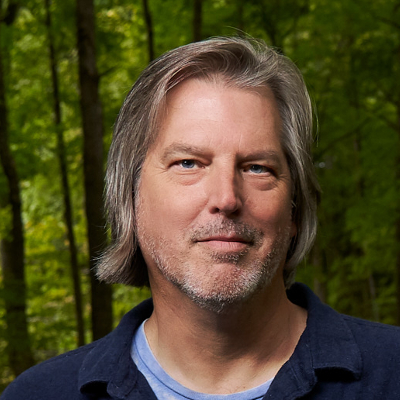
In this episode, Nate is joined by biologist and farmer Jason Bradford, to discuss his ‘Farming Club,’ which offers hands-on learning for ecologically based agriculture, where members also get to take home food and build a relationship with the land. Jason explains why industrial agriculture, optimized for financial returns and machine efficiency while ignoring ecological costs, makes it almost impossible to become a successful small-scale farmer in today’s economy. The Farming Club’s model provides a way for people to maintain their jobs while building the knowledge, skills, and community connections needed for a lower-throughput future.
How could reinvigorating farming culture provide an avenue to real skills and purpose to the next generation, especially for young men? How could the farming club model be replicated across the country, sparking small rural movements everywhere? And how could thousands of ideas and initiatives like these act as safety nets for individuals and communities as we transition to a more simplified society?
About Jason Bradford
Jason co-manages a Community Supported Agriculture program with the Organic Growers Club at Oregon State University, where he practices land stewardship methods and cultivates community rooted in ecologically-based agricultural practices. Prior to his switch to agriculture, he was a research biologist studying evolution, ecology, and global change.
Additionally, Jason has been affiliated with the Post Carbon Institute since 2004, first as a Fellow and then as Board President. He is currently a co-host of the Crazy Town podcast, as well as a writer for Resilience.org. Additionally, in 2019, he authored The Future is Rural: Food System Adaptations to the Great Simplification.
Show Notes & Links to Learn More
The TGS team puts together these brief references and show notes for the learning and convenience of our listeners. However, most of the points made in episodes hold more nuance than one link can address, and we encourage you to dig deeper into any of these topics and come to your own informed conclusions.
00:00 – Jason Bradford (TGS #24, Reality Roundtable #6), Corvallis Farming Club
- Author of The Future is Rural: Food System Adaptations to the Great Simplification
- Writer at Reslience.org
- Co-host of Post Carbon Institute’s Crazy Town Podcast
Other Resources:
- Soil Quality Guide, Soil Triangle (More info)
- Leasing to small farmers as a landowner
- Agroecology academic programs
03:55 – Outsourcing of domestic work, Perceptions and Misperceptions of rural America
07:05 – Productive soil of Willamette Valley
07:30 – Missoula floods and Glacial erratics
08:30 – Columbia Plateau, Channeled Scablands
08:55 – U.S. is leading in oil and gas production (doesn’t have the most reserves)*, Oil reserve origins, History of the Permian Basin
09:18 – Upper midwest U.S. soil is very valuable, Topsoil degradation and recovery
09:45 – Jason’s Farming Club
10:40 – The Great Simplification
11:10 – Leasing to small farmers as a landowner
13:03 – Price does not equal value
13:13 – Labor costs small vs. large farms, Financing farm equipment, Industrial agriculture
14:23 – Tennis players: Carlos Alcaraz, Roger Federer
17:10 – Breeding plant varieties for longer shelf life
18:51 – U.S. agriculture is dominated by large companies
20:40 – Cover crops
21:00 – Environmental externalities ignored (More info)
23:10 – Windpumps
24:10 – Land Back, Back-to-the-land, Importance of relationship to the land
27:40 – Chris Smaje, A Small Farm Future, TGS Reality Roundtable
28:20 – Agroecology, Agroforestry, Ecological Restoration
29:40 – Dry farming, Permaculture
30:50 – Riparan zone
31:20 – Shelterbelt, Silvopasture, Wind fetch
35:10 – Xerces Society, NRCS USDA, CREP, EQIP
36:05 – Berkeley Food Institute on agroecology, Tomato pests study
36:55 – Current number of farms globally and in the U.S.
37:20 – 5.4%* of U.S. population are just employed in the energy sector,
1.2% of U.S. are employed in the direct on-farm* agricultural sector, (General food sector is 10.4%), More than 55% of Indians farm for a living
37:55 – Jean-Marc Jancovici, TGS #175 & TGS #84, Sobriété
38:57 – Cargo cult
39:20 – Robin Wall Kimmerer, Indigeneity, Food sovereignty, Gilgamesh, Centralization, Roman land reform
41:00 – Dark triad, Reality Roundtable #19, Frankly #108 on Dark Triad
43:35 – UC Santa Cruz agroecology, UC Davis, Land-grant university
44:20 – Kenneth Mulder farming with oxen
45:07 – Agroecology academic programs
45:15 – Horticulture
48:20 – K-shaped economy
53:00 – Study: Professor who spends a small amount of time per year to grow his own food
54:30 – Average cost of food in the U.S., Median wage in the U.S.
55:40 – Time studies of peasant communities
56:40 – Breakdown of the food dollar
59:30 – 501(c)(7)
1:08:30 – Coppicing, Ash Borer-affected trees and coppicing
1:15:10 – Cost of living continuing to increase, Price tracker for basic needs over time
1:19:15 – Phase shifts, Tipping points
1:19:40 – AI Gods, AI growth, $3 trillion investment in data centers
1:21:50 – AMOC slow down