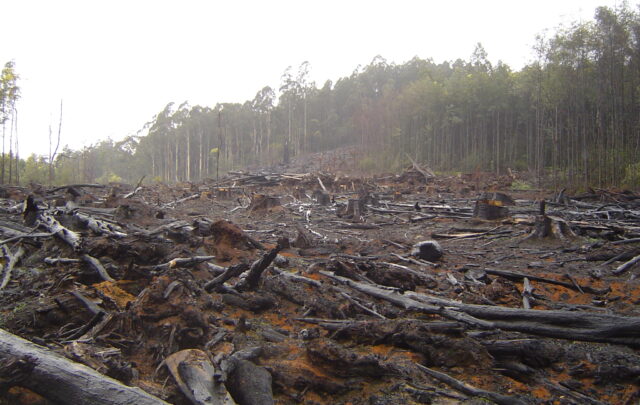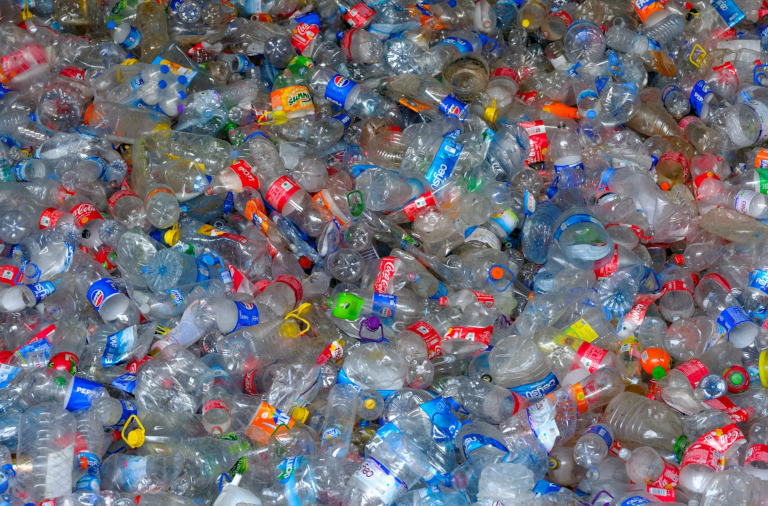
The global annual production of plastics rose to 400 million metric tons in 2022 and is projected to double by 2050 (a metric ton, or Mt, is 1,000 kilograms or about 2,200 pounds). As of 2015 some 6,300 metric tons (roughly 13.8 million pounds) of plastic had become waste. About 9% of it was recycled, 12% incinerated, and 79% ended up in landfills or the natural environment — rates that haven’t gotten much better in the ensuing decade. Current trends suggest that by 2050, we will put roughly 12,000 Mt of plastic waste in landfills or the environment.
Clearly the problem of plastic pollution in land and marine environments isn’t going away. This series looks at some approaches to dealing with it, such as efforts to replace disposable plastic items with reusables.
Order take-out and most likely your meal comes in plastic containers inside plastic bags with a set of plastic utensils — each item designed to be used just once. That beer you grab at a concert or basketball game is served in a plastic cup meant to be thrown away when empty. And at most stores, your purchases are tossed into a single-use plastic bag.
Replacing these disposable items with reusable ones could help address plastic pollution by reducing the amount of waste generated.
But what are the best ways to accomplish that? Should the responsibility — or the opportunity — to use less plastic come from individuals, large suppliers, or the government?
To help settle these questions, we looked at some organizations and businesses working to cut back on our addiction to disposable plastic.
Retooling Large and Small Systems
Events like concerts, festivals, football games, and conventions use tens of millions of disposable cups. An average-sized stadium will go through 5.4 million of them every year, according to Upstream, a nongovernmental organization supporting reuse efforts.
To break this endless chain of disposability, venues and events could turn to companies that deliver, pick up, wash, and return reusables. Most of these are made from polypropylene, a nontoxic plastic polymer that is tough, lightweight, heat-resistant, and does not absorb water.
Trial runs of reusable cups at major venues have been promising. A four-day After two 2024 concerts at the Los Angeles Crypto.com Arena kept 23,000 single-use cups out of the trash, the venue made the switch for good, r.World reports. As of Dec. 31, 2025, the company’s reusable service had diverted more than 23 million single-use items from landfills.

Photo courtesy r.World
Other sports venues, events, and teams currently working to switch to reuseable cups include the Los Angeles Coliseum, Red Rocks Amphitheater, Kansas City Chiefs and Arrowhead Stadium, Portland Trail Blazers, and Charlotte Hornets.
Another recent initiative — Protect Where We Play, launched by the Ocean Conservancy and Green Operations & Advanced Leadership — has provided reusables for several events, including two June 2025 Coldplay concerts in Las Vegas; a September Lumineers performance in Savannah, Georgia; and two October Billie Eilish concerts in Belmont Park, New York. The program plans new 2026 tour stops and hopes to replace a total of 1 million single-use cups with reusables managed by Bold Reuse.
Jenna DiPaolo, chief brand and communications officer for Ocean Conservancy, says the effort was inspired by data showing that the easiest initial action people can take is one related to the ocean (where much plastic waste ends up), plus evidence that many people don’t take action because no one they trust has asked them to do something specific.

A volunteer with Ocean Conservancy’s International Coastal Cleanup removes a plastic bag from Venice Beach in Los Angeles, California. Photo: Val Vega for Ocean Conservancy
“Protect Where We Play leverages the people that Americans trust most — athletes and entertainers — and shows them how easy it can be to take an action,” she says. A key to the effort is showing venues the value of switching to reusables.
“We’re banking on folks to make the right decision when we provide the data,” DiPaolo says.
Bold Reuse is analyzing how many times the products can be reused, says marketing manager Mya Manibusan (existing assessments suggest 300). She said the company had kept 6 million single-use items out of landfills before the end of 2025.
Cups are just part of the issue, though. Every year people in the United States use 1 trillion disposable food service products, Upstream reports, including cups, containers, bags, and utensils. The organization estimates that 840 billion of these items could be replaced by reuse services.
A reusable dishware program called Re:Dish — which serves public school and company cafeterias and events across communities in New York, Boston, and Philadelphia — has kept about 7 million products out of landfills to date.
“Fundamentally, we are an industrial washing operation that also has a line of reusable dishware,” says CEO and founder Caroline Vanderlip. “At the institutional level, most companies, schools, and other operations don’t have the labor, resources, or space to make reusable work. We’re an outsourced solution that provides the full gamut or just whatever pieces you need.”
At end of life, items are taken to a materials recovery facility to be packaged and resold.
“Our mantra is ‘never landfill’, which is really important to us,” Vanderlip says. “We don’t have enough landfill space in this country — and more importantly, plastic takes centuries to deteriorate.”
Switching to reusables at a more local level can make a difference, too. Brothers Kevin and Harrison Kay founded containers for food delivery services in the Washington, DC area.
During the COVID pandemic, they ordered take out a lot (as a lot of us did) and became frustrated with the volume of single-use containers.
“We started brainstorming a solution that would not only work in our lives but be scalable and help solve the problem for other people,” Kevin says. The idea of a shared network of reusable containers was born.
Restaurants that buy the reusable containers are listed on To Go Green’s online ordering platform. When individuals order through the platform, the restaurant places the order in those reusable containers, which customers return for washing along with the restaurant’s in-house dishes.
“We’ve been in business about a year and have 17 restaurant partners and around 700 reusable container uses so far,” Kevin says. “The biggest challenge now is visibility and customer awareness, since we are relatively new. We’ve had tremendous positive feedback from customers, but a lot of people don’t know about us yet.”
Increasing awareness is their biggest challenge.
“Ordering takeout and delivery has become very popular but spreading the word that reusable containers are an option is a hurdle,” Kevin says. The brothers are working on integrating with a third-party delivery app and other ordering channels to increase their reach.
Returning the containers can be cumbersome, Harrison says, so they offer an at-home return service integrated with Uber Direct.
“On a broader note, there are a lot of challenges to scaling up, but if big players in the food delivery field buy into these kinds of services, they can become much more mainstream. We think reuse has to be the future. The current culture of throwing things away is not sustainable.”
Making Reuse the Law
Globally people use 5 trillion plastic bags a year, or 160,000 per second. Americans use on average 365 per person per year. Most marine litter is plastic bags (an estimated 300 million end up in the Atlantic Ocean alone annually) and they cause a lot of damage, killing marine life through ingestion or entanglement, releasing toxic chemicals into the water, and negatively affecting tourism.
Cities, states, and countries have started to regulate their way out of the single-use plastic bag problem. Complete bans prohibit any sort of single-use plastic bag at store checkouts, while partial bans limit bags under a certain millimeter in thickness but allow thicker bags that hold up for multiple uses. Fee policies require customers to pay some amount for a bag, typically 5 to 25 cents.
Research shows that bans work. One study analyzed crowdsourced data from more than 45,067 U.S. shoreline cleanups and 611 local and state-level plastic bag regulations enacted between 2017 and 2023, finding that regulations reduced the proportion of plastic bags by 25 to 47%.
“What we see in places with policies is a decrease in plastic bags as a share of total items collected,” says Anna Papp, co-author and post-doctoral associate at MIT. “It’s important to emphasize that it is a relative decrease. Overall, bags are increasing in all areas. The policies are just slowing down the problem, not eliminating it. And we don’t find that these policies lead to reduction in other plastic items.”
Future laws and regulations could help address other single-use items.
Taking Individual Action
Each of us individually can help reduce single-use plastic waste. For example, we can advocate for adoption of reusable services in the places we work and play and take advantage of services like To Go Green where available.
“If you live in a city with a reuse provider, you can encourage more stadiums, venues, festivals to make the switch,” Manibusan says.
Individuals can join Protect Where We Play’s Team Ocean and receive information about scientifically vetted actions to take.
In addition, with research showing that people underestimate how much plastic they throw away, everyone can simply pay more attention to how much single-use plastic waste we generate.
One study found that households in the UK on average tossed 23 plastic items per person per week, considerably more than 45% of participants expected. The researchers found a direct link between how often people shopped online and how surprised they were at their waste levels. They suggest that online retailers clearly show packaging impacts at the point of purchase and provide reuse or refill alternatives.
Taking an action is not as hard as people think, says Manibusan, and every reuse prevents waste.
“Single use was built for convenience,” she says. “Reuse is built for the future.”