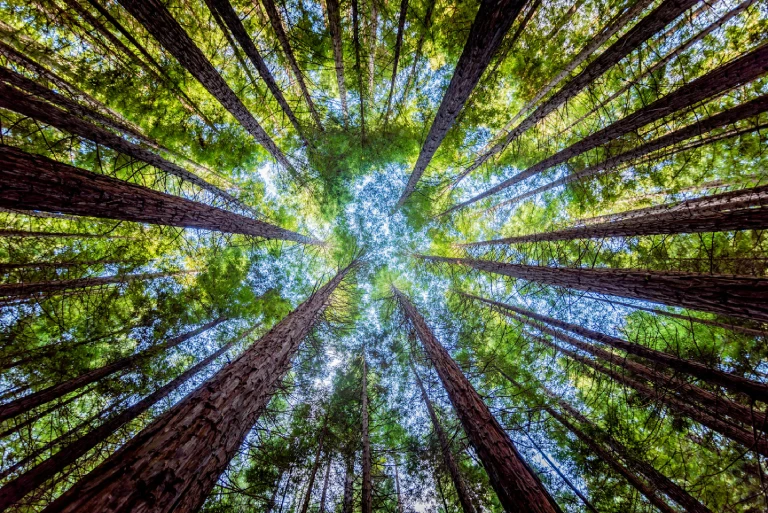
Forests are much more than a collection of trees—they’re complex, living systems that communicate, cooperate, and nurture one another. In a natural, diverse forest, trees are so well connected that they behave as a single organism in many ways. Indigenous communities have understood this deep interconnection for generations and in recent decades, science is able to explain how these fascinating systems work.
Dr. Nalini Nadkarni, forest ecologist, and one of National Geographic’s ten Explorers at Large, and Dr. Teresa Ryan, a Tsimshian scientist, Indigenous knowledge practitioner, and fisheries/aquatic ecologist, will take us on a journey from root to treetop.
Together we’ll explore questions like:
- How do trees share crucial information and resources?
- What happens in the treetops when trees share a robust connection at the root?
- What lessons have Indigenous communities traditionally gleaned from forests that we can learn today?
- Why is it essential for all of us to see forests in a new light?
- How can we be better stewards of our own community forests?
This event will give you a deeper understanding of the wisdom of forests, and what they can teach us about community resilience. You’ll also come away with a clear path for protecting and caring for your own local forests. We’ll share resources that can help you support community forest initiatives, join stewardship or citizen science efforts, and utilize existing tree-mapping tools to better understand the forests where you live.
About the panelists
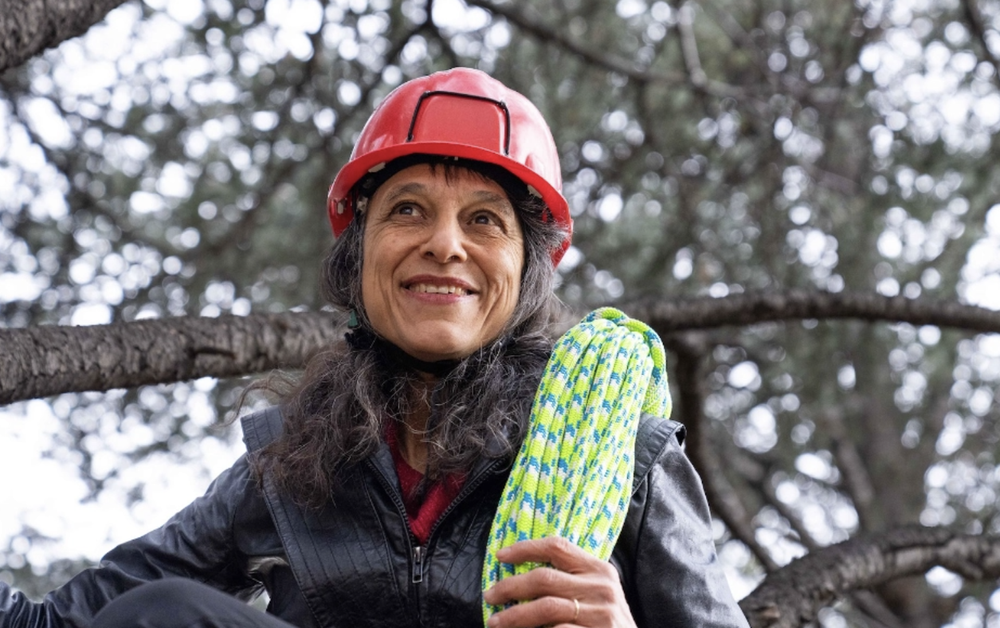
Dr. Nalini Nadkarni is a forest ecologist and Professor Emeritus in the Department of Biology at the University of Utah. Since 1984, she has carried out research on the biota that live in rainforest canopies, supported by the National Science Foundation and the National Geographic Society. She has written 150 scientific papers and three scholarly books. In 2024, she became a Senior Fellow in Residence at the Sorenson Impact Institute to engage sustainable support for programs with positive environmental impacts. She also interweaves her rainforest research with innovative public engagement. She engages those who do not or cannot gain access to science education with the diverse values of trees to broaden awareness for forest conservation around the world. Her programs include faith-based groups, artists, corporations, and people who are incarcerated in state prisons, county jails, and juvenile detention centers.
Nadkarni created the approach of ‘tapestry thinking,’ bringing together seemingly disconnected ways of knowing and tailoring the qualities of nature through the values of others to amplify the need to protect it. Her work has been featured in journals ranging from Science to Playboy Magazine, and has been featured on RadioLab, Science Friday, and Wait Wait, Don’t Tell Me. Her awards include a Guggenheim Fellowship, the AAAS Award for Public Engagement, the William Julius Wilson Award for Advancement of Social Justice, the National Science Foundation Public Service Award, the Archie Carr Medal for Conservation, and the Rachel Carson Award for Conservation. In 2024, the National Geographic Society named Nadkarni as one of their ten Explorers at Large.
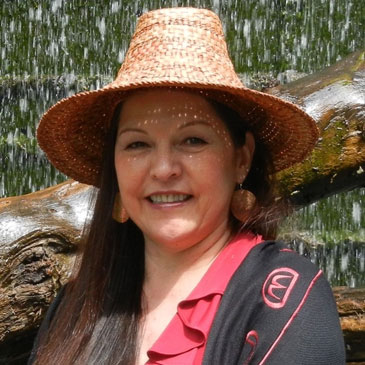
Dr. Teresa Ryan (Sm’hayetsk) is a Tsimshian scientist, Indigenous knowledge practitioner, and fisheries/aquatic ecologist whose work bridges Indigenous knowledge systems and Western science to advance forest and watershed stewardship. A lecturer in the Faculty of Forestry & Environmental Stewardship at the University of British Columbia, she teaches courses on complex adaptive systems, ecological sustainability, and Indigenous forest and fisheries stewardship.
Dr. Ryan serves as First Nations Liaison to the Mother Tree Project & Program, where her expertise is central to guiding the project’s values, partnerships, and research directions. Dr. Suzanne Simard depends on her insight to ensure the work remains culturally grounded, and aligned with Indigenous values and protocols.
She played a key role in launching the Mother Tree Project & Program, one of the world’s largest forestry experiments, and is the visionary behind the Salmon Forest Project, which explores the ecological and cultural relationships between salmon, forests, and Indigenous Peoples.
Dr. Ryan holds a PhD in Resource Management and Environmental Studies from UBC, a Master’s in Resource Management from Central Washington University, and a BSc in Fisheries and Aquatic Ecology. She has served as a national advisor on species-at-risk legislation, Indigenous knowledge policy, and ecological restoration strategies. Known for her powerful storytelling and deep relational approach to knowledge, she brings clarity to complex systems and fosters meaningful dialogue.
Event Registration
After you register for this event you will receive an email from Zoom with instructions for joining.
A recording of the event will be posted on this page for attendees who add a donation to their registration or who make a post-event donation.