The Shared Breath
Every living thing takes part in the same quiet exchange. With each breath, we become part of the atmosphere shaped by forests, oceans, and the unseen work of countless microorganisms. About 21 percent of the air we breathe is oxygen, produced continuously by photosynthesis, with half coming from land plants and the other half from oceanic phytoplankton (Field et al., 1998; Sekercioglu, 2010). We seldom think that the air entering our lungs might have been released just moments earlier by a kelp forest, a patch of moss, or a distant rainforest canopy.
The same molecules of oxygen and carbon we breathe today have cycled through ancient seas, primordial ferns, and the lungs of those long gone. In this way, breath connects generations —past, present, and future —in a continuous exchange. To breathe is to inherit, participate, and prepare the air for those yet to come. It is the most basic act of interdependence, with each inhale a receipt of life and each exhale a contribution to it. In this simple rhythm lies the measure of enough: we take only what we need, then return what sustains others. The atmosphere is both personal and planetary, a shared medium through which all life endures.
The Covenant of Breath
Breathing is more than a biological process; it is a relationship and covenant among all living things. In the natural balance between respiration and photosynthesis, every species helps maintain the fragile balance of gases that make Earth livable. The ratio of oxygen to carbon dioxide, kept steady by this exchange, forms an ancient agreement of reciprocity (Lovelock & Margulis, 1974).
Every inhale assumes trust: that the air remains clean, available, and balanced. Every exhale fulfills an obligation: returning carbon to the cycle in forms that plants or oceans can reabsorb. Justice lies in maintaining this rhythm without domination or harm. When balance is respected, life continues without exceeding what the system can replace.
The Breach
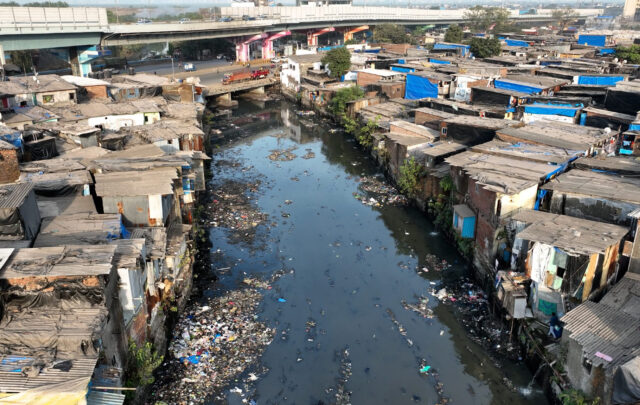
When the covenant is broken, breath becomes labor. The World Health Organization (2023) estimates that seven million people die prematurely each year from air pollution, most in low-income nations that emit far less than industrialized economies. These deaths are not random; they are symptoms of atmospheric inequality. The poorest communities breathe the most polluted air, live near refineries or highways, and bear the burden of decisions made far beyond their borders (Fuller et al., 2022).
Meanwhile, the atmosphere shows signs of exhaustion. Carbon dioxide levels now exceed 420 parts per million (and still rising) – the highest in at least three million years (NOAA, 2023). Wildfires, worsened by climate change, release large amounts of carbon and particulate matter, creating feedback loops that darken skies and harm lungs across continents. The Amazon, once a net carbon sink, now emits more carbon than it absorbs due to deforestation and drought (Gatti et al., 2021). These breaches make breathing unequal, turning what was once the most basic act of life into a symbol of injustice.
Justice in Breath
Justice, in its purest form, is not a human invention but a condition that allows life to continue in right relationship. The breath makes this visible. When the cycle of giving and receiving air remains intact, all beings benefit from a system that operates without ownership. Oxygen is never privatized; it exists in constant circulation.
To breathe freely is to be part of a planetary balance that has developed over billions of years. The atmosphere responds immediately to excess carbon, lack of vegetation, and seeks correction through weather patterns, ocean absorption, and photosynthetic feedback (IPCC, 2021). Justice is reflected in these natural responses: a dynamic tension that restores balance rather than imposes order. “Enough,” in this context, is the space where every being can draw breath and still leave air for others. When that space is violated, the air itself becomes a witness to moral failure.
The Measure of Enough
Enough is a moral boundary as much as an ecological one. Modern economies act as if the planet can endlessly breathe by recklessly burning, extracting, and emitting beyond its ability to recover. Yet the biosphere depends on carefully balanced exchange. The global carbon budget, estimated at about 1,100 gigatons of CO₂ to have a 50% chance of staying below 1.5 °C of warming, is shrinking quickly (IPCC, 2021). Each ton emitted increases the tension between the atmosphere and life.
Imagining an economy that breathes like an ecosystem reshapes the idea of value itself. In such a system, success is not measured by growth but by respiration, whether the world can still absorb what we release. The concept of enough is relational, not just in numbers. It exists when the cycle continues without breaking down, where every breath connects instead of depletes. This is justice as feedback, not a rule: a living balance that calls for restraint, humility, and reciprocity.
Ha
Long before science measured oxygen or carbon, Māori cosmology recognized the air as “ha,” or the breath of life. The theologian Rev. Māori Marsden described ha as the vital essence that flows through all beings, linking physical existence to the spiritual (Marsden, 2003). To breathe, then, is to share in that unity and to acknowledge that life and atmosphere are one living system.
Justice persists within our shared breath. It simply asks that we maintain the right balance—neither taking more air than can be given nor withholding it from others. Every inhale signifies participation, every exhale, accountability. Maybe this is the true measure of enough: letting the breath of life circulate freely through all that exists.
References
Field, C. B., Behrenfeld, M. J., Randerson, J. T., & Falkowski, P. (1998). Primary production of the biosphere: Integrating terrestrial and oceanic components. Science, 281(5374), 237–240.
Fuller, R., Landrigan, P. J., Balakrishnan, K., Bathan, G., Bose-O’Reilly, S., Brauer, M., Caravanos, J., … Suk, W. A. (2022). Pollution and health: A progress update. The Lancet Planetary Health, 6(6), e535–e547.
Gatti, L. V., Basso, L. S., Miller, J. B., Gloor, M., Gatti Domingues, L., Cassol, H. L. G., Tejada, G., … Wofsy, S. C. (2021). Amazonia as a carbon source linked to deforestation and climate change. Nature, 595(7867), 388–393.
Intergovernmental Panel on Climate Change (IPCC). (2021). Climate Change 2021: The Physical Science Basis. Cambridge University Press.
Lovelock, J. E., & Margulis, L. (1974). Atmospheric homeostasis by and for the biosphere: The Gaia hypothesis. Tellus, 26(1–2), 2–10.
Marsden, M. (2003). Kaitiakitanga: A Definitive Introduction to the Holistic World View of the Māori. In C. Royal (Ed.), The Woven Universe: Selected Writings of Rev. Māori Marsden. Otaki, NZ: Estate of Rev. Māori Marsden.
National Oceanic and Atmospheric Administration (NOAA). (2023). Trends in Atmospheric Carbon Dioxide. Earth System Research Laboratories.
Sekercioglu, C. H. (2010). Ecosystem functions and services. In N. S. Sodhi & P. R. Ehrlich (Eds.), Conservation Biology for All (pp. 45–72). Oxford University Press.
World Health Organization (WHO). (2023). Air pollution.