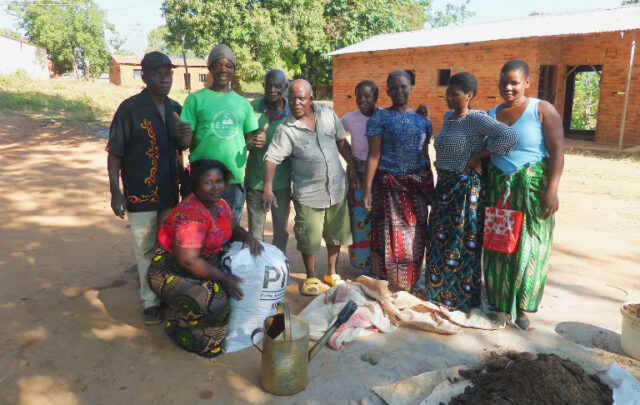
Every bar of chocolate begins in the hands of a farmer. In Ghana, the world’s second-largest producer of cocoa, over a million people grow and harvest the beans that fuel a multi-billion-dollar industry. Despite powering one of the world’s favorite indulgences, 58% of Ghana’s cocoa farmers live below the extreme poverty line, and up to 90% don’t earn a living income. Women make up more than a third of the cocoa workforce, tending the crops, managing fermentation and ensuring the quality that chocolate lovers depend on. Still, they face systemic barriers that hold back their full potential: unequal access to land, limited credit and exclusion from decisions that shape their futures.
But change is taking root. In the heart of Ghana’s cocoa belt, three women—Janet, Racheal, and Joyce—are cultivating more than cocoa. They’re growing independence, leadership and hope. Their stories reveal the quiet power of women transforming not just their own lives, but their communities and the future of cocoa itself.
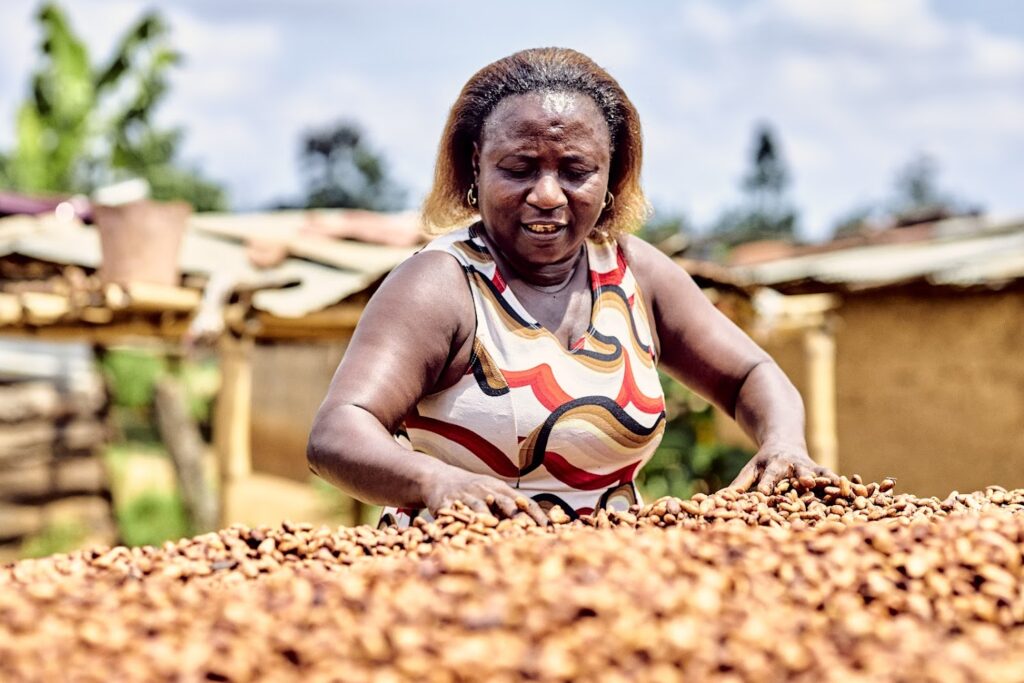
Janet
When The Hunger Project established the Supreso Epicenter in Ghana in 2007, most women in the community did not believe they could own land or earn their own income. Social norms and long-held traditions limited their participation in decision-making and economic activities.
Janet, now 61, has witnessed how that mindset has shifted and how women’s empowerment has reshaped her community. The turning point came when The Hunger Project introduced its Vision, Commitment and Action workshop in Supreso. Through this series of trainings, Janet developed a clear vision for her own future: to earn a sustainable living through farming. Acting on that vision, she acquired one acre of land to farm cocoa and stayed committed to improving her livelihood year after year.
Nearly 20 years later, Janet’s life looks markedly different. She has built her own house, which she rents out to teachers and is constructing a second building. She participates in savings programs through her local epicenter, applies improved farming techniques, such as planting in rows, and grows vegetables like pepper, tomatoes, and garden eggs in her backyard garden to save on household expenses.
The ripple effects extend beyond her own household. Community sensitization programs have strengthened women’s roles and reduced teenage pregnancy rates in Supreso. Janet has been able to support her three children’s education, with one now a media school graduate.
While challenges remain, Janet’s determination continues to drive her forward. Her journey reflects a powerful shift: as women in Supreso began to believe in their own potential, they transformed not only their livelihoods but the fabric of their community.
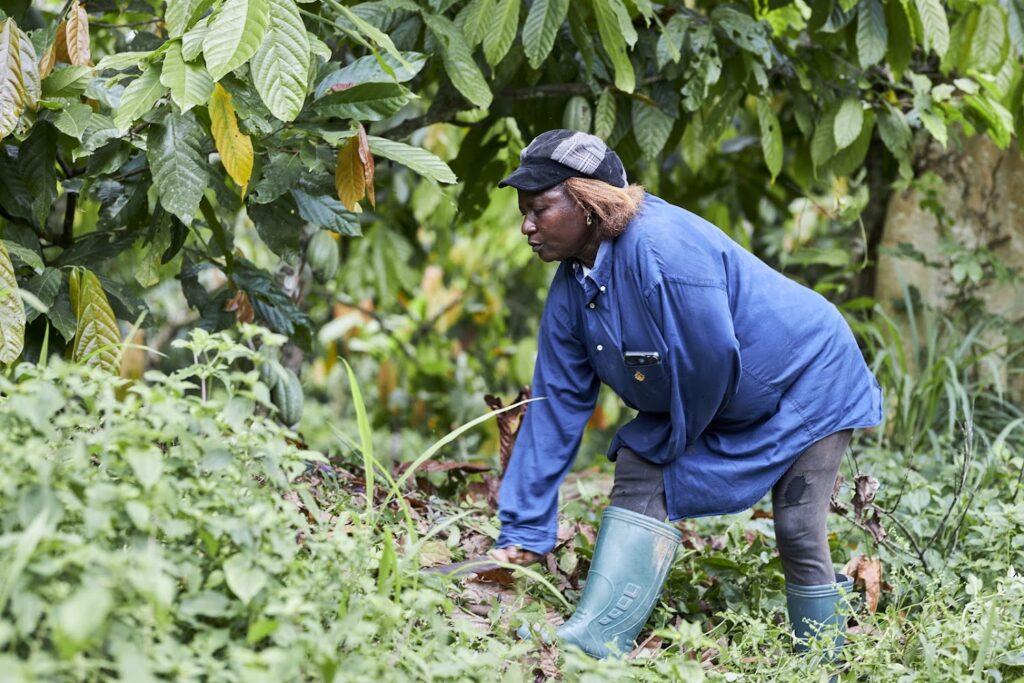
Racheal
For Racheal, cocoa farming has always been more than work. It has been her way of providing stability for her family in a community where opportunities are limited and access to services can be difficult. At 51 years old and a mother of six, she has cultivated her two-acre cocoa farm for eight years, while also growing cassava, maize and pepper to sustain her household.
Before The Hunger Project began working in her community, essential services, like agriculture extension services, were hard to access. When The Hunger Project-Ghana started offering agriculture trainings, Racheal jumped at the opportunity. There, she discovered improved methods for farming. “We were taught how to care for our cocoa and how to plant in rows. It has really helped to improve our work,” she shares. These practices have helped her harvest six 64 kilogram bags of cocoa in her most recent season—steady progress she continues to build upon.
Beyond agriculture, The Hunger Project’s programs have become a source of empowerment and growth for Racheal. She regularly uses the internet and computer lab at the community center The Hunger Project established in the community. Here, she accesses the latest information about farming, including information about current pests and diseases impacting the plants. The community bank at the center has encouraged saving habits. “I am able to save now, and it has helped me manage my home better,” she says proudly.
Cocoa farming remains her primary source of income, enabling her to send her children to school and even support her siblings. Racheal’s journey demonstrates the lasting impact of knowledge, opportunity and community support in transforming lives and livelihoods.
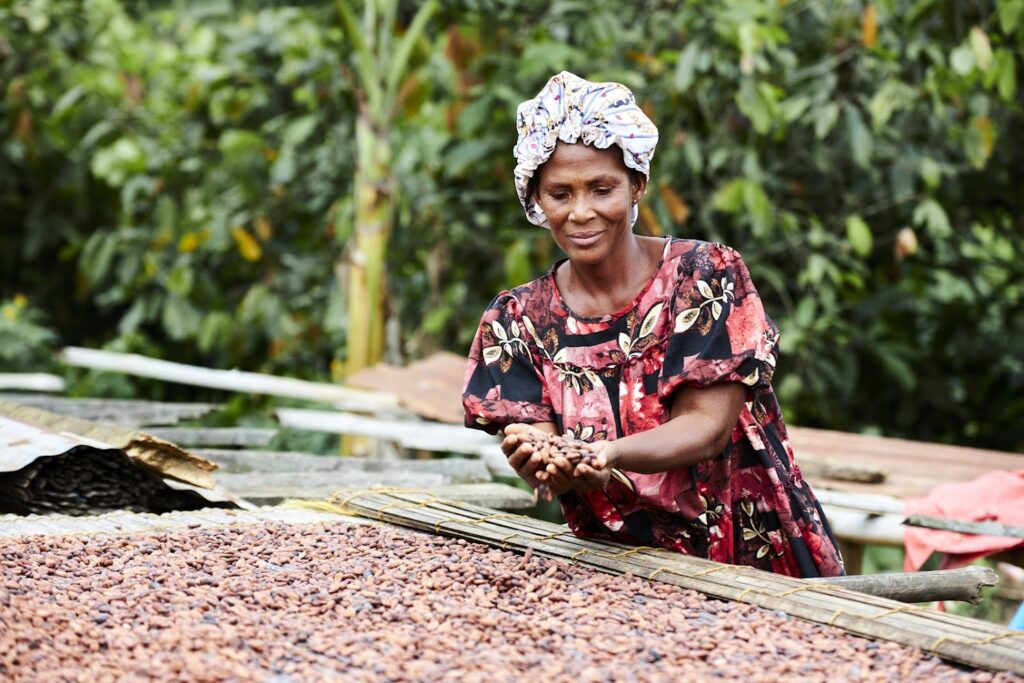
Joyce
Joyce approaches farming with intention, seeing it as a foundation for security and dignity. At 50 years old, Joyce works the land with pride, growing cocoa together with cassava, maize, plantain and cocoyam on her four-acre farm. Joyce has been working diligently to increase her cocoa yields. In the most recent season, she was able to harvest five bags, a reflection of her steady effort and resilience.
For years, Joyce and many other women did not have access to a formal bank, making it challenging to save or make investments in their businesses. When The Hunger Project started working with her community, the organization established a community bank. Joyce took the opportunity to participate in financial literacy trainings and shares that today, she is able to save her income securely. Her earnings from cocoa have allowed her to consistently pay for her four children’s school fees and medical care, milestones that reflect her growing financial stability and commitment to building a better future.
Joyce has been working with The Hunger Project to develop her backyard garden. By growing vegetables such as pepper, tomatoes, and garden eggs, she has reduced household expenses and improved her family’s nutrition. Joyce’s progress underscores the resilience of smallholder farmers and the transformative power of access to knowledge and resources.
***
These stories are a snapshot of a complex reality. Janet, Racheal, and Joyce illustrate how knowledge, community support, and financial literacy can transform lives. They are building houses, saving money, improving their families’ health, and educating their children. Their determination shows the profound power of opportunity, proving that with the right tools, these women are building stronger futures for themselves and their communities, one cocoa pod at a time.