A brief note here on a topic that’s been in the news lately – namely, the news. Or, more specifically, the so-called ‘legacy media’ such as national newspapers and television. And, alongside that, declining literacy and book-reading, which is obviously of great personal concern to me as the author of a recently published book, as well as a watcher of historical change. Also, religion.
Let me explain.
Benedict Anderson’s book Imagined Communities: Reflections on the Origins and Spread of Nationalism (1983) is a touchstone work on, well, nationalism, that religion of modern times. One of his arguments is that literate publics reading national newspapers, of the kind that emerged in the nineteenth century, helped to create a shared sense of purpose and joint understanding, forging a national community out of people who had no ‘real’ community with each other of the face-to-face sort. Later, national television stations served the same function. These, along with sacred sites of the political centre (like the tomb of the unknown soldier, the Capitol or the White House) help generate the nation as a collective entity. It’s not necessary for citizens to agree with everything they encounter in the media, or to like incumbent governments. But it probably is necessary for these media and symbols of rule to set the terms, to largely define the universe of community narrative for most people, if nation-states of the modern form are to endure.
If that’s so, then various recent events suggest the nation-state’s days may be numbered. If we take the case of the USA, the President’s lawsuit against the venerable New York Times doesn’t bode well. Presidents and newspapers of record need to be jointly defining the political universe, not locked in multi-billion-dollar battles. Keener students of US history than me might correct me if this is wrong, but as I understand it the last president or would-be president who sued a newspaper was Theodore Roosevelt’s case against Michigan’s The Iron Ore in 1913. Apparently he won, receiving six cents.
Meanwhile, I read somewhere on Substack (I read quite a bit of stuff on Substack) that the legacy media is commanding less and less of people’s attention compared to platforms like, er, Substack (see?) The context of the piece was the kerfuffle a few weeks ago about Jimmy Kimmel’s ABC show being pulled after his remarks about the Charlie Kirk murder (sorry, I can’t find the post to link to anymore). No big deal, the Substack author thought. Most people aren’t tuning in to legacy media anymore anyway. The author argued that Jimmy Kimmel would be better off running his own social media show, following in the footsteps of other online notables such as Chris Smaje and Joe Rogan.
But the risk is that if citizens get most of what informs them about the wider world by picking and choosing their preferred content from the online bazaar, pretty soon they stop being citizens of a functional nation-state where the terms of the community narrative get publicly defined. Although Kimmel was reinstated after an outcry, it seemed to me that the ease of his initial ousting was symptomatic of this larger disintegration of nation-states, which is impelled by many current forces. Declining literacy is another such force. If nation-states need literate publics, the decline of literacy might help impel their eclipse and replacement.
I’ve long been a critic of modern nationalism and the nation-state, but there’s a case of being careful what one wishes for. One aspect of the modern, legacy-media inflected nation-state is the high bar it sets for citizen rights. Phrases like “that sort of thing just shouldn’t happen here/in this day and age” are possible in a modern nation-state. They become moot when the idea that the state or the modern system of states is the guardian of the nation’s interests crumbles. And that idea has done a lot of crumbling lately. New distributed media technologies like mobile phone cameras enable every bit of state brutality to be recorded and disseminated with the admonitory cry “the eyes of the world are watching!” But increasingly the eyes of the world don’t care. The eyes of the world watching those things not happening here, only come into play when citizenship rights matter, and that’s precisely what’s now falling apart.
(Incidentally, there have long been de facto if not de jure gradations of citizenship rights in many countries – especially around racialised and other minorities, for whom the eyes of the world have never watched so attentively. I don’t mean to minimise this. But nationalist projects can long endure while stigmatising out-groups, provided there’s a large in-group. I’m not sure they can long endure without a secure in-group).
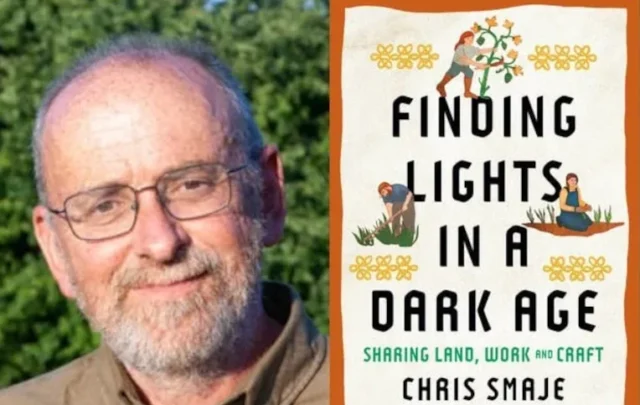
From my admittedly distant vantage point, I’ve been watching US politics unfold over the last few years, and the last few months in particular, and wondering whether the nation-state can survive what’s been happening (much the same is true in the UK and elsewhere, but generally not on such a fast forward setting). In my new book, Finding Lights in a Dark Age, I draw on the idea of stranger kingship to try to make sense of the present Trump presidency.
I read over that section quite a few times while it was still in draft, asking myself repeatedly if stranger kingship (a phenomenon more typical of premodern societies outside of Europe and its offshoots) really worked as a model for the contemporary USA, or if I was just being a smartarse who was trying too hard to be original and different. To which my considered answers are not entirely and yes probably, but nevertheless I left that section in because I do think it still captures something relevant.
I’ll write about stranger kingship in the US in more detail in another post. One thing that’s clear is that a society characterized by stranger kingship isn’t a nation-state. And that it requires the ordinary people to define themselves as a group in a certain opposition to the king.
Here we come to a fork in the road. I’ve been looking at social media responses to ICE raids and militarised federal incursions into US cities, which often enough divide into progressive horror of the ‘that sort of thing just shouldn’t happen here’ variety, and right-wing glee of the ‘that’s why I voted for Trump’ variety. If that sort of thing continues and Trump-style Republican government endures, then the usual roster of modernist political labels like right-wing populism, authoritarianism and/or fascism will probably do the job. But as the federal government’s inability to deliver big, beautiful outcomes for people locally becomes increasingly manifest, another possibility is that people start to build local politics in structural opposition to their stranger kings.
Presently, the major currents of thinking on both the mainstream political left and right seem fatefully enraptured with the centralized politics of the nation-state, believing that if the correct government is in place it will deliver what the people really want. If people were to stop thinking that, we may be at the start of a politics equal to present times.
A couple more points to wrap up this post. First, my new book was duly launched last week in Frome Town Hall, appropriately. I enjoyed it and the feedback was generally positive. I got an interesting question from a sceptically secular member of the audience about whether ‘ethics’, ‘spirituality’ and ‘religion’ always go together, as per one of the slides in my presentation. To which my answer, after a long and crooked road from my secular left-wing starting point, is a guarded ‘yes’. To quote Nick Mayhew-Smith “religion is what mediates the relationship between people and place”* – and I think this means collective, organised religion as part of an ongoing tradition, even if I’m not certain that any of the existing organised religions and their ongoing traditions are quite up to the task. Still, I find the fact that, unlike various other extinct creatures, they’re still there after the full force of the modernist onslaught against them to be mildly encouraging. More on that another time.
Second, a check-in with readers of these posts. I’ve got a lot of non-blog related work to get through at the moment, so my output here might be quite slow. I have in the pipeline posts about overshoot, housing and rent, Nate Hagens’s interesting analysis of what he calls the Walrus movement, and possibly an update on the manufactured food story discussed in my previous book. Then I was planning to write a short cycle of posts about Finding Lights in a Dark Age. I’m also feeling quite low energy at the moment and need to pace myself a bit. Anyway, I’m interested in any thoughts about topics of interest to those who generously devote time to reading what I have to say.
Current reading
Nick Mayhew-Smith The Naked Hermit: A Journey to the Heart of Celtic Britain
* the quote above is from page 113