


The intricate tapestry of global cultures and societal frameworks owes much to the myriad events that unfurled over the course of history. The foundations laid by the advent of agriculture, industrialism, capitalism, and pastoralism continue to shape our world. Yet, among these practices, pastoralism, particularly as it pertains to the Maasai community of Loliondo, is often misunderstood and undervalued in the economic discourse. Why is this the case, and what does it reveal about our perceptions of different modes of production?
In the heart of Tanzania, the Maasai of Loliondo have made a conscious choice to forgo the conversion of their lands to agriculture, opting instead to preserve their ancestral territories for pastoralism. This decision is not made lightly; it is born from a deep-seated relationship with the land, one that sustains both their cultural identity and their livestock, within a communal land ownership system. However, the complexities of this choice are often overshadowed by the contentious issue of conservation.
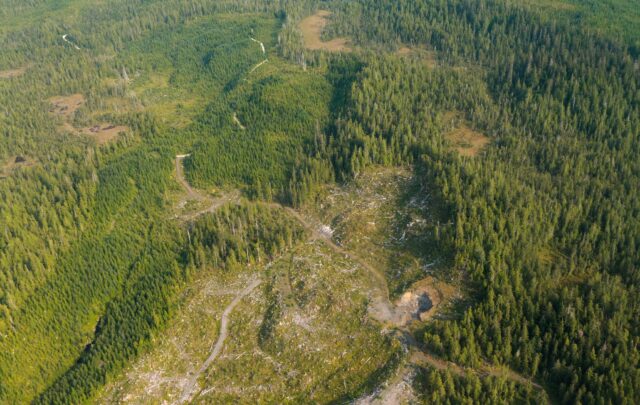
The Loliondo Game Controlled Area has become a hotbed of debate, contrasting the Maasai’s way of life with the government’s conservation efforts, often spearheaded by foreign companies such as the Ortello Business Corporation (OBC). The government and OBC advocate for conservation under the guise of protecting forests, water resources, and wildlife. Yet, such initiatives seem to overlook the fact that the Maasai and their cattle are also integral parts of this ecosystem.
The paradox lies in the government’s selective approach to conservation. It seems that the preservation of certain species is prioritized over the rights and livelihoods of the Maasai people. This has led to accusations of intimidation and marginalization, with the Maasai becoming conservation refugees in their own land.
Furthermore, the narrative promoted by the authorities often appears to be steeped in ideology rather than fact, serving the interests of a select few rather than the community at large. This misalignment of intentions raises critical questions about whose interests are genuinely being conserved.

Click on the image to consider the Maasai Predicament
In the face of these challenges, it is imperative for NGOs, academics, and other stakeholders to rally in support of the Maasai community. The preservation of their pastoral lifestyle is not just about maintaining economic stability but also about upholding a rich cultural heritage that has withstood the test of time.
The historical context is telling: humans thrived as hunter-gatherers and pastoralists for the vast majority of our existence. The shift to agriculture, while bringing certain advancements, also ushered in issues of starvation, welfare dependence, and tyranny. Renowned science writer Jared Diamond has suggested that the transition to agriculture may have been the “worst mistake in human history.” In light of this, the push to alter the Maasai’s pastoral ways seems not only culturally insensitive but potentially detrimental to their survival.
The Maasai’s relationship with their environment is one of symbiosis and respect, a balance now threatened by external pressures and agendas. The real monsters, it could be argued, are those who perpetrate cruelty and violence in the pursuit of misguided conservation efforts.
In conclusion, the conservation paradox in Loliondo is more than an environmental issue; it is a clash of ideologies, rights, and survival. The Maasai’s pastoralist lifestyle should not be dismissed or dismantled in the name of conservation. Instead, a more inclusive and nuanced approach to environmental stewardship is required—one that recognizes the Maasai’s role as custodians of the land and respects their right to maintain their pastoral practices.
The survival of the Maasai people is inextricably linked to the preservation of their pastoral way of life, which has been sustainable and adaptive over centuries. The conservation strategies implemented must account for the welfare of the human communities as much as they do for fauna and flora. The Maasai have shown that it is possible to coexist with nature without the need for the large-scale agricultural practices that often lead to environmental degradation.
The international community must take heed of the lessons that the Maasai of Loliondo offer. Their model of living attests to a deep understanding of ecological balance and the role humans play within it. The misguided notion that conservation can only be achieved by excluding human participation is not only erroneous but also harmful to the very goals it seeks to accomplish.
It is essential to engage in an honest dialogue with the Maasai, ensuring that any conservation efforts amplify their voices and consider their needs. Non-Governmental Organizations (NGOs) and other allies must continue to advocate for the Maasai’s rights, ensuring that their traditional knowledge and practices are not only preserved but also integrated into broader conservation frameworks.
The paradox of conservation in Loliondo challenges us to rethink our approach to environmental protection. It calls for a paradigm shift from a conservation model that is exclusionary and ideologically driven to one that is inclusive, equitable, and recognizes the value of indigenous knowledge and practices. Only then can we hope to achieve true sustainability, not only for the Maasai people of Loliondo but for all communities around the world facing similar dilemmas.
In the end, the Maasai’s struggle is a reminder of a universal truth: real conservation cannot be divorced from the human element. To protect the Earth’s ecosystems, we must protect and respect the human cultures that have grown alongside them. The future of Loliondo, and indeed our planet, depends on our ability to embrace this inclusive vision of conservation that honors both nature and humanity.



Comments
We changed commenting systems on September 10, 2026 as part of a site-wide functionality and security upgrade. Your past comments have not disappeared, and you can still log in with your old Disqus account credentials if you wish. Contact us with any questions.
But maybe it's the case that the world can't afford the Maasai way of life–maybe it's too destructive of biodiversity and ecosystems. I suspect this is not the case–that a case could be made for why their traditional pastoral way of life is actually better for the land and ecosystems in which it developed than what is proposed to replace it–but this piece fails to make that case, just repeats that terminating the Maasai way of life would be bad for the Maasai. That alone is not reason to preserve it, in these perilous times. There is a culture of people with pale skin who have thrived for many centuries based on a way of life of ever more intensive and extensive agriculture, the burning of fossil fuels, the transfer of resources from elsewhere into their hands–do we need to preserve that one too, because many would argue that it's good for the palefaces and especially for the most privileged among them?
One can say "maybe" to anything. It would be good if the case were made that Maasai pastoralism is ecologically better than the agriculture proposed to replace it – because that is almost certainly true, that is what science – rather than the insane meme that cows are destroying the planet – says.
But that is just common sense. The burden of proof is not on the Maasai and an ancient lifestyle, that has not wreaked any destruction for millennia, but those who suggest replacing it. The recent paleface lifestyle, has no such record, has not met a burden of proof of innocuousness, rather the reverse. Replacing pastoral land with plant farming, monocultures is what created the Dustbowl in the USA, within living memory (barely). So it is not a very good comparison.
These are conservative cultures, so the last thing liberals will do is preserve them.
The feminist knives are out for the Maasai and any other culture that has a traditional sex division.
NGOs are absolutely the next stage of colonization and cultural erasure, but kind of sickeningly deceitful about it.
Usually they select ambitious young women from among a tribe and turn them into change agents, which means simply making the culture conform to fashionable western ideals rather than their own primitive, sexist barbarism.
Sustainable indigenous way of life is code for dying nice and young, isn't it?
Jerry,
We encourage thoughtful comments that contribute to a conversation. People don’t have to agree, but we’re trying to have a good discussion, which means listening and thoughtful interaction.
Usually we limit comments from individuals to a few days to prevent overload.
Thanks
The moderator