

My apologies for such a dismal post topic, but modernity made me do it. I’ve borne witness to a number of the following tragedies first-hand. When exposed to similar atrocities in your own life, I recommend repeating the mantra that appears at the end of every point below. I think it helps in fighting human supremacism, validating other life and recognizing the pain we inflict—often unwittingly as we animate the maw of modernity. Evolution did not prepare the plants and animals of this planet for a sudden and dramatic up-ending of the world they were customized to inhabit. That’s on us.
Twenty Terrible Tales
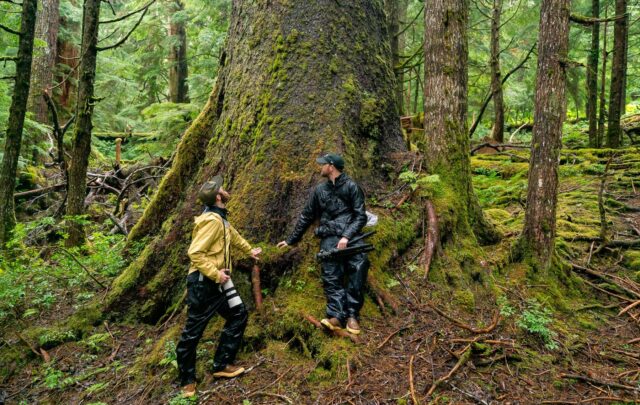
A massive tree that took hundreds of years to attain tremendous height and bulk was no match for an hour of chainsaw action. It did nothing wrong, but didn’t stand a chance.
A gangly moose was minding its own business in the willow thicket along the stream edge, when—BAM—its head was taken to grace the lodge wall. It did nothing wrong, but didn’t stand a chance.
Domesticated bees were bred to produce more honey and be less aggressive. Weakened against parasites and disease, their colonies crashed. They did nothing wrong, but didn’t stand a chance.
A deer, finding itself on a strange, hard, flat ribbon stood transfixed as two unearthly lights sped closer, seemingly set to pass on either side. It did nothing wrong, but didn’t stand a chance.
Orangutans who lived for countless generations in the dense and biodiverse rainforest found their home destroyed and replaced by oil palms. They did nothing wrong, but didn’t stand a chance. [Warning: only watch the link if you are ready to be haunted for life by seeing the skinny, muddy “bean” at the end of all things. It grieves me to my core.]
A butterfly created a caterpillar who had the misfortune to eat pesticide-coated leaves, undergoing metamorphosis into a dead lump. It did nothing wrong, but didn’t stand a chance.
The noble forebears of our dumb-bred domesticated (captive) animals had no evolutionary answer to ropes and tall fences. They did nothing wrong, but didn’t stand a chance.
The chattering swallows returned in spring to raise a new set of chicks. But the local mosquitos had been exterminated, leaving the parents and chicks to starve. They did nothing wrong, but didn’t stand a chance.
An 80-year-old tortoise followed the familiar route through the forest, across a road that wasn’t there in its youth, just as a truck came along. It did nothing wrong, but didn’t stand a chance.
The wasps weren’t bothering anybody when they went about their business raising young in a nest under the eaves, only to be shot by a 3 meter jet of poison. They did nothing wrong, but didn’t stand a chance.
Native grasses and flowers tried to restore health to a corn field, only to be coated in herbicide dropped by an airplane. They did nothing wrong, but didn’t stand a chance.
Crabs, lobsters, clams, and oysters found that they were no longer able to make protective shells in more acidic water, ultimately perishing from this earth. They did nothing wrong, but didn’t stand a chance.
A rough-skinned newt, in bursts of slowness, made its way across a wet road at dusk, only to have its innards abruptly and rudely squashed out through its mouth. It did nothing wrong, but didn’t stand a chance.
The exquisite ruffed grouse cruised into a clearing, aiming for trees that turned out to be a reflection in a house window. It did nothing wrong, but didn’t stand a chance.
Salmon had fed the forest for millions of years, but demand for heat pumps, electric vehicles, and chat-bots put a dam in their way. They did nothing wrong, but didn’t stand a chance.
A large prairie dog colony had lived on this patch of land as long as anyone could remember. The commercial developer orchestrated their final solution. They did nothing wrong, but didn’t stand a chance.
The polar bear cubs got exhausted from swimming in a futile effort to find ice and seals. Their inevitable end was cold, wet, hungry, and oh-so skinny. They did nothing wrong, but didn’t stand a chance.
The foxes in the Mojave desert required large unobstructed habitat, which vast new solar farms fenced, shaded, and uprooted. They did nothing wrong, but didn’t stand a chance.
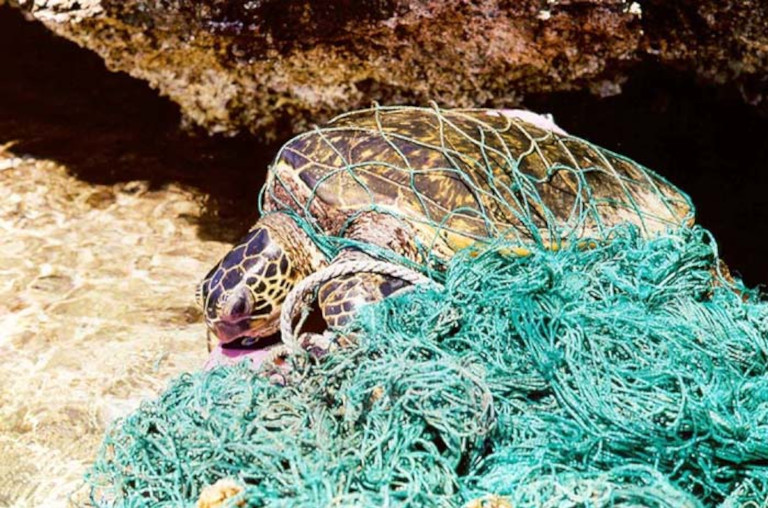
A sea turtle had no notion of the word “bycatch,” yet found itself dying in a crowded net all the same, only to be discarded as waste upon discovery. It did nothing wrong, but didn’t stand a chance.
Pursuers of modernity forgot themselves, thinking they owned and controlled the world, no longer subject to limits or part of a larger ecology. The world taught them a cruel lesson on the definition of unsustainability. They, for a change, might have known better, but as it was didn’t stand a chance.
End Note
The common thread is forcing plants and animals out of their evolutionary context, as we have done to ourselves as well via modernity.
I kept coming up with more examples, and eventually decided to stop because I felt I was beating a dead horse. It’s surprising how many more examples I could have used, and I suspect you could come up with a number not covered here yourself. It is telling that we are not running short on grim accounts of biodiversity loss.


.jpg)
Comments
Welcome to the new Resillience commenting system!
We have moved from the former Disqus commenting system to a new system as of September 10, 2026.
We made this change because of privacy concerns regarding Disqus. It's also part of a set of changes to bring more services to the Resilience community under a single login: commenting, (coming September 2026), and online courses (coming 2027). Unfortunately, your old Disqus comments may not reliably link to your account in this new system. Please contact us if you have any questions or concerns.
The large snapping turtle visits us every spring from the pond to lay her eggs and she did not nothing wrong and has a chance to have her babies every year. My main draft horses has gone partially lame in his hind end but he still comes over to get a good head rub and he would not have had a chance but I decided to keep him anyway as a friend. He still puts on a display of joy when I change his pasture and we both enjoy it along with the other horses. His joy is stealing the other horses food and they did not have a chance.
The homes of a small community of Gopher Tortoises bringing me joy in my childhood were bulldozed to build homes for the invaders. They did nothing wrong and didn’t have a chance.
Agreed. The Seattle Aquarium recently had an ad that essentially said coral reefs are suffering, may not be with us for much longer, and in any case are hard to get to…that’s why we’re excited to announce a new exhibit…bring the kids so they can see the endangered $#!+ we nabbed for their pleasure.