

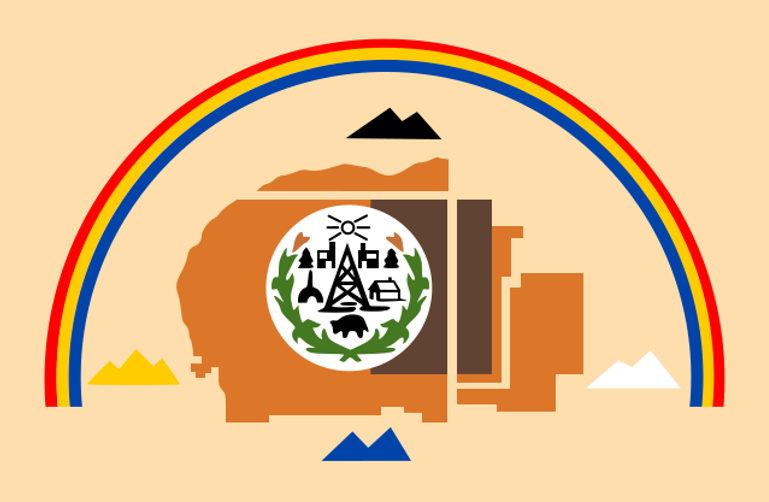
In this profoundly hopeful talk, Diné musician, scholar, and cultural historian Lyla June outlines a series of timeless human success stories focusing on Native American food and land management techniques and strategies. Lyla June is an Indigenous musician, scholar and community organizer of Diné (Navajo), Tsétsêhéstâhese (Cheyenne) and European lineages. Her dynamic, multi-genre presentation style has engaged audiences across the globe towards personal, collective and ecological healing. She blends studies in Human Ecology at Stanford, graduate work in Indigenous Pedagogy, and the traditional worldview she grew up with to inform her music, perspectives and solutions. Her current doctoral research focuses on Indigenous food systems revitalization. This talk was given at a TEDx event using the TED conference format but independently organized by a local community. Learn more at https://www.ted.com/tedx
Teaser photo credit: Flag of the Navajo Nation. By Himasaram – Reference:[1], Public Domain, https://commons.wikimedia.org/w/index.php?curid=1180511



Comments
We changed commenting systems on September 10, 2026 as part of a site-wide functionality and security upgrade. Your past comments have not disappeared, and you can still log in with your old Disqus account credentials if you wish. Contact us with any questions.