

(Conversation Recorded on October 19 2022.)
Today, ecologist, political scientist, and author Patrick Ophuls joins Nate to discuss his new book, The Tragedy of Industrial Civilization and The Future of Politics. As he’s been doing for his lifetime of work, Patrick unpacks how energy, ecology and our political arrangements leaves us in a predicament with no simple solutions. Before we can even begin to plan for the future, we need to understand what we face – Patrick Ophuls helps us do just that.
About Patrick Ophuls
Dr. Patrick Ophuls (who writes under the pen name William Ophuls) is an American political scientist, ecologist, independent scholar, and author. Patrick has a PhD in political science from Yale University and has been a prominent voice in the environmental movement since the 1970s. His award winning book in 1977 is on the bookshelves of most people I know. He has written 10 books including ‘Ecology and the Politics of Scarcity’, ‘Plato’s Revenge’, ‘Politics in the Age of Ecology’, and ‘Immoderate Greatness: Why Civilizations Fail’.
Show Notes & Links to Learn More
00:40 – Patrick Ophuls work + info
01:28 – The Tragedy of Industrial civilization and The Future of Politics (Not Yet Published)
03:18 – Ecology and the politics of scarcity
07:02 – Minamata Heavy Metal poisoning
07:51 – Garrett Hardin Tragedy of the Commons
08:40 – Plato, Thucydides, and The Great Tragedies
09:01 – Hobbes, Machiavelli, Rousseau
11:06 – Blood and Ruins by Richard Overy
11:11 – A Distant Mirror: The Calamitous 14th… by Barbara W. Tuchman
14:22 – Joseph Tainter + TGS Episode
15:14 – Niall Ferguson, Doom
17:05 – NYC Professor let go for making Organic Chemistry to difficult
18:11 – Tsundoku
21:43 – Vaclav Smil, How The World Really Works
23:11 – Fossil fuel warming locked in for the foreseeable future
23:33 – Amplification in the Arctic warming compared to the rest of the world
24:55 – Electrifying the Titanic
25:13 – 95% of the components of renewable energy is made in China with coal and gas powered factories
26:32 – Psychology of changing a human’s mind
27:17 – Charlton Heston
28:29 – Material limits for renewable energies
29:47 – Donella Meadows, Thinking in Systems
33:38 – Hobbes, State of Nature
34:02 – Apollonian Civilization
36:03 – Mass democracy
36:26 – Democracy is a historical exception
38:50 – Mark Zuckerberg, “Im gonna break things”
39:00 – Dennis Meadows (TGS episode)
46:55 – Ivan Illich
57:57 – Citizens: A Chronicle of the French Revolution by Simon Schama
1:03:20 – Methane release from melting permafrost
1:03:35 – Accelerated decreasing biodiversity
1:03:52 – 70% loss from living planet index
1:04:36 – Macron “The end of the age of abundance”
1:04:55 – French Prime Minister – energy sobriety and encouraging using 10% less energy
1:05:20 – Collapsology
1:05:33 – Advance Policy
1:06:35 – Greek Gods and Mythology
1:07:03 – Trente Glorieuses, Fukuyama: The End of History
1:08:09 – A Brief For The Defense by Jack Gilbert
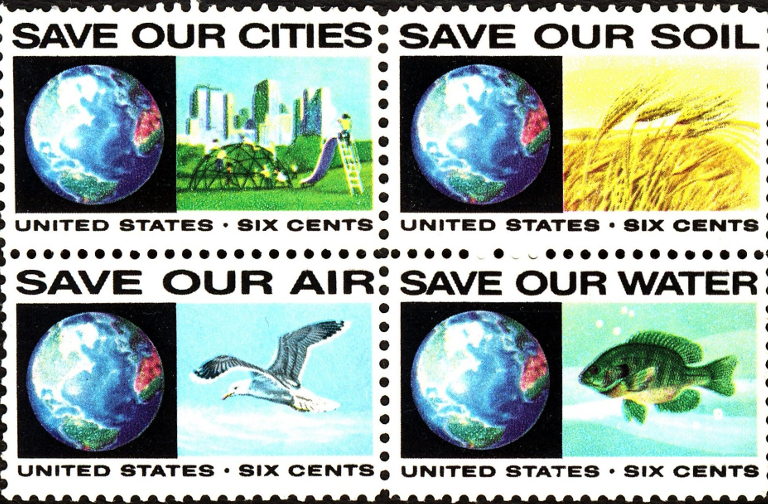
Teaser photo credit: 1970s U.S. postage stamp block. By USPS, scanned by Greudin – USPS, Public Domain, https://commons.wikimedia.org/w/index.php?curid=70894



Comments
We changed commenting systems on September 10, 2026 as part of a site-wide functionality and security upgrade. Your past comments have not disappeared, and you can still log in with your old Disqus account credentials if you wish. Contact us with any questions.