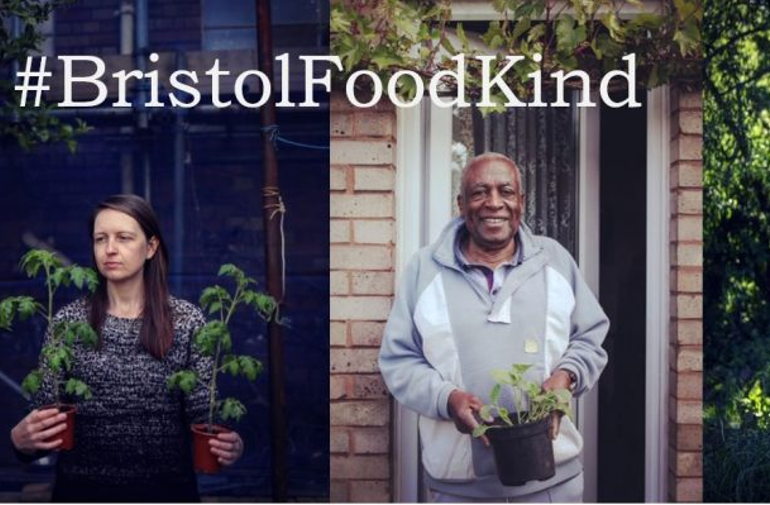
We’re producing a series of films to capture the incredible enthusiasm of people across Bristol for good food. From growing at home to cooking from scratch, stopping food waste to supporting local producers, Bristolians are finding new ways to make our local food system stronger than ever. We’ll publish the films here as they’re made – watch them and share them using #BristolFoodKind to help inspire others across the city.
Growing Food – share the film with friends using #BristolFoodKind
The most powerful way to communicate an issue is to focus on the voices of the people most effected. Create films that allow the community to tell their own story, connect the viewer to the people their culture and their environment. It is only then that we are able to understand some of these complex issues that now saturate mainstream and social media. We need to begin to focus more on the cause than the symptom, the solution and not the problem.
The source project is about using media to engage people in some of the many issues we need to embrace. Story telling from people who are driven by nothing more than a compassion moves us away from the traditional confrontational format, which does little more than foster an overwhelming sense of helplessness.
Tags: Building resilient food and farming systems, food growing, gardening, local food systems
Related Articles
'SELECT SQL_CALC_FOUND_ROWS wp_posts.ID
FROM wp_posts LEFT JOIN wp_term_relationships ON (wp_posts.ID = wp_term_relationships.object_id)
WHERE 1=1 AND wp_posts.ID NOT IN (3481796) AND (
wp_term_relationships.term_taxonomy_id IN (4,8988,8992,8997)
) AND wp_posts.post_type = \'post\' AND ((wp_posts.post_status = \'publish\'))
GROUP BY wp_posts.ID
ORDER BY wp_posts.post_date DESC
LIMIT 0, 3'
Asking if the world grows enough food is the wrong kind of question. It leads to the wrong kind of answer. We don’t need to produce more food. We need to produce more farms: places where communities of living beings can thrive.
Farmer organisations should stop selling agriculture as just another industry and instead reclaim it as a mission rooted in land stewardship and care for animals and ecosystems. But with many farmers locked into debt and infrastructure that bind them to the current model, meaningful change can’t rest on farmers alone, the responsibility rests with society at large.
For 6,000 years, human societies have sought to control water through ever-larger infrastructure. As climate change brings more extreme floods, droughts and heatwaves, a growing number of cities are exploring a different path: adapting to water’s rhythms rather than trying to dominate them.