Kevin Anderson is Professor of Energy and Climate Change at the University of Manchester and Deputy Director of the internationally renowned Tyndall Centre for Climate Change Research.
He is one of Great Britain’s most recognized climate researchers and is well known for his skills in communicating climate science to decision-makers, the business sector, civil society and media. He has been pivotal in establishing research around carbon budgets and the transformation of different societal sectors to acceptable mitigation levels based on politically agreed goals. For environmental reasons, Kevin hasn´t flown in 12 years.
This annual memorial lecture is in honour of Gordon Goodman, founding director of the Beijer Institute at the Royal Swedish Academy of Sciences from 1977–1989 and the Stockholm Environment Institute from 1989–1991.
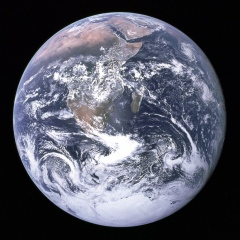 Sixteen of the seventeen warmest years on record have occurred since 2000. Photo NASA
Related Articles
'SELECT SQL_CALC_FOUND_ROWS wp_posts.ID
FROM wp_posts LEFT JOIN wp_term_relationships ON (wp_posts.ID = wp_term_relationships.object_id)
WHERE 1=1 AND wp_posts.ID NOT IN (3468738) AND (
wp_term_relationships.term_taxonomy_id IN (3,8996)
) AND wp_posts.post_type = \'post\' AND ((wp_posts.post_status = \'publish\'))
GROUP BY wp_posts.ID
ORDER BY wp_posts.post_date DESC
LIMIT 0, 3'
By Sharon Stein, Resilience.org
Green AI will likely continue to stretch as different communities bring their own priorities and imaginaries to the term. But if its dominant forms remain tethered to extractive assumptions, it risks becoming little more than an alibi for the systems driving planetary breakdown.
March 25, 2026
By Tom Murphy, Do the Math
The entire Community of Life—humans included—were better off when shrouded in the mysterious magic of the living world: held in awe, humility, and respect. We came into being inside the feedback loop, and threaten to destroy much when presuming to extract ourselves from its magical protection.
March 25, 2026
By Nate Hagens, The Great Simplification
This week’s Frankly marks a turning point in the work of The Great Simplification. Having spent twenty years articulating the more-than-human predicament, Nate shifts from diagnosis to direction as current events – including conflict in the Strait of Hormuz – accelerate the timeline. Today Nate shares a first-pass framework for action and response that’s organized around what to do now, which could be applied to various places and at multiple scales.
March 24, 2026