Apparently things are moving and shaking in Oklahoma, literally. In the past 8 years earthquakes in the “Sooner State” have increased from 2 a year to 2 a day. Is the expansion of gas and oil exploration during that same period of time a mere coincidence? This week on Sea Change Radio, we hear from Ole Kaven, a geophysicist with the US Geological Survey. Kaven’s area of expertise is human-induced seismicity, in other words, how human activity contributes to earthquakes. He talks about the work he has been doing studying the effects of carbon sequestration on seismic events, the sharp increase in Oklahoma’s seismicity, and what the government and the public should know about how oil and gas industry practices could be making the earth move under our feet.

Related Articles

Notes on Being a Man: Review
The challenge before us is therefore larger than “teaching men how to succeed”. It is to teach them how to succeed without destroying the world that makes success meaningful and, when necessary, how to transform the systems that place those goals in conflict.
March 17, 2026

Us and Them: The Curious Case of Rights and Personhood
Justice is neither owned nor taken away. It is a state of being, a condition that arises whenever life is allowed to exist in its own way. When that truth is remembered, the language of rights will fall silent, and what remains will be the only thing that ever mattered: the unbroken relationship among all that exists.
March 16, 2026
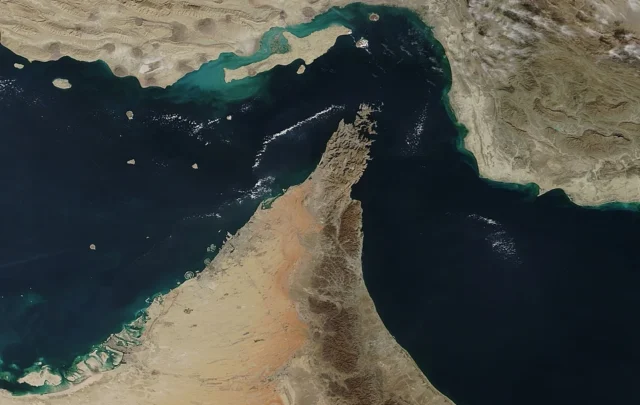
Is the Hormuz Chokehold a Foretaste of Peak Oil?
Hence, the severe restrictions in the flow of oil though the Strait of Hormuz, resulting from the recent US-Iranian attacks, may be seen as a stark rehearsal for the consequences of a severe shock in the global oil supply, as might be experienced from a “peak oil” crisis, with volatile price spikes and supply chain disruptions.
March 13, 2026