NOTE: Images in this archived article have been removed.
 The second in a 3-part series of teleseminars on economic transformation by Marco Vangelisti.
Money and Banking system
Currently, the money and banking systems are conflated (money is mostly created as debt by the banking system) and by their very design they demand continuous economic growth and an ever expanding level of debt (public and private). There is very little understanding in the general public about what money is, how it is created and how the banking system operates. Only a fundamental shift in the design of the monetary and banking systems will allow for a viable way of addressing increasing inequality, the mounting problem of public and private debt and make possible a shift towards a sustainable steady-state economy that works for everybody and is compatible with environmental stewardship.
Reference materials
Marco came to the US from Italy as a Fulbright scholar in mathematics and economics at the University of California in Berkeley. After a stint in the financial industry, Marco worked as visual artist on a full-time basis for 5 years and obtained a MFA focusing on the intersection between public art and ecology. He later worked for 6 years for Grantham, Mayo, Van Otterloo & Co. LLC ("GMO"), managing investment equity portfolios primarily on behalf of large foundations and endowments.
In April 2009 Marco left the finance industry and has since been instrumental in the formation and development of the Slow Money Northern California chapter where he currently leads the investor working group. Marco is currently developing Essential Knowledge for Transition– a curriculum for engaged citizens to understand the money and banking system, the economic system and the financial system and how we need to transform them. Marco is also helping communities increase their capacity for local investing.
Tags: banking, Economics for Transition, finance, Transition movement
Related Articles
'SELECT SQL_CALC_FOUND_ROWS wp_posts.ID
FROM wp_posts LEFT JOIN wp_term_relationships ON (wp_posts.ID = wp_term_relationships.object_id)
WHERE 1=1 AND wp_posts.ID NOT IN (2139511) AND (
wp_term_relationships.term_taxonomy_id IN (2,8988)
) AND wp_posts.post_type = \'post\' AND ((wp_posts.post_status = \'publish\'))
GROUP BY wp_posts.ID
ORDER BY wp_posts.post_date DESC
LIMIT 0, 3'
By Kurt Cobb, Resource Insights
We are now witnessing a game a civilization-widethe other to blink. The longer this goes on, the worse the damage for the entirety of global society. My post for this week: chicken in the Persian Gulf region.
March 29, 2026
By Jeremy Lent, Ecocivilization
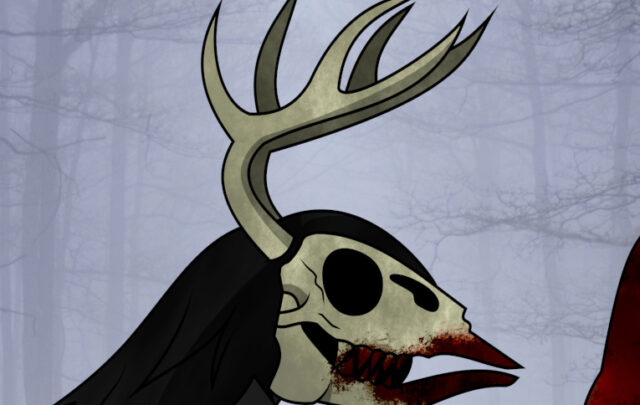
The Windigo diagnosis reveals that the threat we face is not only ecological or political. It is civilizational. It is rooted in a system whose deepest logic is to convert the living world into fuel for its own endless expansion.
March 26, 2026
By Samuel Alexander, Resilience.org
As the current situation (March 2026) around the Strait of Hormuz continues to destabilise the global economy, it is timely to return to Alexander’s analysis outlining ‘the Disintegration of Empire’ (being Chapter Two of Entropia).
March 23, 2026