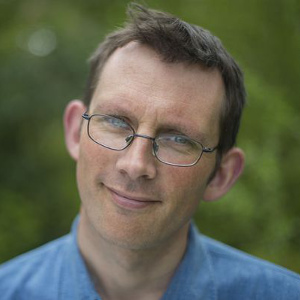
 Join us for an insightful conversation with Rob Hopkins, author, Permaculturist and founder of the Transition Towns Movement.
In this conversation we will be asking Rob to go more deeply into the “ingredients of Transition” as well as answering questions supplied by participants. Transition US board member, author and visionary Vicki Robin will be the host for this call.
Date: Monday, September 12, 2011 – 8:00am – 9:00am
At Transition US: http://www.transitionus.org/event/exploring-ingredients-transition-w-rob…
Audio: http://transitionus.org/sites/default/files/tus-rob-hopkins-091211.mp3
Previous conversation with Rob Hopkins (transcription) : http://www.energybulletin.net/stories/2011-09-01/conversation-rob-hopkin…
This is Carolyne Stayton with Transition US. On our call we have Rob Hopkins, co-founder of the Transition Network, and Vicki Robin, who will be our host today.
This call is sponsored by Transition US, the national hub of the Transition Network. The Transition movement is now in 34 countries across the world. In the US there are 96 official Transition Initiatives in 29 states, and a host of others that are in various stages of formation.
We invite you to contribute to this work by going to our homepage and pressing the Donate button. Contributing enables us to put on programs like this and various skill-building webinars, to build a resource library and develop new programs in support of the emerging Transition Initiatives.
Carolyne StaytonToday’s topic is “Exploring the Ingredients”. Rob’s new book, the Transition Companion [came out around] the end of October in the US. If people order a book on the Transition US website, that would generate a contribution for Transition US. So we encourage you to do that. If you are a Transition Initiative or a group forming to become one, you can get bulk discounts if you order by the case.
We expect to be on the call around 75 minutes. In the first 15 minutes, Vicki will introduce Rob, who will give us current highlights of the Transition Movement as well as his book. Then Vicki will ask Rob a number of questions that many of you have submitted. Then we’ll open up to some live questions towards the end.
Vicki Robin is currently a board member of Transition US.
She is a well known co-author with Joe Dominguez of the international best-seller Your Money Or Your Life: Transforming Your Relationship With Money and Achieving Financial Independence. The Wall Street Journal, Money, Women’s Day, Newsweek, Utne Magazine, and the New York Times, and newspapers around the world have reported on her work on lowering consumption in North America.
Vicki served on the President’s Council On Sustainable Development’s Task Force of Population and Consumption. She’s also cofounder of the New Roadmap Foundation and the Center For A New American Dream, Sustainable Seattle, Conversation Cafes, Simplicity Forum, The Turning Tide Coalition, Let’s Talk America, and currently, Transition Whitby, which is one of our earlier Transition Initiatives that is seeking to catalyze the community on Whitby Island to greater food, fuel, energy, and economic self-reliance in light of predicted impacts of oil depletion and climate change.
Vicki Robin: Thank you Carolyne. As I was listening to that list of things I have cofounded, I was like, “I once was lost but then I cofounded.”
Vicki RobinI’m honored to be here as the hostess for this call with Rob Hopkins who happens to be one of my heroes. He’s an extraordinarily ordinary man; he’s an ordinary man who’s extraordinary. I would like to introduce you to Rob and give him his freedom to say what he wants to and then we’re going to go to your questions.
Rob Hopkins is the cofounder of Transition Town Totnes and of the Transition Network. He’s worked for many years in education, teaching permaculture and natural building. He set up the first two-year full time permaculture course in the world, at Kinsale Further Education College in Ireland, as well as coordinating the first Eco-village development in Ireland to be granted planning permission.
He is the author of Woodlands for West Cork and Energy Descent Pathways, and most recently the Transition Handbook, from Oil Dependence to Local Resilience. And as you’ll hear today, he has a new one coming out, the Transition Companion. The Transition Handbook was voted the fifth-most-popular book taken on holiday by MPs during the summer of 2008.
He publishes www.transitionculture.org, which was recently voted the fourth best green blog in the UK. He is the winner of the 2008 Schumacher Award, he is an Ashoka Fellow, he is a Fellow of the Post Carbon Institute, he served three years as a Trustee of the Soil Association, and was named by the Independent as one of the UK’s top 100 environmentalists.
He is the winner of the 2009 Observer Ethical Award for the Grassroots Campaigner category, and in December 2009 was voted the Energy Saving Trust/Guardian’s Green Community Hero. He lectures and writes widely on peak oil and Transition, holds an MSc in Social Research, and recently completed a PhD at the University of Plymouth entitled “Localisation and resilience at the local level: the case of Transition Town Totnes.” And he lives in Devon and he is a keen gardener.
And after all of that Rob, what do you have to say?
Rob Hopkins: (laughs) That the being rated the fourth best green blog is such a fantastically unexciting thing to have on a CV. I always think the reason that the Transition Handbook was the fifth most popular book MPs took on vacation with them is that it’s printed on recycled paper. It’s very absorbent for mopping up suncream and red wine when you spill it.
Lovely to be here and thank you all very much.
Vicki and Carolyne mentioned the Transition Companion – today’s a landmark day because today’s the day it goes to the printer. So finally we’ve pulled this thing together over the last many months. Now all I have to do for the next two weeks is not look at any of the versions of it and find any mistakes because it’s too late now anyway.
I wanted to give a little taster of the book. Below is a photograph which is one of the illustrations in the book. It’s part of the attempt to get across the idea of when we’re talking about the ingredients for Transition. The picture is that of a pantry, with lots of things in it. On the labels, if you can see them in good enough resolution, is the taste of some of those ingredients.
Ingredients: Photo by Maria Vons-Gupta
When we started with Transition, we had the idea of the 12 steps. It was very much the idea that you start with this, then you do this and then you do this. Some people like that clarity and sense of direction – doing one thing after another, putting one foot in front of the other.
But increasingly now, we find ourselves in a position in which lot of those things are being overtaken. What we’re seeing happening out there is more complex, and not so ordered. Groups are doing things in all kinds of different ways. As I said in one of these previous conversations, Transition, really, is an enormous experiment of which you’re all part. What we’ve tried to do in this new book is to pull back as much as we could from the experiment, the learnings from it: to identify what people are doing and what seems to be emerging as the model.
Firstly, what came out of this, is what people aren’t doing, or aren’t doing in most places, is sitting down and saying “first we do this, then we do this, then we do this.”
What we’re seeing is a lot more like the picture you’re looking at: the idea that you go to a larder and open the door. In the Foreword to the Companion, Whittingstall points out that this is like baking. Everybody can make a cake, but will use slightly different ingredients. However there is a process to making cakes that everyone observes.
Each of those ingredients in the Companion represents a problem that Transition initiatives have come up against enough times to think that that is a common experience; and then the solution to that problem is one we’ve seen implemented enough times to have some confidence that it works.
We’ve also observed that there are stages that an initiative goes through. There is that initial wild and free stage, what we call “Starting out” – meeting people and saying “Ah, this is great, this is really interesting, why don’t we start doing Transition?” That’s the stage before it’s called Transition wherever. It’s the stage where you’re just brainstorming – we can do this, we can do that.
What are the things you need to be thinking about at that stage? What are the problems that people come up with, and the solutions they find? What are the tools that they find useful? So, Starting Out is the first stage.
The second stage is what we call Deepening, which is where you’re thinking, “OK, now we’re becoming Transition wherever, and what do we do about that? How do we start to embed that and become something more structured?”
The third stage is Connecting – looking around and saying “OK, now we’re up and running, we’ve got things going,and we are Transition wherever; how do we start to broaden how this connects with the community around us?”
The fourth one, the one that distinguishes Transition from other approaches, is Building, which is looking strategically and skillfully at how to start to bring around this new, more localized, more resilient kind of an economy.
The last stage is Daring to Dream, which is what all this might look like if it’s scaled up, and how it would start to have an impact on local politics, local economies and so on.
Now I want to pull out a few, a couple of patterns from each of those stages, and give you a taste of what’s in them.
Starting Out
In Starting Out, for example, the early stage, the first ingredient is called ‘Coming together as groups’. It’s the first one because it’s one of the key lessons that’s come back.
It’s something reflected in some of your questions – the importance of getting the group things right from the beginning. Sometimes we can be so excited and keen to just get going and to start doing stuff because we’re so motivated by the urgency of all of this, that we just dash in and meet with some people and just start doing projects, and don’t really think about getting the foundations in place from the beginning, for the group to actually work properly from the start – getting good decision making processes in place, getting a clear purpose, that sort of thing.
Also in Starting Out is the ingredient ‘Measurement’: having, from an early stage, a mind-set of thinking about how are we going to document whether what we’re doing is successful. That can be as simple as keeping a record of what you do and how many people came, or it can be more complex, in terms of surveys or other forms of evaluation.
The ‘Arts and Creativity’ is an ingredient in Starting Out as well. We saw in lots of groups, from that very early stage, there was a desire to make materials visually interesting, to involve the arts and events, to make the whole process very colorful and playful.
‘Building Partnerships’ is another ingredient. At that early stage, it is very important: the idea that you can’t do the whole thing on your own. You have to build skillful relationships with other organizations.
Deepening
We noticed in quite a few initiatives that although there wasn’t a conscious step from one stage into the next, at the beginning it definitely felt like an early forming and storming kind of stage. And then there was the Deepening stage where all of a sudden you realized that you had become Transition wherever.
One of the key things we would see again and again in the Deepening stage was ‘Local Food Initiatives.’ Often it is the food projects that Transition groups start doing first. They can be a wide wide range of things: urban tree planting, food growing, education, linking with local farmers, that kind of stuff. Often the food groups come together first and create a lot of early momentum.
Another ingredient at this stage is cPersonal Resilience,’ the need to be mindful of how you’re doing, and making sure that it’s not becoming your every waking hour obsession.
When Richard Heinberg came to speak in Totnes, early on in the beginning of the process he said, “How many people, put your hands up if you check peak oil web sites every day.” Quite a few people put their hands up, and he said,”Oh dear! this isn’t very healthy!”.
It is very important to create a balance between doing Transition, earning a living, supporting your family and making time for your family. Quite a few Transition initiatives try to give people the tools and the support they need in order to reduce burnout.
A tool in Deepening is ‘Unleashings.’ I know there have been quite a lot of them here in the US, but there are also interesting questions about whether they need to be called Unleashings or not, because it’s quite a silly kind of English term. Maybe we’ll come to that later on.
Connecting
The next stage is Connecting – when things are moving along, and you’re looking at how to deepen things and engage more people.
One tool there is ‘Street-by-street Behavior Change,’ looking at what change looks like at the neighborhood scale, street by street. Here in Totnes, we’ve developed this thing called Transition Streets, which has been working now with 500 households, a very interesting way of engaging people where they self-organize with their neighbors.
Although we did lots of measurements with that – we can tell you on average how much carbon everyone saved and how much money everyone saved, actually what people are really impressed about is the relationships, the social connections they’ve made with other people.
One technique at the Connecting stage is ‘Meaningful Maps,’ using maps in a creative way to engage people. Joanne Poyourow of Transition LA sent us interesting stories of ways they’re using maps. Physical maps, that people put pins on and write their names and draw all over, and what does the place mean to them. Virtual maps, starting to map local food capacities and other things in the area. Even creating maps with people at events – using people in a room to move around to give you the information you needl Maps are really really useful.
Yet another ingredient is the ‘Role of Story Telling,’ getting people telling stories about the work they’re doing.
Building
Building is the fourth stage where things start to step up. What I argue in the book, much more than in the Transition handbook, is that if we’re serious about this, nobody else is going to do this on our behalf. If we’re talking about economic localization, we’re going to need new businesses, new institutions, new infrastructure to be put into place. It is the role of Transition initiatives, or people allied to Transition initiatives, to start putting that in place, in a way which embodies the principles of social justice, of inclusion, of fairness, to get that in there from the beginning.
So, one of the ingredients in the Building stage is ‘Social Enterprise’ – creating businesses, based, in the beginning, on the idea that they’re not just there to profit the founders, but to serve some larger, wider, social purpose.
When I started researching the book, my idea was that that should be the direction things are starting to go; but the more I researched it, the more it turned out it’s actually happening. There were Transition groups setting up local food businesses, Transition groups setting up Energy companies, setting up community shops, setting up community breweries.
In the UK, social enterprise is very much in vogue at the moment. However about 95% of them don’t have an environmental take at all. So, the idea of suggesting that social enterprise is a vehicle for creating a lower carbon, more resilient society and economy, is quite a new idea, which this book is trying to stress.
Another ingredient is ‘Strategic Local Infrastructure,’ which encourages initiatives to look at infrastructure, what are the viable businesses that the place needs. Is there a good local food economy? Is there a good renewable energy infrastructure? Is there food processing? We’ve done a big study here in Totnes about what the local food economy needs. One of the things that’s coming out of that is that actually there’s nowhere for local food producers to have their produce washed and processed, which is something that I wouldn’t have imagined, even after doing that study.
‘Community Ownership of Assets,’ is where we start to try to become our own developers. If there’s derelict piece of ground in the town, rather than waiting for it to be developed, in a business-as-usual kind of style, by a developer usually from outside, where the money just goes out of the community, maybe we can become our own developers, and allow that money to cycle locally.
Daring to Dream
The last stage is Daring to Dream. What does it look like if all this just goes completely ballistic, and every town, every city in the US has an active, vibrant Transition initiative, has its own local currencies, has its own a community energy company, so that people by habit start to invest their money into the community rather than out into distant banking organizations? How will that then affect how policy is made? How will that affect how economies work?
An ingredient at this stage is ‘Investing in Transition,’ which is about ringing some serious investment into this. The city of Bath here in England has set up Bath Community Energy, which want to, within 5 years, have 11 million pounds worth of renewable energy capacity in place. It would generate 350,000 pounds for Transition work in the town, in the city. Well, that takes 11 million pounds to come in, so are we fundraising all of that from the community, or where else are we bringing money in from?
So, those models for immediate investment, those models for revolving loan funds for Transition initiatives, and at Transition network, we get approached by people who want to invest in these kind of things. But how we make the bridge between Transition groups with ideas for business, and something that’s investment ready and viable, I think is one of the big questions over the next few years.
Another important ingredient is ‘Policies for Transition’: what does it look like when policy makers, either at the local or national level, reach out and enable Transition? One of the ideas that has been kicked around here is the idea of a Transition Enabling Act. What would such an act look like? In 1936, on the eve of war, there was a an act called something like the Food Preparation Act . It was about shifting the food economy around, so that there was much more local food production. If we decided we wanted Transition to happen really fast, what would such a piece of legislation look like?
With Transition, we’ve looked at something which starts out often as people meeting up, starting showing films, starting to do some awareness raising, doing some practical projects, that kind of thing. We’ve tried to give that bigger picture of where all of this can go, so it doesn’t feel like running around doing the same thing over and over again, but actually it feels like there’s a progression to it, and a sequence.
At the same time, there isn’t any “you must do this before you can do that”, and “you have to do this”. We’re tried to make it like, when you open the pantry and you see the picture there that’s on the web site, what do you pick out? How do you assemble that? How do you create a Transition cake which is best suited to the place where you are?
The book, the online version, the playing cards
So, the plan of what’s happening over the next month is this. [The Transition Companion came out in late October. All the ingredients and tools in the book are online so that people can leave comments and help shape future versions of those: http://www.transitionnetwork.org/ingredients ]
Another tool that we’ve been developing is a set of cards, of the ingredients and the tools which we’ve been playing around with at different events. People have found them really really useful.
Any of you who’ve done the Transition training have probably seen those Milling Cards, where on one side you have the facts, and on the other side you have the writing. You go around the room and tell people your fact, and then hear theirs. So on the cards for ingredients, I imagine they have an ingredient name and idea on one side of the picture, and on the other side they have the problem and solution that is embodied in that ingredient, or in that tool.
You can do different things with them. They are a useful way of getting people familiar with them, just by milling around; but also they’re useful in an initiative that’s been going for a little while, to get people to tell the story of their initiative using the cards. And then there are different activities, such as, which cards are you still holding? Which ones have you not done? How might that have been useful?
We’re going to put those up as a Beta version to see how useful they are to people. You can download the cards. There will be a sheet with the games and the exercises, and you can play with them, and an invitation to experiment with them and come up with your own games, and to let us know, so that we can then do a nice version that contains a lot more games. ( http://www.transitionnetwork.org/resources/ingredients-and-tools-cards )
The Process
We try to embody the principle that has always run through Transition, that of collaborative knowledge building. It’s been very much the case with Ingredients. Many of you have followed that, and have contributed, and I’m very grateful to all of you.
I would put up ingredients and ask for people’s input, and then people would give feedback. So they’ve been really been shaped by that input, by people sending in their photos and their stories, and so on. I hope that when you do get a copy of the book, you’ll see your input reflected in there.
I think that’s about all I wanted to say. I look forward to getting in some of these question because last time we didn’t have so much time for questions, and I think that’s the most interesting and important part of the conversation.
VR: Thank you, Rob. I have one clarifying question. You said the book presents these stages, these ingredients arranged in stages, but it also presents some of the barriers and the solutions. Is that all embedded in the stages, or were there challenges and solutions for them that you noticed?
RH: An example might be the ‘Coming Together as Groups’ ingredient I mentioned. The problem is that the group falls to bits. The group gets to the stage after six months and half of them can’t talk to each other or they’re all phoning their lawyers. We see this in a surprisingly small percentage of groups, but there are some groups which don’t make it! Other groups come together and do stuff for a while, and then drift off and run out of steam or fall out with each other. Then these groups are picked up again by other people and come back more strongly.
Most of the ingredients address a problem, which is always stated at the beginning. Another example would be ‘Personal Resilience’ which I mentioned. That’s designed to address the challenge of burnout, and people grinding themselves down. For example somebody who says, “ Rob, I’ve got to do this and this.” and they’re doing Transition 24/7, and then they keel over in the heat.
So, all the ingredients state what the problem is, but don’t just stay at that. They try and present the solution to it.
VR: Fantastic, thank you. So, shall we go to some of these questions?
RH: Yes, let’s.
VR: You singled out an interesting question to start with. Don Hall asks, “What do you think is the relationship between Permaculture design and leading Transition initiatives? Is there a congruence between what we say in Transition of ‘Let it go where it will,’ and the more intentional design part of permaculture, when you really observe and test and make change?”
RH: It’s great that Don’s asked. He’s very kindly sent me an email with the PC’s written on there. I’ve been so busy trying to get the book finished that I haven’t had a minute to read it properly, or to get back to him. So, this might be my opportunity to do that.
Don is questioning the idea of ‘Let it go where it wants to go.’ In permaculture, the idea is about careful design, careful observation. As most of you know my background was in permaculture and teaching permaculture. Transition originally emerged as a permaculture look at what we could do about Peak Oil.
I know that ‘Let it go where it wants to go’ is very much in the 12 steps, but I think Don will find the new book pleasantly surprising, because I think the “Let it go where it wants to go” idea from the Transition Handbook is now embodied in the idea of ingredients rather than steps.
‘Let it go where it wants to go’ was really a way of saying, it doesn’t have to be really rigid. It’s NOT first you do this, then you do this, then you do this. What “Let it go where it wants to go” was not saying is, do whatever you like: just sort of have a think about something you might like to do , and then just sort of amble around.
The Building stage in the book is very much about observation, doing your homework. My idea of an Energy Descent Plan has that intentional, design-led, strategic approach. The whole idea is that you’ve got a limited amount of time, limited resources, limited financial resources. Just running out and just starting to do stuff not in a strategic overview, in a strategic framework, could be a complete waste of time.
Making time for some kind of strategic planning before you start, whether it’s an Energy Descent Plan, whether it’s a town-scale permaculture design, whether it’s what we call economic blueprints, looking at the most skillful place to start and nudge a local economy, that kind of intentional design is important and central.
I would hope that what Don will get out of the new book is the sense that “Let it go where it wants to go” refers to a process that allows you to be creative, and not feel constrained in something that says, first you do this, then you do this. It’s a process where you design the process.
For example in London you’ve got 40 Transition initiatives, maybe nine different Transition initiatives next door to each other in the borough of Camden alone. Every one of those initiatives has a different culture, does things slightly differently, has its own approach. That’s healthy, that’s how it should be. That’s what “Let it go where it wants to go” refers to. But the process of pulling it all together, does need a strategic overview, and that’s what the book tries to stress. That’s one of the things we can learn from permaculture.
VR: There are several questions here that ask about the context for Transition. Brent Flickinger said “Though climate change and post peak oil issues are important, so many people have tried to undermine climate change predictions, and I see no one discussing Peak Oil. Shouldn’t that be an easier issue to spotlight, based on economic and affordable oil alone, especially with all the coal and tar sands push going on?”
Several other questions suggest that maybe it’s not about climate change and peak oil. Maybe the strategic way to approach this is through economic re-localization. So, how are you framing it now, and how do you see the climate change and peak oil issues as being the drivers for the Transition movement?
RH: The first thing to say is that there really isn’t a right answer to this question. It depends whom you’re talking to. You elevate the pitch.
There’s a lovely presentation about Transition cultures this morning, from someone in the US giving a presentation to his local council. He’s got three minutes to give the presentation, and the video is taken from the back. You can see the councilors, you can see his back, and you can see the clock ticking down for three minutes; it’s one of the most stressful films I’ve ever watched.
You present your case in terms of what the drive is, depending on whom you’re talking to. That’s most people’s experience. What I’ve tried to do in the new book – reflecting back to people the experiment that we’ve all been involved in, for the last 3 or 4 years – has been to ask people, well, “Why do YOU do Transition?,’ rather than me saying, ‘This is why we do Transition’ or ‘This is why you should be doing Transition.’
We’re seeing a whole range of things. In there are Peak Oil, Climate Change, what’s happening in terms of economics, economic contraction or the bursting of the debt bubble or whatever you want to call it. Also we would hear back from people like, “because it enables me to do the project that I’ve always wanted to do.” There are people who have a passion for doing certain things, and Transition creates a space for it.
“Because I’m really scared”, is something we sometimes don’t give the space to, that actually people often can be really really scared. Transition is the first thing where they think, “Ah, that’s what I can do about this: because it brings you closer to other people, and it connects people. I talk to people when I go around and they say, “Well, I’ve lived here for 22 years and I felt more connected to people in the last 2 years I’ve been involved in Transition than in the 20 years up to that.
So there’s a whole range of reasons why people do it – because it’s creative, because it’s fun.
Credit: David Holmgren Future ScenariosThe idea of resilience cuts through all of this. Whether it’s Peak Oil, Climate Change, Economics – actually, it’s all of those issues posed at different times.
Right now, people are more worried about the economy than they’re worried about peak oil and climate change, Then there are times when people are more worried about climate change than the other two. Then the oil price goes through the roof and everyone is focused on peak oil.
Resilience and localization run steady through all of these. Making the places where we live more resilient can be argued from a peak oil perspective, climate change perspective, an economic perspective, and several others as well.
There will be situations where you find yourself talking to people for whom climate change is just complete nonsense, and who’ve just pushed all that science to one side. But there are still other ways you can have a conversation with them.
That’s how we approach it in the book: that it depends whom you’re talking to.
You can also come at it from the perspective that people do Transition because their life feels more nourished and satisfied than it did before. They now know loads more people than they knew before. They’re pursuing something that’s filled their life with a rich sense of purpose that wasn’t there before. They feel much more connected to the places that they live, whether it’s to the community, to the bio-region, to the soils, to the plants, whatever.
VR: On the last call you said that this is not so much about infrastructure change or technical change, but about culture change. That’s what I’m hearing you say here – that as result of Transition, people are entering into a different culture – where before we were isolated, now we are being nourished. It changes their thinking as well as their behavior. Am tracking you, Rob?
RH: Absolutely. I went to Lancaster one time, and a guy who met me at the station said, “Even if this whole Transition thing falls tomorrow morning, I know 200 people now, whom I didn’t know a year ago.”
And there is something I was talking about the other day with Ben Brangwyn, who’s my colleague here at Transition Network the other day. The Transition Handbook has a story about the very first Totnes pound. I went into a building here in town, and on the wall they had an 1810 Totnes Bank note, framed and hanging on the wall. That led to a whole conversation about, wow, Totnes Pound! Made its own money, had its own banker, printed its own money, what a fascinating story!
Which led to the question, “well, what would happen if we printed some new ones?” We printed 300 of them and we gave them away at an event. Right away we had 18 shops who said they would accept them. It was a blind leap of faith, a mad ‘let’s just see what happens’ sort of a thing. But here we are, three and a half, four years after that, and the city of Bristol and Lambeth, which is a part of London, are working with Transition Network, and with the New Economic Foundation, to do something similar.
The Bristol pound will be for the city of over a million people. There will be a printed currency element to it, but also a mobile phone based currency, a mobile complementary currency. The software developed for that is all new. The council are very involved with it. They’re putting money into it and saying, “We want this to be the money that people spend here, and people can pay their taxes in it”.
You can trace a lineage back through the other printed currencies, and back to that mad idea of saying, “Let’s just start and print 300 notes and see.”
When you start things with an intention, you never never know where they’re going to go. And that’s partly this idea of this being a culture shift, the culture shifts in the most unpredictable kind of ways. You never know how what you’re doing is nudging these things and helping a place to tell new stories. That’s what I was referring to in saying that Transition is more of a cultural shift, more of a cultural thing than an environmental thing.
VR: There’s a question on the general topic of being green. Tony Robalik, I think it was who said, “…the greatest difficulty many Transition initiatives of Central Pennsylvania are having is catalyzing competent working groups”.
What’s your advice on that? Is it even worth the attempt, given how quickly events are progressing? I want to link that to another question about networking with existing efforts in the community. Where I live, I’ve noticed there are many quote unquote Transition working groups that aren’t under the Transition umbrella; they’re actually independent initiatives that can be linked to Transition. So, what’s this thing about working groups, forming working groups? Is it consistent across the network? Are there other ways that working groups happen, not within the context of specifically the Transition group?
RH: That’s a very good question. This goes back to the discussion of “Let it go where it wants to go”. The energy that drives the Transition process forward, in my experience, is that it creates a space for people to do what they’re really passionate about. It’s the idea of engaged optimism, of people bringing their passion to the process, that underpins working groups.
If you have 10 people who’re really passionate about energy, and 10 people who’re really passionate about food, rather than just trying to have one big steering group where everyone is saying, “Well, well, we should do food”, or “No, no, no, we should do energy”, backwards and forwards, actually Transition enables the food people to do what they’re passionate about and to get on with it.
In some Transition groups you see maybe 10 or 12 working groups, on all kinds of different things that are Transition-related – education, food, building housing, energy, whatever. Usually when you have that many groups, they tend to pulse at different times. It’s rarely the case that you have all of those groups firing on all cylinders and doing incredible stuff simultaneously.
A few of them are on fire doing all kinds of stuff, some of them that seem a bit quiet or maybe a bit dormant; and then it’ll change over, and other ones will come to the fore and some of them will fade back. You find yourself thinking, “Oh well, that one’s gone, and oh, it’s all running out of steam,” but actually they tend to kind of ebb and flow in different ways.
Some Transition groups may only have one or two working groups. Some may not have any working groups. They just have a very active steering group who know what they’re doing, and they’re happy with that. So, it depends on who the people are who come along, who are the people who get involved, what they’re passionate about, what they’re fired up about doing.
There isn’t really a right or wrong. The goal is to create the space within which the people who are passionate about certain things can do them.
Networking with existing groups is another important strategy. You don’t want to start up and find you’re replicating what other people are already doing. So, here in Totnes, for example, one of the groups that we didn’t have from early on was a group looking at Transport and Traffic, because there was already a Traffic and Transport group in the town. We adopted them as our Transport group. We are tryng to stress the idea that Transition is an umbrella that everybody is invited to be part of, rather than something that comes breezing in with all the answers up its sleeve.
VR: Exactly. That’s really excellent. There are some questions here about faith, spirituality, and how to talk about the inner dimension of Transition. I’m guessing from your other answers you’ll say, “Well, there’s a variety of ways to do this”. But sometimes Transition is adopted by faith groups, and so it has a faith flavor; and then there are people who are into the Universe story or Sacred Activism; and then there’s some people who are allergic to religious language at all. And so, what are you noticing out there in the network about using spiritual and religious, or soulful language in expressing Transition?
RH: I suspect this is one of those things we never will quite get right, that will continue to evolve. The Transition Handbook has the idea of the Head, the Heart and the Hands.
In Transition the Head represents the intellectual understanding of where we’re coming from and the issues involved. The Heart is the inner aspect and supporting each other. Then there’s the Hands – actually getting on with stuff and making change happen on the ground.
When you meet somebody, the first thing that you generally observe is the hands, what people are doing. As you get to know them better, you start to find out about the head – their motivation. The heart is like our inner world. It’s what show about ourselves last.
The most skillful thing for Transition would be for groups to have an inner heart and soul, addressing the challenges that Transition groups come up against.
Here in Totnes, for example, the Inner Transition group have done something brilliant. A number of counselors or therapists offer mentoring and support to the people in the middle of Transition. To those people doing Transition day in day out: having the meetings with council and planners, working out the funding bids, and this, that and the other. The fact that they have some kind of support has reduced burnout massively. This support is a useful, tangible thing.
What feels unskillful to me, is if people put their own spiritual perspectives up front in Transition.
Different faiths can certainly work with Transition. Some of the church groups are doing some great stuff around Transition. But it seems to me that Transition, on its own, needs to be primarily focused on the first thing people see about it – what it’s actually doing on the ground, and the change that it’s making.
VR: That’s very useful. There’s a series of questions here about economy. You were talking this in the Daring to Dream stage.
This is a piece of the idea of taking Transition to scale. How are we going to re-make our community to be resilient, at a systemic level, not just individual projects? What are you seeing in the way of more daring economic and localization projects.
RH: What has struck me is that there’s a really interesting level of maturity coming through. I did an interview with Michael Shuman, who’ll be familiar to many of you, who does a lot of work with localization in the US. In an interview with him for Transition Culture, I asked, “What one thing can we do to move this forward?” He said, “We need to go to business school”. I don’t think he meant that literally. It’s more in the sense of becoming serious about this
I’ve been involved in the environmental movement since I was about 17. There’s always been that tendency to complain about what other people aren’t doing right, and what the people who’re in power are doing wrong. But now in Transition we’re starting to see interesting things like the energy company in Bath that I was talking about, like the social enterprises coming through the renewable energy companies, the local food systems. People are starting to look at those ideas through the perspective of, “How do we create a viable business here?”
That felt like a big step up for lots of us, because we’re often used to being in a more alternative world where business is felt to be somewhat.
Here in Totnes, the Transition initiative I know most, once we started talking about that, and saying “We need to create a new economy that has these new things in place which are vibrant and viable, which provide training and bring young people through,” then a whole load of people started coming along, who hadn’t been to anything before. They were people who had sat on the fence thinking, “Yeah, I kind of like this idea, but let’s just wait until they get it together”. Now there’s a very different kind of take on it, in terms of things being viable, how do we bring in investment, how do we actually scale this up?
There’s a steep learning curve. It’s not OK any more really to say, “Tsk, ugh, why doesn’t anyone create a more localized economy, and when is it going to become more resilient?”
No one’s going to do that other than us. If we don’t have the skills, then we need to acquire the skills. If we don’t have that way of looking and thinking, then we need to acquire it, based from the beginning on principles of inclusion and social enterprise models.
One of the things that Transition Network will be focusing on is helping groups make the transition from saying, ‘Yeah, we’d want to set up a community energy company’ to being ready to take some kind of an investment. There’s support and encouragement needed there, in large amounts.
VR: Wonderful. A personal note here. We have a solar pea-patch where I live, and I’m just buying into it. It’s an LLC. It’s a group of people that arose congruent or consistent with the Transition group. They’ve been working a long time on structuring this business, and they’ve had four installations. One’s already up and running, and then the second one is going up.
RH: Interesting. When you spend time with entrepreneurs and the way they look at things, we may not agree with everything. Entrepreneurialism at its worst is about selling people more crap they didn’t need. But at its best, it’s a dynamic way of looking at where we need to go, and how to make things happen very quickly, and not being fearful, “ Oh, that’s not going to work”. There’s something we can learn from that, definitely.
VR: It’s a kind of boldness.
RH: Absolutely….
VR: Final question before we open up the mics, is this question of your “airplane fast”, this unwillingness to use airplanes, as an expression of Transition. How is that working for you? Do you have any prescription for the movement as a whole or the rest of us?
RH: I wouldn’t have any prescriptions for anybody. (emphatically) This is an entirely personal thing. (laughing) The last thing I would want to do would be to say everybody has to do this, that and the other.
I just reached the stage where the idea of getting on a plane was so opposite to what I was trying to do, that I felt I couldn’t do it any more. It also felt important to live that in the everyday realm, rather than it being just a notion. Seeing international climate change scientists flying around the world to do conferences – it didn’t seem to join the two things up. Within Transition Network we try to embody the idea; we don’t really fly anywhere.
What it means is we do lots of things by Skype, technologies like this, filming talks.
A while ago, Transition Network was nominated by the Currystone Design prize as a finalist. They rang us up and said, “You’re a finalist. The award ceremony is in California, and you need to be there, because you’re one of the four finalists.” I said, “But, we don’t fly”, and they said, “Well, you need to be there, you’re one of the finalists”, and I said, “Yeah, but we don’t fly, so what do we do?”. Then they said, “We’ll get back to you”. They disappeared for two weeks, and then they came back and said, “ All the finalists will be presenting by Skype”. So, it wasn’t just us, in the end; it was everybody who stayed at home.
Whenever we do that, we always say, the reason is nothing personal. We aren’t there because, if we’d flown to be at this conference, it would’ve meant that we would’ve used a year’s worth of carbon allowance, and we didn’t really feel we could do that. And it has been known for getting standing ovations at events, to actually say that.
For me on a personal level, it means I’ll almost certainly never go to the U.S. because I’d get horribly sea sick. It also means I’ll probably never go to other parts of the world that I’ve always dreamt about going to.
But I realize there are lots of places closer to where I live that I don’t know at all. I know Delhi better than I know Leeds, for example. Richard Heinberg said the sooner you start to live as though you had less access to oil, the easier that transition will be.
So, actually, air travel is no great loss to me. It certainly hasn’t been a decision that has reduced my quality of life. It’s also not entirely absolute in terms of situations of life or death. If one of my children were somewhere in difficulty and I had to go there, then I would do it. But I haven’t had to do it for five years.
It’s very much a personal decision and everybody makes those kind of decisions on their own. I’m certainly not going to prescribe anything to anybody in that sense.
VR: Exactly. In a second, I’m going to open up the microphones, but before I do I want to make one final comment on all you’ve said and relate it to my personal experience.
The word that comes to me as you’re speaking, is the word ‘rooted.’ It’s that “bloom where you’re planted” or” plant yourself where you are.” I did an airplane fast for a year, and part of it was in service to belonging to where I live, to really being part of a community – not just one of the people who uses the community as sort of a backdrop for our busy, busy lives.
Then I did my own “eat within 10 miles of my home” experiment, and it sank me deeper into the community. I really have the experience that I actually live from here, I eat at home. Every act of that actually put me in my place, if you will. People who know me, putting me in my place is a little hard (laughs). But everything I’ve done actually makes me belong to my place, which I think, ultimately, is the key to resilience: feeling part of a community and people in a particular location, and wanting to make your collective experience the richest and most beautiful and prosperous possible. So, that’s what comes to me as I listen to you.
RH: Just one thing to say on that. One of the accusations made of the localization movement is that globalization has opened us all up to all different cultures and different ways of doing things all around the world, and we’re now global citizens. And the danger with localization is we retreat back into little parochial, insular, horrible, local world.
Actually one of the things that’s most fascinating about Transition, is that here you have a global movement of communities re-localizing themselves, using the technology we have to share the stories, the tools, the expertise, through films and photos and blogs and tweets. It’s omething that could never have happened 10 or so years ago. But the technology we have now allows the process of localizing to sit within a bigger context. We can see the wider lessons and learnings from it.
VR: Thank you. So, let’s go, get a couple of these questions. To start out, I’m going to turn the microphones on, Rich!
Rich: I was wondering if there is any conflict between localization and globalization. When we want to make the world a better place, we want to do it locally based for all the reasons you mentioned, but is there any negative consequence to the activities of diplomacy and peace building, and exchange of cultures and meeting people from other places in our universities? Is there any conflict in your mind?
RH: You could imagine a form of localization which is really really terrible. Localization on its own isn’t necessarily a good thing. There have been plenty of cultures and civilizations and times in our history where they’ve been much more localized, and were really wretched, patriarchal, really miserable places to be.
But if you get localization right, it has wide range of benefits. But it’s important that when we start planning it, that we make sure that those issues of fairness and social justice are in there from the beginning.
Nancy: I was curious how your Transition initiative responded to the recent riots and what questions that brought up.
RH: Whoo, that’s a good question. Everybody is still picking through that at the moment. Certainly there were some fantastic things that happened in London. There was the big cleanup, which was organized with people on Twitter and all coming out and cleaning the streets. There was something that was called the “de-loot map”, a map of all the shops in London that were looted, so that you can take the map and go and do your shopping, in order to support stores which had been looted.
One of the key things that’s come out from the riots is the importance of community and how, building community is something that governments can’t do. You can’t legislate for building community. There’s certainly legislation which is detrimental to community, which damages a community’s ability to look after itself. The government tried building community with the idea of the Big Society, which nobody took very seriously.
The thing that came through strongly was, firstly, that Transition groups have an important role in building community, and they’re doing that in ways that government couldn’t do. So, the whole thing of affection, of people feeling a part of something, finding meaningful things for young people to do, these are also important.
The riots also got across the point that Transition groups can’t do everything on their own. Those riots emerged out of 40, 50 years worth of class issues and social problems, and they’re very very complex. I think people are still trying to work out how to respond to them.
VR: Thank you. I’m going to do one more question and then ask you for closing comments, because we’re getting close to the end. So, let’s just try Rob.
Rob: About 12 years ago, the environmental impact of dairy and poultry factory farming horrified me: the impacts on rivers, soil and the air. That made me go vegan. I heard earlier you say that you’re vegetarian. In a class I did at our local Phoenix permaculture guild, I heard talk of people having chickens on their land and things like that. I suspect that animals, as we go into energy descent, will play a larger role in Transition cultures – perhaps tilling land with oxen. From your perspective, what do you think the role of animals will be, in future?
RH: My goodness, that’s a complex question in this short period of time. I’ve been vegetarian since I was 14, but increasingly, I don’t know…
A book by Simon Fairlie called “Meat” arguies that in the future, a more low carbon, more localized way of doing things would mean that we would eat less but higher quality meat and more locally produced meat. He argues that certainly here in the UK, that grass fed animals is a key part of a local agricultural system.
But for me, in the same way that I wouldn’t prescribe to anybody whether they should fly, I wouldn’t prescribe to anybody about vegetarianism. Sometimes people say to me, “Why doesn’t Transition argue that everybody should be vegan or vegetarian?” The answer is that about 95% of other people would just wander off and leave it. It’s very much a personal thing.
In answer to the question, I think we will see much more urban agriculture. Food production will become a completely run-of-the-mill aspect of our daily urban existence. We will increasingly have animals as part of our lives.
VR: Thank you Rob. We are really at time. What would you like to say to wrap up?
RH: Thank you, everybody. I appreciate all the work you all are doing, and it’s always really inspiring to hear your stories, and keep on keeping on!
Carolyne: This is Carolyne again. Thank you so much Vicki, for being an incredible hostess today. Rob, thank you once again for joining us, and doing another fantastic program.
I just wanted to mention a couple of things. This program was recorded and we’ll have the link up on our web site within a day or two. In the US, Rob’s new book, the Transition Companion, will be available through Chelsea Green. You can purchase the book through our web site.
Transition US is re-purposing the great work that you’ve done over there, Rob, on Transition Streets, and making it into a US manual. Hopefully we’ll have that out in the new year.
Please do consider donating to Transition US; you’ll find the Donate button on our home page, at Transitionus.org. So, thank you in advance for anything you can contribute, and, that’s it for us.
Everyone shouts out Thank you! and goodbye!