Click on the headline (link) for the full text.
Many more articles are available through the Energy Bulletin homepage.
The Keystone Victory
Mark Hertsgaard, The Nation
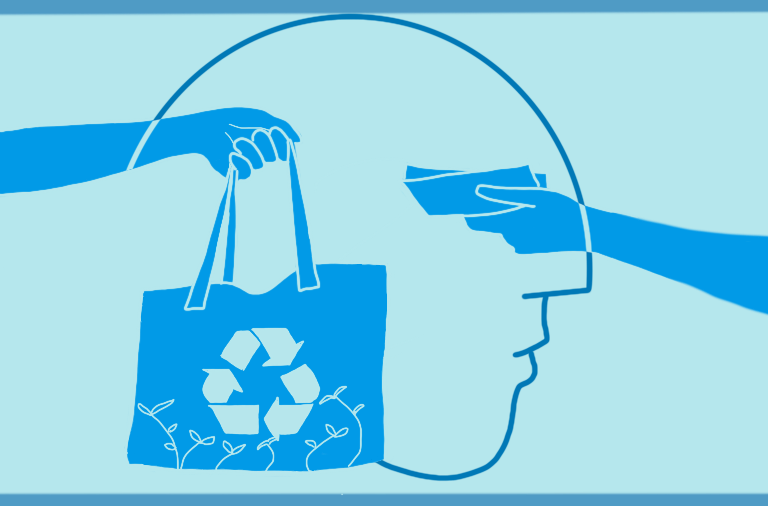
Victories against climate change have been rare, so it’s vital to recognize them when they happen. The Obama administration’s decision to delay the Keystone XL pipeline is one such victory—arguably the most important achievement in the climate fight in North America in years.
True, the administration’s November 10 statements did not outright kill the 1,700-mile pipeline, which the TransCanada company wants to build to transport highly polluting tar sands from Alberta, Canada, to refineries on the Texas coast. Yes, President Obama or his successor could try to greenlight the project in 2013, when the State Department’s new review of the project is due. But that’s unlikely, as TransCanada’s CEO, Russ Girling, has acknowledged. The project’s contracts require the pipeline to be completed by 2013, or refineries will be free to look elsewhere for supply, which Girling expects they will.
In any case, such caveats mean only that the Keystone victory is not absolute. But when a $7 billion project involving the number-one US trading partner and oil supplier, a project that Secretary of State Hillary Clinton only a year ago said she was “inclined” to approve, is very publicly postponed—even as the inspector general of the State Department launches an investigation into cronyism involving a former top aide to Clinton—good luck putting that Humpty Dumpty together again.
The climax of the Keystone campaign came November 6, when some 12,000 activists surrounded the White House (evidently a first) to urge Obama to honor his 2008 campaign pledge to fight climate change. “We want jobs but not as gravediggers for the planet,” Roger Toussaint, head of Local 100 of the Transport Workers of America, told the crowd in one of the strongest green declarations by a US labor leader. (Unfortunately, other elements of organized labor did not play against stereotype; the Building Trades Unions went so far as to team up with the oil industry to launch a “Jobs for the 99” campaign, co-opting Occupy rhetoric for their pro-pipeline propaganda.)
The breadth of the anti-pipeline coalition—indigenous people, progressive labor unions, youth, faith, farmer, community and environmental activists—was just one way this crusade contrasted with previous environmental campaigns. Other key differences: demands were more concrete and more radical. Strategy was set more by grassroots activists than by Beltway insiders. Tactics stressed people power—putting feet on the street, going to jail—over policy papers. The message was comprehensible to ordinary people rather than off-putting. And thanks to the Occupy movement, journalists were primed to pay attention to street protests.
All these factors combined not only to deliver the immediate victory over Keystone but to reanimate a movement that had been reeling after the failure of the Copenhagen climate talks in 2009 and the defeat of climate legislation on Capitol Hill in 2010
(18 November 2011)
Older, Suburban and Struggling, ‘Near Poor’ Startle the Census
Jason DeParle, Robert Gebeloff and Sabrina Tavernise, New York Times
They drive cars, but seldom new ones. They earn paychecks, but not big ones. Many own homes. Most pay taxes. Half are married, and nearly half live in the suburbs. None are poor, but many describe themselves as barely scraping by.
Down but not quite out, these Americans form a diverse group sometimes called “near poor” and sometimes simply overlooked — and a new count suggests they are far more numerous than previously understood.
When the Census Bureau this month released a new measure of poverty, meant to better count disposable income, it began altering the portrait of national need. Perhaps the most startling differences between the old measure and the new involves data the government has not yet published, showing 51 million people with incomes less than 50 percent above the poverty line. That number of Americans is 76 percent higher than the official account, published in September. All told, that places 100 million people — one in three Americans — either in poverty or in the fretful zone just above it.
… Demographically, they look more like “The Brady Bunch” than “The Wire.” Half live in households headed by a married couple; 49 percent live in the suburbs. Nearly half are non-Hispanic white, 18 percent are black and 26 percent are Latino.
Perhaps the most surprising finding is that 28 percent work full-time, year round. “These estimates defy the stereotypes of low-income families,” Ms. Renwick said.
(18 November 2011)
Zoobombing in Portland, Oregon (video)
BBC
The US city of Portland in Oregon is home to a unique weekly cycling event known as zoobombing.
It attracts an eclectic crowd of cycling enthusiasts who like nothing more than hurtling down a steep hill at high speed, on souped up children’s bikes, late at night.
Some of the bikes are left chained up in a pile in the city centre, which has itself become a local landmark. The ride, often repeated several times in an evening, starts with a journey on Portland’s light rail system then a hike to the top of a hill, near the city’s zoo.
Peter Bowes went along to see the zoobombers in action.
(5 November 2011)
Go to the original article for the video. -BA
End Bonuses for Bankers
Nassim Nicholas Taleb, New York Times
More than three years since the global financial crisis started, financial institutions are still blowing themselves up. The latest, MF Global, filed for bankruptcy protection last week after its chief executive, Jon S. Corzine, made risky investments in European bonds. So far, lenders and shareholders have been paying the price, not taxpayers. But it is only a matter of time before private risk-taking leads to another giant bailout like the ones the United States was forced to provide in 2008.
The promise of “no more bailouts,” enshrined in last year’s Wall Street reform law, is just that — a promise. The financiers (and their lawyers) will always stay one step ahead of the regulators. No one really knows what will happen the next time a giant bank goes bust because of its misunderstanding of risk.
Instead, it’s time for a fundamental reform: Any person who works for a company that, regardless of its current financial health, would require a taxpayer-financed bailout if it failed, should not get a bonus, ever. In fact, all pay at systemically important financial institutions — big banks, but also some insurance companies and even huge hedge funds — should be strictly regulated.
Critics like the Occupy Wall Street demonstrators decry the bonus system for its lack of fairness and its contribution to widening inequality. But the greater problem is that it provides an incentive to take risks. The asymmetric nature of the bonus (an incentive for success without a corresponding disincentive for failure) causes hidden risks to accumulate in the financial system and become a catalyst for disaster. This violates the fundamental rules of capitalism; Adam Smith himself was wary of the effect of limiting liability, a bedrock principle of the modern corporation.
Nassim Nicholas Taleb, a professor of risk engineering at New York University Polytechnic Institute, is the author of “The Black Swan: The Impact of the Highly Improbable.” He is a hedge fund investor and a former Wall Street trader.
(7 November 2011)