



September is the time we dig for buried treasure, that is, potatoes. I try to wait for a day at the end of a dry spell. The spuds come out of the ground without much muddy clay clinging to them. When I had to contend with muddy potatoes, I would spray them with water to get them clean, but I read somewhere that washing is not a good idea if the potatoes were going into storage. Better just leave the dirt on until it comes time to eat them. Don’t know how true that is, but I will use any excuse available for not doing work that I don’t have to do. For what its worth, dirt clings to red potatoes more than white or yellow ones, but I think that is because our red ones, Red Norland, are a bit rough-skinned while the white ones, Kennebec, are as smooth as a baby’s cheek. All red potatoes seem to develop slightly rough skins in our ground, but Red Norland is the best tasting potato of all to my taste buds.
Anyway, I like to dig potatoes. Maybe the next hill will have the biggest potato ever, or the most spuds in a hill ever. I leave the treasures lay on top of the ground for an hour or so to dry out in the open air and sunlight, then load them in a wheelbarrow and let them sit over night in a dark, dry place. If you let potatoes sit out in the sun too long, as you all know, they will start turning green and that green is somewhat toxic.
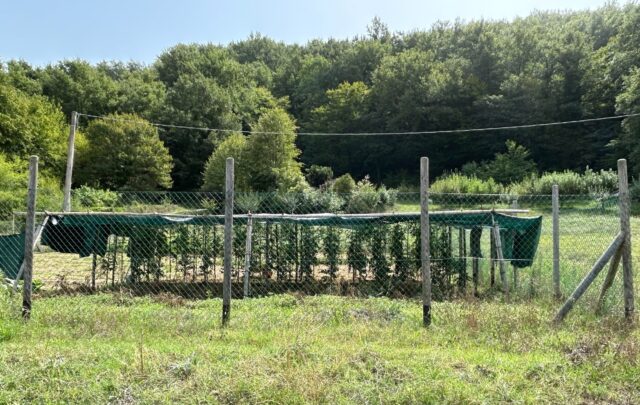
Next day or two days later, I re-bury the potatoes. For years I had two steel barrels (30 gallon size) that I dug into the ground to hold them. Digging holes for the barrels was not easy but I was younger then. The barrels rusted out and I had to replace them this year. Being older and smarter (debatable), I used plastic bins and dug them into a handy slope at the edge of the woods. The bins are less than two feet tall, easier to reach in to the bottom in the ground. They are two to three feet in length and so hold about as much as the barrels did. As you can see in the photo, taking advantage of the sloping hill, I only had to move about half the dirt I would have if on the level, and put the excavated dirt on the downside of the hill to bury the bins up to their lids. The slope also means that water will drain away from the site better. These bins have a curled lip around the edge, allowing me to drill little holes all around for a bit of air circulation without letting any water or mice in.
First a layer of straw goes in, then a layer of potatoes, then more straw and another layer of potatoes, and so on until the bin is full. Later in the fall, I will pile autumn leaves over the bins about a foot or so deep. The potatoes never freeze even in sub-zero weather. Then through the winter I just have to push aside snow and leaves and lift the lid to get another basket of spuds. The two bins will last until new potatoes are ready next year. In fact I make sure there are enough left over for seed. We’ve saved our own Kennebec seed potatoes nearly forever and got the Red Norland start a few years ago from organic growers Andy Rinehart and Jan Dawson (Jandy’s Farm Market). That’s the only way I can be sure that our potatoes continue to be truly organic, that is without the BT gene that has been put into commercial potatoes to combat potato bugs. The experts say it is safe to eat a potato that will kill bugs, but not me.
That’s all the know-how necessary. What could be a simpler, more secure food supply? Even if the electricity goes off, even if the house blows away, even if we are visited with “the rocket’s red glare and bombs bursting in air,” our buried treasure will be safe. Along with carrots which I leave in the ground in the garden covered with more leaves, and cabbages that should last where they grow until January if given a little protection, there’s about ten million scabby apples on the trees this year, too many for even the deer to eat. Apples can be stored for winter much like potatoes but we just keep some in the cellar. Plus, there’s all the stuff that Carol has canned. I think we could survive a couple of months anyway. Can’t say that about gold.



Comments
We changed commenting systems on September 10, 2026 as part of a site-wide functionality and security upgrade. Your past comments have not disappeared, and you can still log in with your old Disqus account credentials if you wish. Contact us with any questions.