Click on the headline (link) for the full text.
Many more articles are available through the Energy Bulletin homepage
Kellogg’s Six-Hour Day
Robert Whaples, MR Zine
Benjamin Kline Hunnicutt. Kellogg’s Six-Hour Day. Philadelphia: Temple University Press, 1996. x + 261 pp. $33.95 (paper), ISBN 978-1-56639-448-2; $69.95 (cloth), ISBN 978-1-56639-447-5.
Between the Civil War and World War II the length of the American work week decreased dramatically. Since the end of World War II, the rate of decline has become positively glacial. The five-day work week with an eight-hour workday came to be seen as the norm over a half a century ago and it is still seen as the norm today.
This development caught a lot of attentive observers by surprise — for example, John Maynard Keynes in 1930 predicted that by 2030 a fifteen hour work week would be sufficient for all but the most extreme workaholics. The stabilization of the work week at forty hours continues to defy easy explanation.
Benjamin Hunnicutt knows that the explanation for this dramatic reversal is highly complex. In Work Without End (1988), he offered a strikingly new and controversial thesis that pinpointed the role of policy decisions during the New Deal. In Kellogg’s Six-Hour Day, he examines the question from a fascinating new angle — that of a work force which eagerly adopted the six-hour workday during the Depression, but which reverted back to the eight-hour workday during the postwar period.
(2 April 2010)
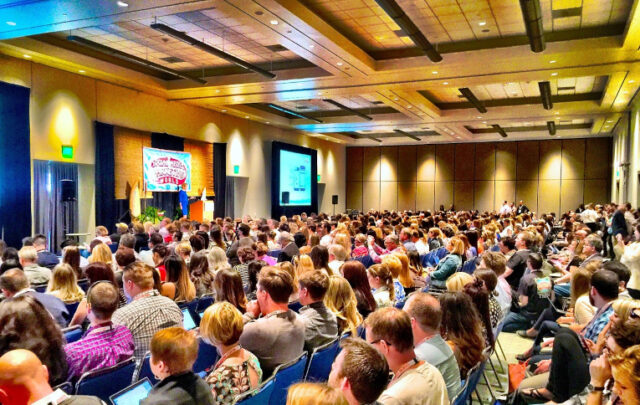
Why are there no young people in the room?
Ken White, Post Carbon Institute
PCI Development Director Ken White wrote Politics in a New Key: Breaking the Cycle of U.S. Politics with a Generational/Developmental Approach for Integral Review in response to the oft-heard but rarely answered lament: “Why are there no young people in the room?” A more accessible version of that piece is also available.
 As anyone who’s ever worked for political and social change can tell you, rocket science looks simple in comparison. The laws of physics are pretty well known, and the behavior of rockets is generally predictable (except when it isn’t). By comparison, the laws of politics are much more complex and changeable. And the laws of human behavior? Well, there really aren’t any (except maybe Murphy’s), and if there were, they’d likely have more exceptions than rules.
So, the list of structural and behavioral obstacles to change is long, daunting, and constantly in flux. And that’s just for “standard issue” social and political change efforts, like trying to introduce recycling in a community (and get people to actually recycle!), or pass a health care reform bill in the US Congress.
Truly transformational social and political change, like trying to reimagine how democracy could evolve in the 21st century? Let’s just say the impediments are even greater….
And, as anyone who’s ever worked for transformational social and political change can tell you, sometimes the biggest obstacle is: us! As in, all of us, changers and changees alike, and the “mental models” we use when we try to impose some kind of order on the chaotic social/political world.
So…”Why are there no young people in the room?” Maybe it’s because young people have different mental models of how to create social and political change.
Maybe those different models just might contain the potential for the truly transformational change we seek. And maybe, just maybe, we (all of us) can actually help coax those changes into reality…but perhaps only if we let go of our expectations of exactly how the process will unfold.
And therein lies the challenge. For all of us.
(30 March 2010)
Political Strategy, Macro and Micro
Ted Glick, ZSpace
… we could have initial success pulling together the broadest and baddest coalition of the oppressed to try to move this (or any other) strategy forward, and if we aren’t serious about the process of how we build it, how we develop our unity in action, it will eventually fall apart.
I was reminded of this critical point when I attended the Left Forum conference last weekend in New York City. … two things bothered me, and not for the first time as far as these annual conferences.
One was the format. In all but one of the sessions I attended, and it looked as if this was true generally, four or five people sat up front in a panel, spoke for 2/3 or more of the time, and there was then a limited, compressed amount of time for questions or comments.
A preferable format would have been shorter presentations, or fewer panelists, with ½ or more of the time given over to back-and-forth dialogue with all present, with firm time limits to prevent monopolization of the time by those who tend to go on too long.
The other thing which bothered me was a tendency toward intellectualism in the presentations made and, for that matter, some of the responses from the audience. Maybe the next Left Forum could be organized to prioritize the addressing of this and related issues, like how those who see themselves on the Left go about their day-to-day work in a way which builds the leadership skills, the ability to organize, of regular folks.
I’ve written about this dialogical style of organizing in my new book manuscript, “Love Refuses to Quit: Climate Change and Social Change in the 21st Century:
“What this means is that we have to be prepared, have to welcome even, taking a back seat so that other people can step forward to speak up, be recognized, give leadership in situations where these things are called for. Our organizing work has to be about working with others in such a way that they grow from being new members of a group to the point where they are able to not just do these things but feel comfortable doing them. Over time, they also need to become ‘leadership trainers,’ bringing others along just as they were.
“Antonio Gramsci, a brilliant Italian socialist leader jailed for many years in the 1930’s for his opposition to fascism, wrote about how our ‘mode of existence can no longer consist of eloquence, the external and momentary arousing of sentiments and passions, but must consist of being actively involved in practical life, as a builder, an organizer, ‘permanently persuasive’ because he is not merely an orator.’
Builders and organizers function differently than eloquent speakers. Of necessity, they must be more humble, more collective in their way of working with others, consciously encouraging them to grow and learn. To build, they must have a vision of what it is they wish to construct, and this needs to be communicated to others to motivate them. This is not the same thing as getting up on the stage and speaking, the “momentary arousing of sentiments and passions.” …
Glick has prioritized work on the climate crisis since 2004. His recent book manuscript and other writings and information can be found at http://www.tedglick.com.
(3 April 2010)
It always seemed to me that some talented U.S. conservatives read Gramsci and adapted his theories to create the highly successful grassroots right-wing movement over the last few decades.
The decentralist approach advocated by Glick also seems to echo the philosophy of the Transition Movement. -BA
First Transition Town in Pennsylviania:
Media works toward a green transition
Art Carey, Philadelphia Inquirer
… It was typical of the Steubers, who believe in respecting the environment and the finite and perishable treasures of Planet Earth. Sari, in particular, has long been interested in sustainable living.
So when she learned that like-minded souls in Media and vicinity were working to make the Delaware County seat a Transition Town, she gladly joined the effort. In August, Media became the first Transition Town in Pennsylvania.
What does the Transition Town designation (TT, for short) mean? In Media, it means that scores of conscientious citizens who live in and around the borough have committed themselves to trying to meet more of their needs locally so that they use fewer resources, especially oil and other carboniferous sources of energy.
“The idea is to enjoy a more vibrant, livable future by weaning ourselves from fossil fuels,” Sari Steuber says.
(2 April 2010)