Click on the headline (link) for the full text.
Many more articles are available through the Energy Bulletin homepage
Care Farming
Lorna Howarth, Resurgence
The Japanese visionary and environmentalist Masanobu Fukuoka once stated that “the ultimate goal of farming is not the growing of crops, but the cultivation and perfection of human beings”. This sentiment is at the heart of ‘care farms’ which aim to combine care and meaningful work in the supportive natural environment of farms, woodlands and market gardens for some of society’s most vulnerable people. Care farming provides a healthy daily structure for the participant ‘farm helpers’, building confidence and supporting people to develop their social and practical skills.
Three fundamental ingredients make care farming so successful: the connection with Nature, the connection with other people and the connection with meaningful work and a healthy daily structure. People experiencing mental health issues or depression find themselves with negative thought spirals that engender low confidence and low self-esteem. Stepping out of their front door into the wider world is often challenging, but knowing that they are going to spend a day working in the natural environment with people who understand their difficulties can significantly support their healing process. Farm helpers do not feel they are ‘in therapy’ but rather they are simply making friends and doing something useful for society in the form of providing healthy, nutritious food.
Another group of farm helpers successfully using care farms are young people excluded from school. Around 10,000 students are excluded from school in England and Wales every year, yet many young people whom teachers felt were “unteachable” in the classroom become engaged and redirected through spending time on a care farm, finding that they can release their immense inner energy and creativity through their hands in practical ways.
It is interesting to see how the connection with something as simple as a daily structure can impact so positively. Take for example those experiencing substance misuse issues. Prior to engaging with care farming, this group of people tend to be physically active from mid-afternoon into the early hours, often intensely involved with acquisitive crime. The initial integration into the care-farming process focuses upon getting them out of bed in the morning and onto the farm. They become involved with the physical work of the farm, are given responsibility for looking after plants and animals and also get a good lunch sitting around a table eating together, which can be a new experience for some…
(Jan 2010 issue)
Campaign to save tropical forests failed by food giants
Martin Hickman, The Independent
Western food manufacturers are buying so little sustainable palm oil that the system set up to limit damage to tropical forests caused by the world’s cheapest vegetable oil is in danger of collapse. Palm-oil producers say the industry may quit the Roundtable on Sustainable Palm Oil (RSPO) because so few firms are financially backing the scheme.
Houshold products giant Unilever and the World Wildlife Fund (WWF) founded the RSPO seven years ago, to encourage producers of the oil, used in products such as biscuits and margarine, to minimise forest destruction, greenhouse gas emissions and loss of endangered wildlife, such as tigers and orangutans. Palm oil is in hundreds of branded foods such as Kit Kat and Hovis and household products such as Dove soap and Persil washing powder.
The first certified RSPO supplies arrived in Europe in November 2008, yet only 27 per cent of present supply has so been sold, leading to claims of hypocrisy among Western buyers. Tesco, Asda, Morrisons, Procter & Gamble, Nestle, Allied Bakeries and even Unilever did not buy any separate certified RSPO oil last year, though Tesco and Asda “offset” small quantities by buying GreenPalm certificates for Rspo production elsewhere…
(25 Jan 2010)
Golf and the great Lao land grab
Beaumont Smith, Asia Times
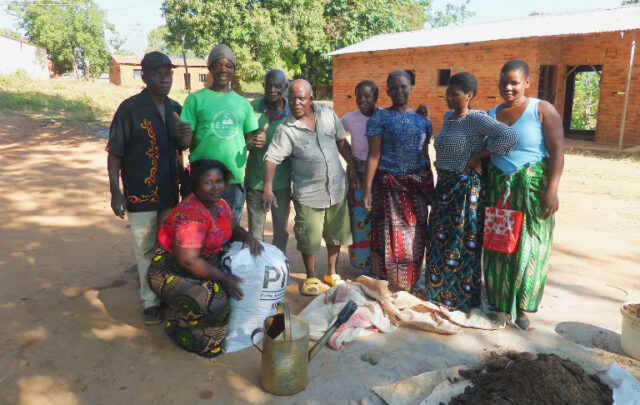
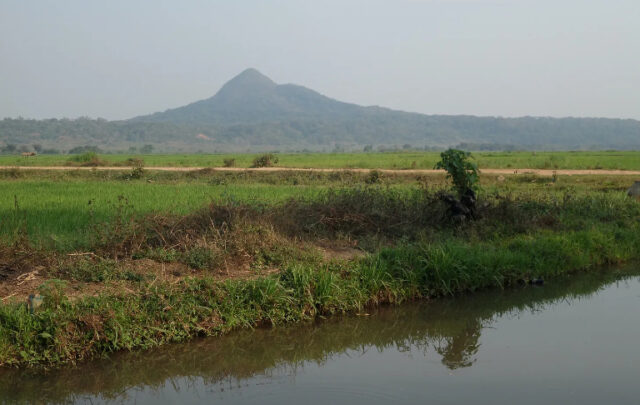
It is easy to be seduced by the peaceful rural scenes, punctuated by rice fields, vegetable patches and reed-filled wetlands. But behind the natural tapestry, tension and anger are brimming over in the local communities near the Thai-Lao Friendship Bridge outside of the Lao capital.
The communal complaint: their long self-sustaining community will on government orders soon be converted into an 18-hole golf course, luxury hotel and top-end residential developments, and the compensation on offer to relocate is well below going market land prices.
…His are bold words in authoritarian-run Laos, where the regime brooks no dissent or media criticism. As the economy transitions towards more market driven economics, the landlocked country has undergone a quiet economic boom in recent years, with average gross domestic product growth averaging around 6%.
At the same time the country’s Gini coefficient, a measure of inequality, has steadily increased, indicating a widening gap between rich and poor amid rising economic growth. Recent widespread and broad scale land grabs have become part and parcel of the government’s new market-led development model, as witnessed in recent years in neighboring Cambodia and Thailand.
As in many traditional societies, land in Laos is often held by tacit agreement rather than legal deeds. In some cases land was given by the state to those deemed worthy, like soldiers. Now that land is becoming a highly prized commodity, traditional land rights are being overturned by state power…
(21 Jan 2010)
Food carts take the curse off Portland’s parking lots
Philip Langdon, new urban news
In Portland, Oregon, everyone is talking about food carts. In the past few years, more than 400 theoretically movable (but in fact mostly stationary) food stands have proliferated across Multnomah County.
From walk-up windows, the cart operators dispense extremely varied food, often of high quality. In many instances, they work with ingredients from nearby agricultural producers. In a state that’s currently suffering one of the highest unemployment rates in the nation, carts make it possible for people of modest means to eat out — usually more healthfully than at fast-food chain restaurants.
Some individuals with long-term hopes of opening full-scale restaurants see diminutive food carts as a low-cost way of making a start. “What do creative unemployed young people do in a recession?” asks Ethan Seltzer, a Portland State University planning professor who is a fan of food carts. “They get a micro-loan and run a food cart. We’re losing parking lots to food cart pods.”
“The carts help to keep activity on the street” and make the edges of parking lots more appealing, observes G.B. Arrington, principal practice leader for PB PlaceMaking in Portland.
When the Congress for New Urbanism held a transportation summit in downtown Portland last November, participants were struck by the number of food carts downtown. Several lots in the central business district have not just one or two carts but whole clusters of them (see photo on page 1)…
(Jan/Feb 2010)
One quarter of US grain crops fed to cars – not people, new figures show
John Vidal, The Guardian
One-quarter of all the maize and other grain crops grown in the US now ends up as biofuel in cars rather than being used to feed people, according to new analysis which suggests that the biofuel revolution launched by former President George Bush in 2007 is impacting on world food supplies.
The 2009 figures from the US Department of Agriculture shows ethanol production rising to record levels driven by farm subsidies and laws which require vehicles to use increasing amounts of biofuels.
“The grain grown to produce fuel in the US [in 2009] was enough to feed 330 million people for one year at average world consumption levels,” said Lester Brown, the director of the Earth Policy Institute, a Washington thinktank ithat conducted the analysis.
Last year 107m tonnes of grain, mostly corn, was grown by US farmers to be blended with petrol. This was nearly twice as much as in 2007, when Bush challenged farmers to increase production by 500% by 2017 to save cut oil imports and reduce carbon emissions.
More than 80 new ethanol plants have been built since then, with more expected by 2015, by which time the US will need to produce a further 5bn gallons of ethanol if it is to meet its renewable fuel standard…
(22 Jan 2010)
Thanks to kalpa again for the articles below.
Reclaiming Value: An Interview with Raj Patel
Paula Crossfield, The Huffington Post
In his latest book, The Value of Nothing, Raj Patel explores the failures of so-called free market capitalism, and highlights some of the ways people are changing the democratic system. One of the most exciting social movements for Patel is the food movement, where thousands of people are raising the bar for social justice by improving the health and environmental impacts of the food we produce, and the labor practices employed in how we bring food to the table, with the goal of providing a stable food supply for all people.
The title of his book comes from a quote by Oscar Wilde, “Nowadays people know the price of everything and the value of nothing.” I spoke to Patel this week to better understand where our market system went wrong, and how we can begin to reclaim the idea of value from the marketplace.
Paula Crossfield: You book centers around the idea that price is not a proper indicator of value. How are the costs left out of the price getting paid?
Raj Patel: Well, we pay $4 for a hamburger at our local burger joint, but Indian researchers looked at the environmental costs of producing a hamburger and came up with the figure that that burger should cost $200. That is just the environmental costs. But we [also] pay in terms of lost biodiversity, species that are lost through deforestation, [and] through increased climate change. There was a study a couple of years ago that did the math with the way that we over-consume today, and if you add up the excess debt, from the depletion of the ozone layer, to the migrations and mitigation costs of climate change, the costs in terms of emptying the seas, [and] increased desertification, then people in developing countries pay way more than we do. We owe them around 5 trillion dollars, with a very conservative calculation. [In addition] one in five health care dollars in the United States is spent on taking care of someone who has diabetes. Those are the costs that we pay not at the check out, but through our health insurance system. And thats why in the book I say that cheap food is cheat food. The way that food is made cheap in the United States involves all sorts of cut corners from the environmental costs we don’t pay to the labor costs we don’t pay… But we all end up paying for it in the end, just not the corporations.
PC: Stephen Colbert asked you [when you were on his show, the Colbert Report, last week] if we should just be paying $200 for a hamburger, but you argue for a different approach.
RP: That seems like where the argument would be heading, if the issue was that we should just pay the full costs of things, and let the market guide our consumption. Eventually we’d just end up paying a tax, and the increased costs would end up being a disproportionate tax on poor people. If we’re interested in a comprehensive public health care scheme, with things like the soda tax, then we need to look at the whole system. And the whole system involves people’s ability to afford food in the first place. When you have 1 in 3 kids born in 2000 who will develop diabetes, and 1 in 2 kids of color [of the same age] who will develop diabetes, its worth asking that deeper question. And when you get into that deeper question, you get immediately into the issue of poverty. So what I’m arguing for is certainly a move towards us paying the full costs of the goods that we produce, but we need to tackle poverty and we need to tackle the appalling state of low wages in the United States, but more than that, what I am arguing for is a more democratic way in which we live with the consequences of our economic actions…
(22 Jan 2010)
You can learn more about the book at Raj Patel’s blog
How Cows (Grass-Fed Only) Could Save the Planet
Lisa Abend, Time Magazine
On a farm in coastal Maine, a barn is going up. Right now it’s little more than a concrete slab and some wooden beams, but when it’s finished, the barn will provide winter shelter for up to six cows and a few head of sheep. None of this would be remarkable if it weren’t for the fact that the people building the barn are two of the most highly regarded organic-vegetable farmers in the country: Eliot Coleman wrote the bible of organic farming, The New Organic Grower, and Barbara Damrosch is the Washington Post’s gardening columnist. At a time when a growing number of environmental activists are calling for an end to eating meat, this veggie-centric power couple is beginning to raise it. “Why?” asks Coleman, tromping through the mud on his way toward a greenhouse bursting with December turnips. “Because I care about the fate of the planet.”
Ever since the U.N. Food and Agriculture Organization released a 2006 report that attributed 18% of the world’s man-made greenhouse-gas emissions to livestock — more, the report noted, than what’s produced by transportation — livestock has taken an increasingly hard rap. At first, it was just vegetarian groups that used the U.N.’s findings as evidence for the superiority of an all-plant diet. But since then, a broader range of environmentalists has taken up the cause. At a recent European Parliament hearing titled “Global Warming and Food Policy: Less Meat = Less Heat,” Rajendra Pachauri, chairman of the Intergovernmental Panel on Climate Change, argued that reducing meat consumption is a “simple, effective and short-term delivery measure in which everybody could contribute” to emissions reductions.
And of all the animals that humans eat, none are held more responsible for climate change than the ones that moo. Cows not only consume more energy-intensive feed than other livestock; they also produce more methane — a powerful greenhouse gas — than other animals do. “If your primary concern is to curb emissions, you shouldn’t be eating beef,” says Nathan Pelletier, an ecological economist at Dalhousie University in Halifax, N.S., noting that cows produce 13 to 30 lb. of carbon dioxide per pound of meat.
So how can Coleman and Damrosch believe that adding livestock to their farm will help the planet? Cattleman Ridge Shinn has the answer. On a wintry Saturday at his farm in Hardwick, Mass., he is out in his pastures encouraging a herd of plump Devon cows to move to a grassy new paddock. Over the course of a year, his 100 cattle will rotate across 175 acres four or five times. “Conventional cattle raising is like mining,” he says. “It’s unsustainable, because you’re just taking without putting anything back. But when you rotate cattle on grass, you change the equation. You put back more than you take.”
It works like this: grass is a perennial. Rotate cattle and other ruminants across pastures full of it, and the animals’ grazing will cut the blades — which spurs new growth — while their trampling helps work manure and other decaying organic matter into the soil, turning it into rich humus. The plant’s roots also help maintain soil health by retaining water and microbes. And healthy soil keeps carbon dioxide underground and out of the atmosphere…