Click on the headline (link) for the full text.
Many more articles are available through the Energy Bulletin homepage
Carbon emissions pose danger, EPA finds
Mark Clayton, Christian Science Monitor
Agency’s move lays the foundation for expanding US regulation of thousands of companies.
—
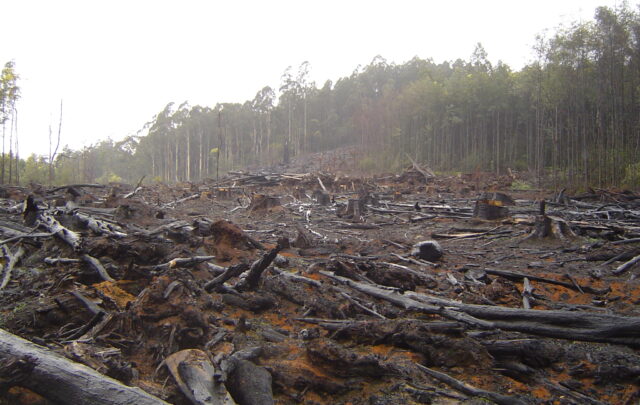
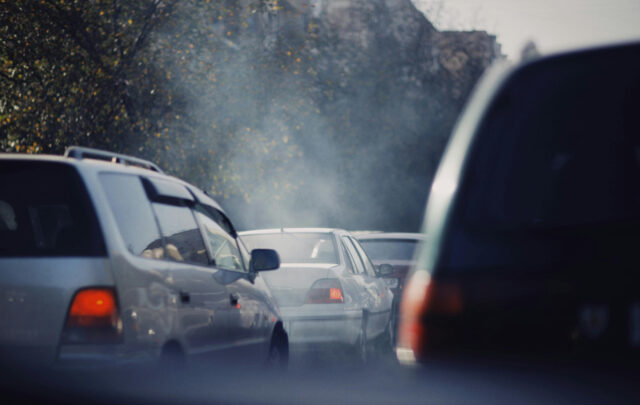
In deciding that carbon dioxide poses a danger to human health and the environment, the Environmental Protection Agency has laid the groundwork for new and expansive federal oversight of carmakers, utilities, and a host of other large emitters of the greenhouse gas.
The EPA’s finding, announced Friday, is likely to act as a big nudge to Congress to take quicker action on new energy and climate legislation that sets carbon-emissions limits. Many lawmakers and companies would prefer to see limits set by Congress rather than regulations set by the EPA. Indeed, the Obama administration has made clear that it, too, prefers a legislative approach.
The finding also bolsters the Obama administration’s standing heading into international talks in December on addressing climate change, in that it is the most assertive stance yet taken by the United States.
(17 April 2009)
Energy Secretary Chu, on Power Sources Old and New
Lois Romano, Washington Post
… Romano: Do people get it? How would you rate our nation’s understanding of the energy crisis?
Chu: I think virtually all Americans are uneasy about our growing dependency on imported oil. . . . [But] it’s hard for people to actually think deeply about what will be happening 30, 50 years from today [on global warming]. Most societies have not had to grapple with the fact that something 50 years down the road can have some grave consequences.
… Romano: Al Gore has launched a multimillion-dollar campaign against coal, against coal manufacturing plants. In fact, he’s encouraged civil disobedience in protesting them. What do you think about this?
Chu: The issue here is that if you consider, for example, the countries that have coal, two-thirds of the known coal reserves lie primarily in the United States, China, India and Russia. The United States actually has the most known coal reserves in the world, and over 50 percent of our electricity is generated by coal. Even if the United States turns its back on coal, China and India will not, given the state of affairs. I would prefer to say let’s try to develop technologies that can get a large fraction of the carbon dioxide out of coal. Start with 70, 80 percent and build up to over 90 percent, but start now and try to get it out.
Romano: So is it a little unrealistic for Vice President Gore to think that he can end coal production by protesting these plants?
Chu: Well, Al Gore is a friend of mine, and let’s just say that — I’ll go back to my original statement that we really have to take the lead, the technological lead, and see if this can get done.
(16 April 2009)
Related:
Energy Secretary Backs Clean-Coal Investments (WSJ).
Pentagon Prioritizes Pursuit Of Alternative Fuel Sources
Steve Vogel, Washington Post
For the Defense Department, the largest consumer of energy in the United States, addiction to fuel has greater costs than the roughly $18 billion the agency spent on it last year.
By some estimates, about half of the U.S. military casualties in Iraq and Afghanistan are related to attacks with improvised explosive devices on convoys, many of which are carrying fuel.
… Spurred by this grim reality, the Pentagon, which traditionally has not made saving energy much of a priority, has launched initiatives to find alternative fuel sources. The goals include saving money, preserving dwindling natural resources and lessening U.S. dependence on foreign sources.
(13 April 2009)
Elizabeth Warren Makes Jon Stewart Feel Better about Bailout On “Daily Show” (video and text)
Sam Stein, Huffington Post
Detailing the need for transparency, laying out a framework for bank recovery and making a clear and succinct case for a smart regulatory system, TARP overseer Elizabeth Warren did what few other “Daily Show” guests have done in the past year: instill confidence in its host, Jon Stewart.
In a relatively lengthy interview that aired on Wednesday night, Warren, ever the academic, managed to generate a few laughs, none more so when she stumped herself on what exactly the acronym PPIP meant (for the record: the Public-Private Investment Program). But it was her commentary on the economy, at once clear and forthright, that left Stewart soothed.
“[This] is probably the first time in probably six months to a year that I feel better,” said the Daily Show host. “I don’t know what it is you just did right there. But for a second that was like financial chicken soup for me.”
[EMBEDDED VIDEOS]
(16 April 2009)
The video’s fun to watch. We need more officials like Elizabeth Warren and more journalists like Jon Stewat. -BA
Why Obama’s bank bailout could be bad for the environment
Tom Philpott, Grist
The Obama adminstration’s plan for reviving the banks is predicated on the idea that the “toxic assets” weighing down balance sheets aren’t really all that toxic at all; that the banks, in other words, aren’t actually insolvent, but just the victims of temporary investor panic. If that logic proves true, then we may be in the process of delaying a much-needed reckoning of how we arrange our built landscapes. in short, the Obama administration is placing a massive bet, with public cash, on the resiliency of suburbia—at a point when climate change and hair-trigger oil markets threaten to make suburbia look like a foolish relic.
Here’s what i mean. The administration is betting an unfathomable amount of public money on the idea that banks have merely gotten a bad rap from investors. Here is how Josph Stiglitz, the Nobel laureate Columbia economist, recently summarized the so-called Geithner plan for the New York Times op-ed page:
Under the plan by Treasury Secretary Timothy Geithner, the government would provide about 92 percent of the money [for large institutional investors like hedge funds] to buy the [“toxic”] asset[s] but would stand to receive only 50 percent of any gains, and would absorb almost all of the losses.
So the government induces well-heeled investors to buy beaten-down assets, with a guarantee of limited losess and the prospect of outsized gains. And if the assets actually bounce back and prove to be worth something after all, then the public purse books a modest gain, the investors make out like bandits, and the banks clean up their balance sheets. Based on this scenario, bond-market strongman Bill Gross declared the plan “win, win, win.”
But what does it mean to win in this case? It’s my understanding that the “toxic assets” mainly involved securities and derivatives based on housing stock—much of it concentrated in highly suburbanized regions in south-central Florida and around southwestern cities like Phoenix and Las Vegas.For everyone to win, those places—which rank high among areas with the nation’s highest foreclosure rates— will have to become “hot” again. People will have to fill up the desolate subdivisions around Fort Mayers, Fl., immortaiized in Gerorge Packer’s recent New Yorker article “Ponzi State.” They’ll decide that yes, they do want to live in—and are willing to bid up real estate prices in—the fifth suburb out from Las Vegas, or the outer ringsaround Los Angeles or Houston or Dallas.
If they do, the formerly “toxic” assets will rise in value, the taxpayers will be off the hook, and the banks will have been saved on the cheap (maybe even at a modest profit). But suburbia will have become more entrenched, and so will its economic wellsprings: sprawl, far-flung Big Box stores, cars, highway subsidies, etc. However, if you take climate change and oil scarcity seriously, then this scenario looks shaky—and at best temporary. Cheap oil might last long enough to reignite suburban real estate markets temporarily, but they’ll almost certainly crash again—people won’t be able to afford the gas to work far from home.
So arguably, at a time when the Administration should be devoting resources to creating a low-carbon economy and and dense, energy-efficient housing patterns, it’s placing a large bet on business as usual.
How large a bet? Say the “toxic assets” really are toxic—that developers in places like exurban Florida, greater Las Vegas, etc., really dis overbuild housing stock, and are facing years of depressed real estate markets.In that case, the assets that Geithner is now busily shuffling off the banks’ balance sheets and into the hands of private investors could really be worth pennies on the dollar vs. face value. Remember, the public is putting up 92 percent of the money—and facing that much risk as well. Losses could be massive. And money that could have been spent building out a rail network, building houses within dense city centers, bolstering local and regional food infrastructure—will go down the drain. “Win, win, win” looks a lot like “lose, lose.”
(14 April 2009)