Click on the headline (link) for the full text.
Many more articles are available through the Energy Bulletin homepage
“The Great Squeeze” – film review
Amanda Kovattana, Flickr blog
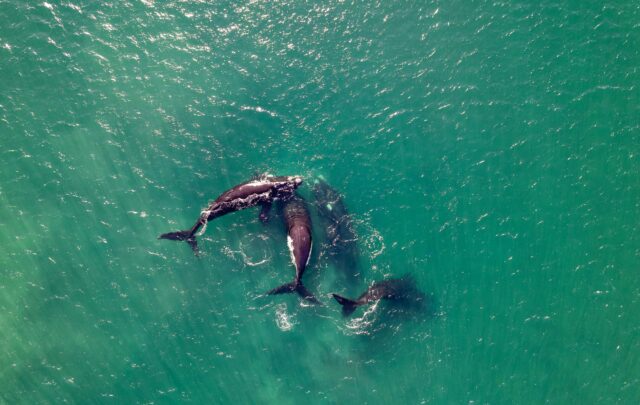
 All the usual suspects, Heinburg, Kunstler, Lester Brown, are gathered to reiterate the litany of eco disasters soon to befall us and the industrial growth paradigm of large amounts of energy resulting in more people and more consumption leading to ecological collapse. Plus many not so well known faces adding their bits to it, ie: water shortage, ocean ph. Alexandra Cousteau (daughter of Jacque) is particularly poignant on eco status of the ocean.
A historical perspective was offered by an archeologist which I found helpful. He described the Mayans as a surplus food based population boom that invested all their surplus into growing more corn until a few drought years did them in. Same for the Anasazi. What was interesting about that early native American civilization was that it was abandonned completely as a lesson in collapse. But the people did not disappear entirely as some imply. They became the tribes of Hopi and Zuni and other desert people lliving in the margins. They had learned. Wickipedia notes that the name Anasazi is also translated as “ancient enemy” which says a lot right there.
The talking heads here urge us to learn before it is too late. Heinberg talks about measuring human happiness rather than GDP.
At 65 minutes this is a good teaching film that covers the basics. Also included is an upbeat short about a post hurricane storm town that rebuilds with a green emphasis that they claim as their new identity.
(14 February 2009)
Interview: Matthew Stein, author of “When Technology Fails” (audio)
Jason Bradford, Reality via Global Public Media
Matthew Stein, author of /When Technology Fails: A Manual for Self-Reliance, Sustainability, and Surviving the Long Emergency/ is the guest on The Reality Report. Learn about the “Survivor Personality” and “What are the best bugs to eat,” as drawn from Mat’s encyclopedic work.
(13 February 2009)
Homer-Dixon: Our Panarchic Future
Thomas Homer-Dixon, Worldwatch Institute
A theory that explains the evolution of ecosystems may apply to civilizations as well-and it says we’re approaching a critical phase.
[Worldwatch Editor’s note: The following article is adapted from The Upside of Down: Catastrophe, Creativity, and the Renewal of Civilization, by Thomas Homer-Dixon (copyright © Resource & Conflict Analysis, Inc.) and printed by permission of Island Press, Washington, D.C. (www.islandpress.org).]
Buzz Holling, one of the world’s great ecologists, is a kind and gracious man, with a shock of white hair and a warm smile. Born in Toronto and educated at the University of Toronto and the University of British Columbia, he worked for many years as a research scientist for the government of Canada, where he pioneered the study of budworm infestations in the great spruce forests of New Brunswick. Later, as an academic researcher and eventually as director of the International Institute for Applied Systems Analysis in Austria, he created powerful mathematical models to explain the ecological phenomena he saw in the field. Using these models, he achieved major breakthroughs in understanding what makes complex systems of all kinds-from ecosystems to economic markets-adaptive and resilient.
Since the early 1970s, Holling’s research has attracted attention in disciplines ranging from anthropology to economics. His papers have been distributed like samizdat through the Internet, and Holling himself has become something of a guru for an astonishing number of very smart people studying complex adaptive systems. Some of these researchers have coalesced into an international scientific community called the Resilience Alliance, with over a dozen participating institutions around the world. Although Holling is now retired from his last academic position at the University of Florida, he’s still terrifically vigorous and focused on furthering the Resilience Alliance’s work.
Holling and his colleagues call their ideas “panarchy theory”-after Pan, the ancient Greek god of nature. Together with anthropologist and historian Joseph Tainter’s ideas on complexity and social collapse, this theory helps us see our world’s tectonic stresses as part of a long-term global process of change and adaptation. It also illustrates the way catastrophe caused by such stresses could produce a surge of creativity leading to the renewal of our global civilization.
(February 2009)
Zero-Sum Game
Richard Heinberg, Post Carbon Institute
Oops!—bad timing. The announcement that California taxpayers will have to pay most of the costs for raising the famous octuplets born recently near Los Angeles is provoking widespread indignation about what is often taken to be a fundamental human right—i.e., the right to reproduce ad infinitum.
The story might have raised eyebrows a year ago or five. But the fact that the 33-year-old single, unemployed mother’s plight is capturing headlines at the very moment when the State of California is in effect declaring bankruptcy (and laying off teachers and other state workers) not only provides grist for irate radio call-ins, it also highlights a profound shift taking place just beneath the surface of our collective awareness.
For most of the last century or two, economic growth has lifted all boats and temporarily increased Earth’s effective carrying capacity. Though the human population was growing relentlessly and at an unprecedented rate, few worried: every year there were more jobs, more opportunities, new careers. The pie was expanding, so the fact that there were always more people at the table was perceived as a plus. With more folks to talk to, life was becoming richer! Whatever area of skill you might be interested in, you could see records being broken, unheard-of achievements being made: there were better pianists and violinists than anyone had ever heard before, better athletes than anyone had ever seen, more brilliant mathematicians, surgeons—you name it—just because there were so many people competing with one another to develop excellence in their areas of expertise. What a time to be alive!
Now suddenly the game has changed. The pie has stopped getting bigger. As more people arrive at the table, everyone nervously eyes the remaining crumbs, anxious to avert a free-for-all but also keen to avoid being left out.
Welcome to the post-peak economic meltdown!
(12 February 2009)