Click on the headline (link) for the full text.
Many more articles are available through the Energy Bulletinhomepage
Scenario 2020: The Future of Food in Mendocino County
Jason Bradford, Global Public Media
A presentation by Jason Bradford originally given to Leadership Mendocino, Nov. 14, 2008. In a brilliant piece of visualization, Dr. Bradford presents as if from the year 2020 on the history of Mendocino county after an energy crisis, describing the rapid changes that followed.
(14 November 2008)
Jason’s envisioned future is not improbable. I hope some of the intelligence agencies watch this. -BA
In “eat local” movement, Cuba is years ahead
Esteban Israel, Reuters
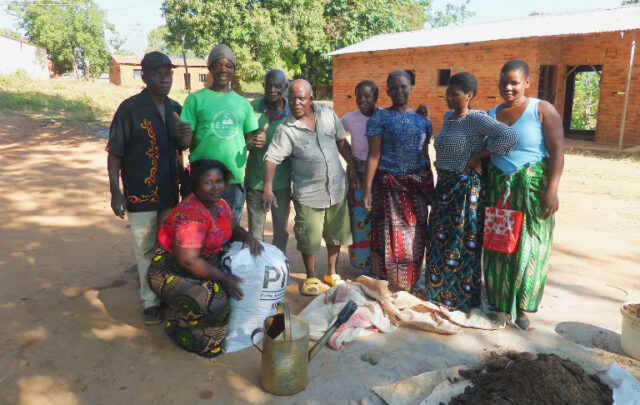
After the collapse of the Soviet Union in 1991, Cuba planted thousands of urban cooperative gardens to offset reduced rations of imported food.
Now, in the wake of three hurricanes that wiped out 30 percent of Cuba’s farm crops, the communist country is again turning to its urban gardens to keep its people properly fed.
“Our capacity for response is immediate because this is a cooperative,” said Miguel Salcines, walking among rows of lettuce in the garden he heads in the Alamar suburb on the outskirts of Havana.
Feeding the world sustainably demands new approach to farming and food
… Around 15 percent of the world’s food is grown in urban areas, according to the U.S. Department of Agriculture, a figure experts expect to increase as food prices rise, urban populations grow and environmental concerns mount.
Since they sell directly to their communities, city farms don’t depend on transportation and are relatively immune to the volatility of fuel prices, advantages that are only now gaining traction as “eat local” movements in rich countries.
(15 December 2008)
Greg Bowman, Rodale Institute
Agribusiness and grain-trade policy as usual is being challenged around the world in light of 2008’s global food shortages and persistent hunger in many sectors. A new theme is that free-trade rules and international banking mandates to developing nations are failing, food-wise.
The commodity agriculture model has evolved to require staple grain crops to be grown as efficiently as possible in one place for export to the highest buyer outside the country. This approach has too often made farming into an industrial process while rendering the role of feeding the cultivated land’s people into a virtual afterthought. Political leaders, researchers and grassroots agricultural organizations are increasingly in agreement that transition to more organic farming methods that target feeding their home areas first will build stronger, safer and ultimately more prosperous countries.
Six years ago, African leaders agreed to an initiative1 to focus agriculture-based development to end hunger, reduce poverty and food insecurity along with increasing opportunities for export. Results have been minimal and measures imprecise, but the goals are in place.
In contemporary research that factors in human health, ecological restoration, environmental responsibility and sustainability tied to current solar power, the current yield-focused conventional farming practices come up short. Dramatic price dips for crude oil notwithstanding, fossil fuels are no longer a sustainable foundation for food production.
… {from sidebar “USDA needs office of community food systems” by Mark Winne)
If I walked into USDA headquarters in Washington, D.C., and asked to see someone who could help me develop a local food system that promoted sustainable and profitable food production with the primary task to feed the people in my region, nobody would know where to send me. Theoretically, if I was super-clever, possessed infinite stamina, and was very lucky, I could piece together what I needed from the various silos in the agricultural bureaucracy. But to my knowledge, no one has fully succeeded with that task.
What must be done? President-elect Obama and his new Secretary of USDA should create an Office of Community Food Systems
(17 December 2008)
Two extraordinary organizations supported by the U.S. government:
National Sustainable Agriculture Information Service (ATTRA) which has posted many publications online.
Sustainable Agriculture Research and Education
One could mention also the agriculture advisors and the Master Gardener programs.
In California, the program makes available quantities of top information, such as this site on Integrated Pest Management.
Michael Pollan On Vilsack, Agriculture — And Food
npr
When President-elect Barack Obama nominated former Iowa Gov. Tom Vilsack as his secretary of agriculture, he praised Vilsack’s knowledge of both agriculture and energy. But author Michael Pollan says the incoming administration’s focus should be on food and the people who eat it.
Obama announced his selection Wednesday and touted Vilsack’s credentials.
“As governor of one of our most abundant farm states, he led with vision,” Obama said, “promoting biotech to strengthen our farmers in fostering an agricultural economy of the future that not only grows the food we eat, but the energy that we use.”
Pollan, author of In Defense of Food and a leader in the sustainable food movement, said Obama will not make progress on climate change or energy independence — or health care, for that matter — unless America’s food system is included in the plan.
(18 December 2008)
Recommended by Tom Philpott at Gristmill, who also points to related interviews with an organic farmer and an environmental advocate and a Ronnie Cummins of the Organic Consumers Association and Brian Moore of the National Audubon Society.. BA
I grew up on an Iowa farm, and I would be the last to devalue the incredible amounts of hard work and persistence shown by the remaining family farmers that are clinging on to their livelihood by their fingers and toes in the face of an ever-encroaching agribusiness takeover of some of the most fertile soil in the world. That said, is intensive industrialized farming of commodity crops that are now mainly used for such things as high fructose corn syrup to sweeten processed food, animal feed for factory farms, and biofuels a sustainable way to feed the planet? If not, and I think that there is increasing scientific evidence to show that it isn’t, I hope that former Gov. Vilsack can begin to find some worth in Michael Pollan’s words as the fossil-fueled farming juggernaut begins to falter in the years ahead. KS