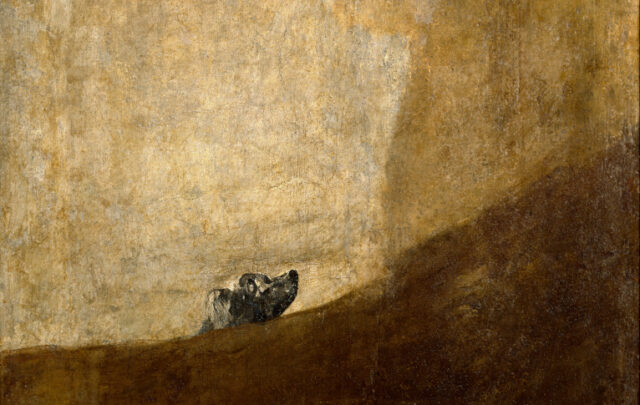
Disarray: The US economy has entered a black hole
James Howard Kunstler, Clusterf**k Nation Chronicle
The dark tunnel that the US economy has entered began to look more and more like a black hole last week, sucking in lives, fortunes, and prospects behind a Potemkin facade of orderly retreat put up by anyone in authority with a story to tell or an interest to protect — Fed chairman Bernanke, CNBC, The New York Times, the Bank of America…. Events are now moving ahead of anything that personalities can do to control them.
The “housing bubble” implosion is broadly misunderstood. It’s not just the collapse of a market for a particular kind of commodity, it’s the end of the suburban pattern itself, the way of life it represents, and the entire economy connected with it. It’s the crack up of the system that America has invested most of its wealth in since 1950. It’s perhaps most tragic that the mis-investments only accelerated as the system reached its end, but it seems to be nature’s way that waves crest just before they break.
(14 Jan 2008)
Kunstler lists policies he thinks should be implemented. -AF
Americans Cut Back Sharply on Spending
MICHAEL BARBARO and LOUIS UCHITELLE, New York Times
A similar trend is evident in the cost of natural gas, electricity and home heating oil. “We built these big houses in the suburbs, which need a lot of energy to stay warm and a car to go shopping,” said Stephen Brobeck, executive director of the Consumer Federation. “And we can’t change that quickly.”
(14 Jan 2007)
Via LifeAfterTheOilCrash.net. Matt notes that in November 2005 Kunstler wrote, “The high cost of home heating is the IED [Improvided Explosive Device] of the housing bubble.”
Empty Houses Home to Crime As Loans Fail
J.W. Elphinstone, Forbes
Eighty-five bungalows dot the cul-de-sac that joins West Ontario Avenue and East Ontario Avenue in Atlanta. Twenty-two are vacant, victims of mortgage fraud and foreclosure. Now house fires, prostitution, vandals and burglaries terrorize the residents left in this historic neighborhood called Westview Village.
“It’s created a safety hazard. And if we have to sell our house tomorrow, we’re out of luck,” said resident Scott Smith. “Real estate agents say to me ‘We’re not redlining you, but I tell my clients to think twice about buying here.'”
As defaults surge on mortgages made to borrowers with spotty credit and adjustable-rate loans, more people are noticing that their neighbors are caught up in the meltdown. Their misfortunes are haunting those left living on the same streets. The effects aren’t confined to just low-income or redeveloping communities; they are seeping into middle-class neighborhoods and brand new developments…
… The rise in crime in Westview is typical of a neighborhood struggling with numerous foreclosures, according to a recent study by Dan Immergluck of Georgia Institute of Technology in Atlanta and Geoff Smith of Woodstock Institute in Chicago.
That study showed that when the foreclosure rate increases one percentage point, neighborhood violent crime rises 2.33 percent.
(13 Jan 2008)
Contributor Jeffrey J Brown writes:
Another one for the “JHK was right” file. The most unsafe areas may increasingly be outlying suburban areas.”