Click on the headline (link) for the full text.
Many more articles are available through the Energy Bulletin homepage
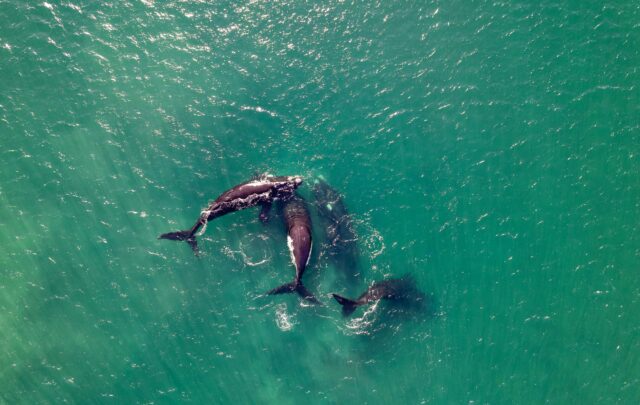
Warming May Be Hurting Gray Whales’ Recovery
Juliet Eilperin, Washington Post
As many as 118,000 gray whales roamed the Pacific before humans decimated the population through hunting, and human-induced climate change may now be depriving those that remain of the food they need, according to a study released yesterday.
The research, based on a detailed analysis of DNA taken from gray whales living in the eastern Pacific, highlights how human behavior has transformed the oceans, the scientists said.
Today there are only about 22,000 Pacific gray whales, including about 100 in the western Pacific. By examining the genetic variability of the current population, scientists at Stanford University and the University of Washington at Seattle calculated that there were between 76,000 and 118,000 gray whales in the Pacific before commercial whaling in the 1800s shrank their numbers.
Federal officials took eastern Pacific gray whales off the endangered species list in the mid-1990s, but a rise in sea temperatures appears to have limited the whales’ available food. A recent spike in deaths among gray whales may suggest “this decline was due to shifting climatic conditions on Arctic feeding grounds,” the researchers wrote in the paper, being published online this week in the Proceedings of the National Academy of Sciences.
(11 September 2007)
Warming Is Seen as Wiping Out Most Polar Bears
John M. Broder and Andrew C. Revkin, New York Times
Two-thirds of the world’s polar bears will disappear by 2050, even under moderate projections for shrinking summer sea ice caused by greenhouse gases in the atmosphere, government scientists reported on Friday.
The finding is part of a yearlong review of the effects of climate and ice changes on polar bears to help determine whether they should be protected under the Endangered Species Act. Scientists estimate the current polar bear population at 22,000.
The report, which the United States Geological Survey released here, offers stark prospects for polar bears as the world grows warmer.
(7 September 2007)
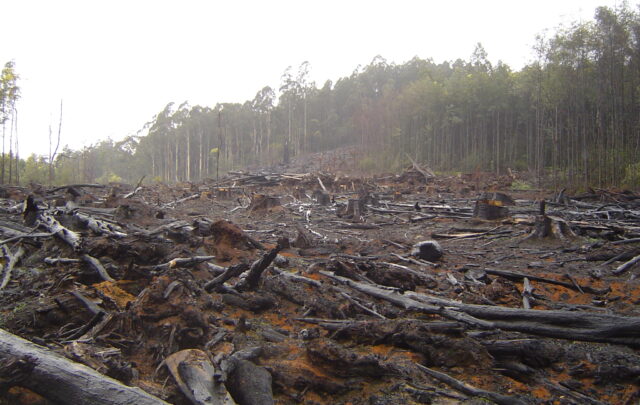
As Brazil’s rain forest burns down, planet heats up
Jack Chang, McClatchy Newspapers
TAILANDIA, Brazil – For more than a decade, Vigilio de Souza Pereira has carved his living out of the thick Amazon rain forest around his ranch in northern Brazil.
0908 04When Pereira needs more land for his crops and cattle, he cuts more virgin jungle and sets the vegetation ablaze. When the nutrient-poor soil has been depleted, he moves on and cuts down more jungle.
Such slash-and-burn agriculture has helped the 51-year-old Pereira and millions of other farmers and ranchers scratch out a living from the forest, but it’s put Brazil at the heart of the environmental challenge of the century.
As vast tracts of rain forest are cleared, Brazil has become the world’s fourth-largest producer of the greenhouse gases that cause global warming, after the United States, China and Indonesia, according to the most recent data from the U.S.-based World Resources Institute.
And while about three-quarters of the greenhouse gases emitted around the world come from power plants, transportation and industrial activity, more than 70 percent of Brazil’s emissions comes from deforestation.
(8 September 2007)
Also at Common Dreams.
What a Lake Says About Climate Change
Julio Godoy, Inter Press Service
BERLIN, Sep 11 (IPS/IFEJ) – When the East German nuclear power plant Rheinsberg was shut down almost 20 years ago, environmentalists expected that fauna and flora in nearby Stechlin lake would survive without further damage.
The power plant in the city 75 km north of Berlin had been functioning since 1966. It took some 300,000 cubic metres of water daily from the lagoon to cool down the facility’s installations. The water would then be released back into the lake — 10 degrees warmer.
Before the plant began to function scientists had declared the waters “the cleanest in Germany,” says Peter Casper, biochemist at the Institute Leibniz for Water Ecology in Stechlin.
There was no reason then to doubt their judgement. The lake is surrounded by pristine forests, without any agriculture use. The region is also scarcely populated, guaranteeing that no sewage was channelled into the lake.
Soon after the Rheinsberg nuclear power plant began operating, scientists began to find changes, Casper told IPS. “Algae and other micro-organisms started to grow very rapidly.” The fauna started to degenerate.
“This is what we call the divergent development of the food chain,” Casper said. “Not all living organisms in the lake reacted at the same speed to changes in the environment. Algae and other micro-organisms grow more rapidly, but also start and end their life cycle more rapidly. This means that fish, which feed on algae, and do not grow at the same new speed, are deprived of their food at a critical point in their growth.”
…Analyses carried out by the Institute Leibniz have a particular meaning today due to the continuity and duration of the study. “We consider these changes we found in the lake Stechlin correspond with what is happening on a larger scale in the oceans due to global warming,” Rainer Koschel, director of the Institute Leibniz told IPS.
Ocean biologists have found that global warming is modifying the growth periods of algae and other sea plants. According to reports by the Intergovernmental Panel on Climate Change, 80 percent of global warming is absorbed by seawater, leading among other consequences to a rise in water temperatures.
(11 September 2007)
Also at Common Dreams.
Expert says climate change will spread global disease
AFP
Climate change will have an overwhelmingly negative impact on health with possibly one billion more people at risk from dengue fever within 80 years, an expert said Tuesday.
While there would be some positive effects, “the balance of health effects is on the negative side,” Alistair Woodward, a professor at the University of Auckland, told a regional meeting of the World Health Organisation.
Woodward was a lead writer for the fourth assessment report of the Inter-Governmental Panel on Climate Change.
Giving examples in a speech, he said that in China’s Jiangsu province the winter freezing zone has moved northwards. The water snail that transmits schistosomiasis had also shifted northwards, putting perhaps 20 million people at risk of the parasitic disease also known as bilharziasis.
… Globally, said Woodward, the largest effect would be under-nutrition. “There will be some winners and losers, but overall, climate change is expected to have a negative effect on food production.”
(11 September 2007)
Global warming may pose threat to heart
Maria Cheng, Associated Press
Global warming may be melting glaciers and forcing polar bears onto land, but doctors warn it could also affect your heart.
“If it really is a few degrees warmer in the next 50 years, we could definitely have more cardiovascular disease,” said Dr. Karin Schenck-Gustafsson, of the department of cardiology at Sweden’s Karolinska Institute.
On the sidelines of the European Society of Cardiology’s annual meeting in Vienna this week, some experts said the issue deserves more attention. It’s well-known that people have more heart problems when it’s hot.
During the European heat wave in 2003, there were an estimated 35,000 deaths above expected levels in the first two weeks of August. In France alone, nearly 15,000 extra people died when temperatures soared. Experts say much of that was due to heart problems in the elderly worsened by the extreme heat.
(5 September 2007)
A must-read 1972 climate prediction
Rate of global warming predicted 35 years ago in Nature
Joseph Romm, Gristmill
Nature just published this remarkable letter by Neville Nicholls of Australia’s Monash University:
Climate: Sawyer predicted rate of warming in 1972
Thirty-five years ago this week, Nature published a paper titled “Man-made carbon dioxide and the ‘greenhouse’ effect” by the eminent atmospheric scientist J.S. Sawyer (Nature 239, 23-26; 1972, $ubs. req’d). In four pages, Sawyer summarized what was known about the role of carbon dioxide in enhancing the natural greenhouse effect, and made a remarkable prediction of the warming expected at the end of the twentieth century. He concluded that the 25% increase in atmospheric carbon dioxide predicted to occur by 2000 corresponded to an increase of 0.6 °C in world temperature.
In fact the global surface temperature rose about 0.5 °C between the early 1970s and 2000. Considering that global temperatures had, if anything, been falling in the decades leading up to the early 1970s, Sawyer’s prediction of a reversal of this trend, and of the correct magnitude of the warming, is perhaps the most remarkable long-range forecast ever made.
Sawyer’s review built on the work of many other scientists, including John Tyndall’s in the nineteenth century (see, for example, J. Tyndall Philos. Mag. 22, 169-194 and 273-285; 1861) and Guy Callender’s in the mid-twentieth (for example, G. S. Callendar Weather 4, 310-314; 1949). But the anniversary of his paper is a reminder that, far from being a modern preoccupation, the effects of carbon dioxide on the global climate have been recognized for many decades.
Today, improved data, models and analyses allow discussion of possible changes in numerous meteorological variables aside from those Sawyer described. Hosting such discussions, the four volumes of the Intergovernmental Panel on Climate Change 2007 assessment run to several thousand pages, with more than 400 authors and about 2,500 reviewers. Despite huge efforts, and advances in the science, the scientific consensus on the amount of global warming expected from increasing atmospheric carbon dioxide concentrations has changed little from that in Sawyer’s time.
This won’t kill the Denier myth that climate scientists were predicting an imminent ice age in the 1970s — since the Deniers can’t be persuaded by the facts. Indeed, a 1977 report, “Energy and Climate,” by the National Academy of Sciences — the nation’s most prestigious scientific body — warned that uncontrolled greenhouse-gas emissions might raise global temperatures a staggering 10°F and raise sea levels 20 feet.
What the history does reveal to the rest of us is a continuity in scientific thought that should lead us to redouble our efforts to stop catastrophic climate change. After all, we were warned decades ago.
This post was created for ClimateProgress.org, a project of the Center for American Progress Action Fund.
(6 September 2007)