


Click on the headline (link) for the full text.
Many more articles are available through the Energy Bulletin homepage
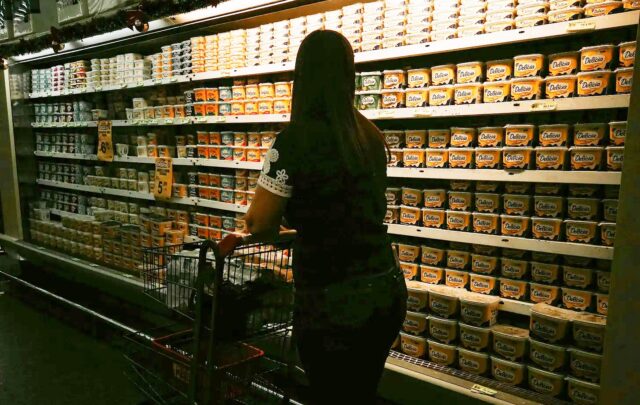
Living on Cuba’s Rationed Food
Anita Snow, Associated Press
AP Havana Bureau Chief Anita Snow is spending the month of June living on the ”libreta,” a ration book for food consumption in Cuba. Here’s her story.
——
June 3
HAVANA – The ration book that determines most Cuban diets – and that will briefly rule mine – fits in my palm. Thick brown pages list amounts of foodstuffs to be checked, signed and stamped at “la bodega,” the local government distribution center.
In my eight years as Havana bureau chief for The Associated Press, I’ve developed great friendships and deep respect for the Cuban people. But as a foreigner paid in U.S. dollars, I’ve never lived the way most Cubans do, using their ingenuity to make sure there’s enough to eat at month’s end.
The foundation of the Cuban diet is the communist government’s ration book, or “libreta,” and as a foreigner, I’m not entitled to one. Cubans, meanwhile, are barred by law from selling or trading their deeply subsidized rations, which cost 33 Cuban pesos a month, about $1.30. That’s roughly 10 percent of the average government salary of 350 Cuban pesos, about $16.
But food is so central to life and culture that I won’t fully appreciate the Cuban experience until I eat as they do. So I’ve decided to spend June eating nothing but the rations and other food that Cubans earning an average salary can buy at farmers’ markets using Cuban pesos.
High in carbohydrates, the ration is a safety net for basic food needs, providing just 10 to 15 days of monthly nutritional requirements, depending on eating habits. My plan is to eat only the amounts and kinds of food listed in a friend’s “libreta,” plus whatever extras most Cubans buy at approved stores and markets.
My project comes amid debate over the 45-year-old universal food ration. Many say it’s unfair to give all Cubans the same allotment irrespective of income. Even Fidel Castro has said Cuba is “creating conditions for the libreta to disappear.”
…Rations aside, Cubans also eat a lot of other government-subsized food, such as sizable hot lunches at workplace dining rooms for less than 1.20 regular pesos, or 6 U.S. cents. And while most schoolchildren go home for lunch, kids with working parents get a hot meal as well.
During this month of living on the libreta, I’ll track my spending and post the results in an AP blog. I hope to develop healthier eating habits out of necessity: cutting down on red meat and dairy products, planning meals ahead, buying fresh produce at the agros.
But come July 1, I’ll also be ready for a big, juicy steak.
(19 June 2007)
A month-long blog. The few pages I read seemed balanced. The link is to the NY Times, but the article should be appearing in other media as well. The latest entry available is for June 19. -BA
Reduction in agricultural production a crisis: Barnala
Staff, United News of India via NewKerala.com
Dharwad, Karnataka, June 11: Tamil Nadu Governor Surjeet Singh Barnala today expressed concern over decrease in the per capita foodgrain production and said there was a need for second Green Revolution to combat the crisis to make agriculture profitable and increase production of foodgrains.
Delivering convocation address at 21st convocation of University of Agriculture Sciences (UAS) here, he said annual per capita foodgrain production had declined from 207 kg in 1995 to 186 kg last year. ..
Mr Barnala said, ”Drop in ground water level, fragmentation of agricultural land, non-availability of quality seeds, nutrient imbalance, over exploitation of nutrients and organic matters in the soil in cropping areas, lack of new technological breakthrough in terms of high yielding varieties of foodgrain crops are some of the factors that have caused a decline in food grain production”.
He said, even global agriculture was at the crossroads today in terms of ecology, economics, equity, energy and employment.
Ecologically, the problems had assumed both short term and long term dimensions. Ground water depletion and pollution, soil degradation and biodiversity loss were the result of habitat destruction. This was the area, which required immediate attention. ..
Mr Barnala said avoidance and adaptation measure to combat climatic change through integrated national and global action was needed now. In economic terms agriculture was becoming unviable unless massive state support was extended to farmers. ..
(11 June 2007)
Expanding deserts hurts farmers in China
Michael Casey, Associated Press
Half a century after Mao Zedong’s “Great Leap Forward” brought irrigation to the arid grasslands in this remote corner of northwest China, the government is giving up on its attempt to make a breadbasket out of what has increasingly become a stretch of scrub and sand dunes.
In a problem that’s pervasive in much of China, over-farming has drawn down the water table so low that desert is overtaking farmland. Authorities have ordered farmers here in Gansu province to vacate their properties over the next 3 1/2 years, and will replace 20 villages with newly planted grass in a final effort to halt the advance of the Tengger and Badain Jaran deserts.
(18 June 2007)
The impacts of climate change on people and food
Mahendra Kumar, Fiji Times
..According to IPCC, the most significant and immediate consequences for small islands are likely to be related to rainfall regimes, soil-moisture budgets, prevailing winds, short-term variations in regional and local sea levels and patterns of wave action.
Observational data from various regions indicate an increase in surface temperature that is greater than global rates for the Pacific. ..
Some of the impacts of climate change on food production which are already visible and seem to be increasing are: Increased heat stress to crop and livestock, e.g. higher night temperatures which could adversely affect grain formation and other aspects of crop development, Increased evapo-transpiration rate caused by higher temperatures and lower soil moisture levels, Concentration of rainfall into a smaller number of rainy events with increases in the number of days with heavy rain, increasing erosion and flood risks, Changes in seasonal distribution of rainfall, with less falling in the main crop growing season, Sea level rise, leading to coastal degradation and salt water intrusion, Food production and supply disruption through more frequent and severe extreme events, Increased incidence of pests and diseases that will negatively affect crop production. ..
Dr Kumar is a specialist in environment, energy and sustainable development. He was Associate Professor of Physics and HOD Physics at the University of the South Pacific, served as technical specialist in climate change with the United Nations Environment Program and Secretariat of the Pacific Regional Environment Program.
(5 Jun 2007)
Dr Kumar goes on to argue for support for crop insurance and warn that adaptations have no guarantee of being economically viable. -LJ
Slurping Prawns, Sizing Up Organic Miles
J.B. MacKinnon and Alisa Smith, TheTyee.ca
[Tyee Editor’s note: Alisa Smith and J.B. MacKinnon, authors of the 100-Mile Diet: A Year of Local Eating, are blogging their latest local-eating adventures from Easter to Thanksgiving. The Tyee is bringing occasional excerpts. For the full blog, go to 100milediet.org.]
The best thing about eating in season is the gorging. Spot prawn season lasts for 80 days beginning sometime in May, and spot prawns (Pandalus platyceros) really are best eaten fresh. We went to the docks near Granville Island to buy our first of the season and fisherman Steve of the Black Heart gave us the kind of “pound and a half” that is really much larger.
The prawns were local as could be.
…Here’s a tough question: should food that travels unsustainable distances be certified as “organic”? The organics movement aims, at least in part, to reduce the environmental impact of food production. To earn the “organic” label, food can’t be treated with industrial chemicals or be genetically engineered — for now, though, it can guzzle jet fuel on its way across the world to your grocery store.
The Soil Association, one of the United Kingdom’s most trusted and important organic standards agencies, is currently debating the question — and asking for your opinion.
For now, the association is focusing on air freight, the most obvious culprit in long-distance food. While air freight accounts for just a fraction of food miles, there are good reasons to give it a close look: air freight is the fastest-growing form of food transport, and has the highest climate-change impact per mile.
(19 June 2007)
The end of the line
Samuel Fromartz, Salon
Author Charles Clover on the scourge of overfishing, disgraceful restaurants, and yes, sustainable McDonald’s.
—-
I first met Charles Clover, the environment editor for London’s Daily Telegraph, over a dinner of striped bass in Washington. I used to surf cast for the fish off the beaches of Long Island, N.Y., in the 1980s, a time of stringent catch limits because of the shrinking bass population. Then strong fisheries management and conservation measures led to a dramatic rebound in the fishery, now evident on our dinner plates.
Clover has been monitoring the oceans since the late 1980s. His book, “The End of the Line: How Overfishing Is Changing the World and What We Eat,” was published in the United States last year but, sadly, was met with a deafening lack of attention. That’s a shame, because Clover presents a compendium of how precisely we are eating our way through the seas. Scientists reported last year that fish would be gone from the oceans by 2048 if this behavior goes unchecked — though Clover points out that it’s not as if the seas will be empty. In the absence of all the fish we’ve eaten, we’ll also experience a surfeit of species like jellyfish because biodiversity has been undone.
In a globe-trotting expedition, Clover takes readers to Newfoundland to visit with fisherman who no longer have cod to catch; to Africa, where massive fleets roam the seas unchecked to feed the hungry maws in Madrid, Spain, and Tokyo; to Scotland, where successful boats fish illegally, because legal species are in short supply; to Denmark, where sand eels filled with dioxin and PCBs were sent to salmon farms and are now fished out; and to the Mediterranean, where bluefin tuna are being wiped out, while sky-high prices fall due to oversupply. He also outs several high-end eateries that serve tasty morsels of “endangered species.”
While this amounts to a depressing indictment, Clover also writes about those who have gotten it right.
(20 June 2007)


Comments