Click on the headline (link) for the full text.
Many more articles are available through the Energy Bulletin homepage
Black Gold of the Amazon
Michael Tennesen, Discover via TOD
Fertile, charred soil created by pre-Columbian peoples sustained surprisingly large settlements in the rain forest. Secrets of that ancient “dark earth” could help solve the Amazon’s ecological problems today
—-
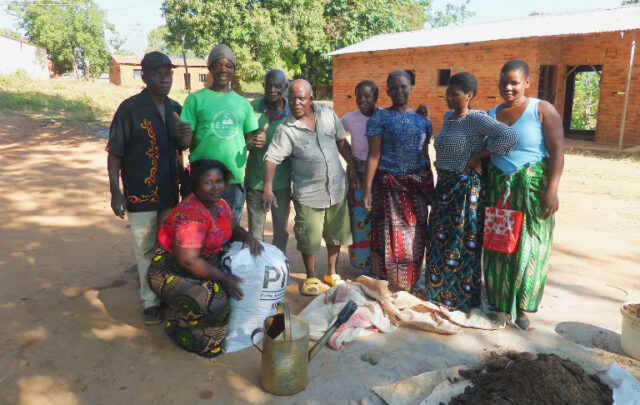
Terra preta de Indio – Portuguese for “Indian black earth” – is prized among local farmers, and it is a direct contribution of the vanished Amazonian cultures. While most Amazonian earth is notoriously nutrient poor, yellowish, sterile, and unscented, there are extensive patches of soil that are mysteriously dark, moist, fragrant, and filled with insects, microbial life, and organic matter. Scholars have come to realize that by devising a way to enrich the soil, the early inhabitants of the Amazon managed to create a foundation for agriculture-based settlements much more populous than scholars had thought possible.
Petersen had called the soil a gift from the past; he believed that studying it would reveal the region’s past cultures in a new, much more complex light. At the time of his death, he and his colleagues had been developing a workshop for teachers in the region on the science and archaeology surrounding terra preta. The discovery held meaning for more than archaeologists, however.
Figuring out the composition of dark earth and how it was formed offers a way to improve soil fertility for today’s small farmers and also curb carbon emissions from the fires that these farmers set to clear the forest. Yet after Petersen’s murder the project was shut down, and those who had gathered for both the workshop and the August field season were sent home. Had the Amazon turned too dangerous for its inhabitants to learn their own ancestors’ secrets?
(April 2007)
Leanan, the newshound at TOD, points out that Discover magazine has opened its archives to the public. I wish scientific journals would think about doing the same for articles of public import. -BA
World’s Most Important Crops Hit by Global Warming Effects
Steve Connor, UK Independent via Common Dreams
Global warming over the past quarter century has led to a fall in the yield of some of the most important food crops in the world, according to one of the first scientific studies of how climate change has affected cereal crops.
Rising temperatures between 1981 and 2002 caused aloss in production of wheat, corn and barley that amounted in effect to some 40 million tons a year – equivalent to annual losses of some £2.6bn.
Although these numbers are not large compared to the world-wide production of cereal crops, scientists warned that the findings demonstrated how climate change was already having an impact on the global production of staple foods. “Most people tend to think of climate change as something that will impact the future, but this study shows that warming over the past two decades has already had real effects on global food supply,” said Christopher Field of the Carnegie Institution in Stanford, California.
The study, published in the journal Environmental Research Letters, analysed yields of cereals from around the world during a period when average temperatures rose by about 0.7C between 1980 and 2002 – although the rise was even higher in certain crop-growing regions of the world.
(19 March 2007)
Climate change hits cereal crops, lab says
Genetic modifications, better farming methods offset estimated losses of $5 billion annually
Don Thompson, Associated Press
Warming temperatures in the past quarter-century have cut production of cereal crops worldwide by millions of tons and caused annual losses of roughly $5 billion, according to a study released Friday.
(17 Mar 2007)
In US Midwest, young farmers priced out of land
Amanda Paulson, The Christian Science Monitor
Ethanol demand has pushed Midwest farmland prices through the roof.
—-
…Real estate prices in cities may be falling, but in Midwestern farm country, land values are going through the roof. Fueled by heavy ethanol demand, which has pushed up corn prices, land that sold for $4,500 an acre a year ago might go for about $6,000 an acre today.
“It’s kind of disheartening,” says Mr. Miller, an organic inspector for the state of Iowa. who has a friendly smile and an upbeat attitude. “It’s like a moving target. All these things we’ve done are futile.”
Average land values are up 13 percent in Iowa from a year ago and 14 percent in Nebraska – and far more than that in prime counties. Along with surging corn prices, land-value growth means a boom in wealth for farmers who own their land. But for beginners like Miller, it’s made an already tough proposition far tougher.
“It’s absolutely destroying their chances,” says Mike Duffy, an agricultural economist at Iowa State University and director of the Beginning Farmer Center. When Mr. Duffy advises aspiring young farmers, he says he encourages them to find other ways to begin than buying land. “But they always want to own land,” Duffy says. “That’s somehow the badge of being a farmer.”
(22 March 2007)
China’s Corn Exports May Plunge as Local Demand Rises
William Bi, Bloomberg
China, the world’s second-biggest corn producer, may slash exports of the grain by almost half as the livestock sector expands to cater for more meat-based diets and industrial use surges in line with economic growth.
Corn exports are forecast to fall 44 percent to 2.5 million metric tons in 2007/08 from 4.5 million tons in the current year ending in September, Jiang Jianhua, vice chairman of Jilin Grain Group Co., one of the country’s two authorized grain exporters, said at the China JCI feed conference in Guangzhou today.
Reduced Chinese corn exports will further shrink worldwide supplies that the U.S. Department of Agriculture expects will drop this year to the lowest since 1978. Corn prices have risen 87 percent in the past year due to record production of the alternative fuel ethanol and global demand for livestock feed.
(23 March 2007)
Ganong finds its profits are not as sweet
Gordon Pitts, Globe & Mail
The soaring price of cocoa has emerged as a serious aggravation for David Ganong, whose New Brunswick family is said to have invented the chocolate bar.
But cocoa’s cost spike does not make a crisis on its own. What really causes grief for this fourth-generation candy maker is being blasted by simultaneous price shocks from all three of his major commodity requirements — sugar, corn syrup and cocoa.
Indeed, Mr. Ganong, the owner and president of 134-year-old Ganong Bros. Ltd. of St. Stephen, N.B., is taking in stride the news that an Ivory Coast drought has helped push cocoa prices to a four-year high.
The more urgent question, he says, is: “What’s the price of oil going to be a year from now?”
…Increases in the price of oil drive up sugar and corn syrup, which has the most serious impact on his soft-candy margins. “Corn syrup in particular has gone ballistic and is staying ballistic, and that’s causing real problems,” he says.
Rising crude leads to higher costs of processing, but, more important, as oil has moved above $50 (U.S.) a barrel, there has been a big increase in the economic incentive to produce ethanol as an alternative fuel.
(23 March 2007)
Contributor CP writes:
Peak oil -> ethanol -> corn syrup -> chocolate. D’oh!