


Click on the headline (link) for the full text.
Many more articles are available through the Energy Bulletin homepage
Vanishing glaciers offer clear evidence of climate change: scientists
Rob Woollard, Agence France Presse
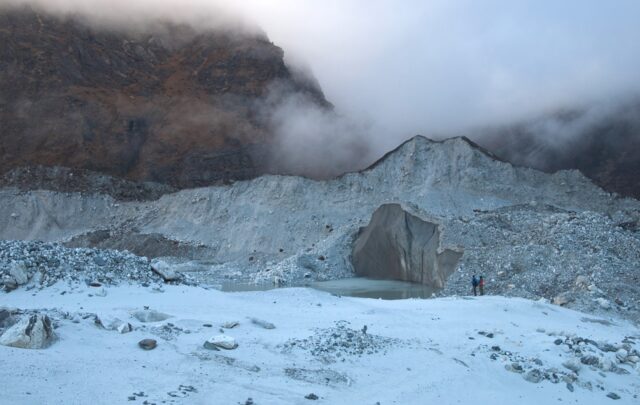
SAN FRANCISCO – Climate change is likely to melt one of Peru’s biggest glaciers within five years and is threatening ice packs on some of the world’s most famous mountain ranges, scientists have said.
Climate change has accelerated the retreat of glaciers at rates not seen for thousands of years, glaciologist Lonnie Thompson told reporters at the American Association for the Advancement of Sciences’ annual meeting.
Thompson, a world-acclaimed paleoclimatologist and professor of earth science at Ohio State University, revealed that the Qori Kalis glacier high in the Andes would soon disappear at current rates.
(16 Feb 2007)
Scientists Sound Alarm Over Melting Antarctic Ice Sheets
Steve Connor, UK Independent
The long-term stability of the massive ice sheets of Antarctica, which have the potential to raise sea levels by hundreds of meters, has been called into question with the discovery of fast-moving rivers of water sliding beneath their base.
Scientists analyzing satellite data were astonished to discover the size of the vast lakes and river systems flowing beneath the Antarctic ice sheets, which may lubricate the movement of these glaciers as they flow into the surrounding sea.
The discovery raises fresh questions about the speed at which sea levels might rise in a warmer world due to the rate at which parts of the ice sheets slide from the land into the ocean, scientists said at the American Association for the Advancement of Science in San Francisco.
(16 Feb 2007)
Life could worsen by degrees
Climate change predicted to bring floods, fire, rain
Jim Redden, Portland Tribune
Killer heat waves. Skyrocketing power rates. Devastating floods and landslides. Catastrophic wildfires.
Those are just some of the potential impacts of climate change on the Portland metropolitan area, according to national and local environmental experts, including weather forecasters, water managers and energy regulators.
Their predictions come in reaction to the most recent report from the Intergovernmental Panel on Climate Change, a panel established by the United Nations to evaluate the risk of climate shifts, based mainly on peer-reviewed and published scientific and technical literature.
(16 Feb 2007)
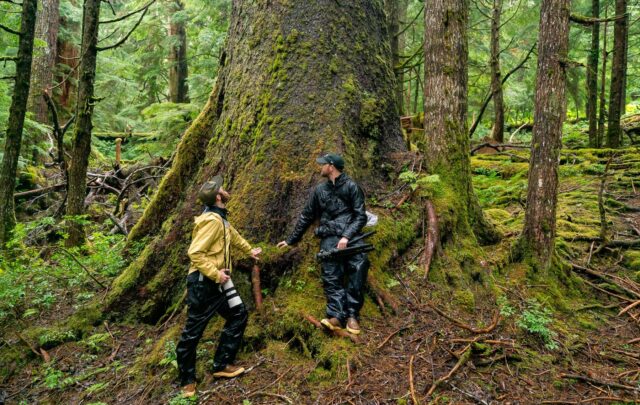
Climate change and Oregon’s forests
Kate Ramsayer, The Bulletin
CORVALLIS – With global climate change predicted to increase temperatures in the West, put a strain on water supplies and cause an increase in large forest fires, organizers of a conference at Oregon State University had a message for the forest managers, timber industry representatives and conservationists in the audience.
“Their forest in the future is not going to look anything like their forest from the present,” said Hal Salwasser, dean of the College of Forestry at OSU in Corvallis.
“We want people to understand that the climate is going to change the forest,” he said.
But forests also have the potential to help alleviate climate change by storing one of the key elements that scientists have linked to the problem.
So OSU, the Oregon Forest Resources Institute and the Oregon Department of Forestry organized a conference Tuesday and Wednesday with about 20 speakers who addressed how climate change will affect the forests and what impact forest management can have on the climate.
(16 Feb 2007)
Rising sea levels present China with ‘unimaginable challenges’
Agence France Presse
Shanghai, Guangzhou and other large coastal cities in China could face “unimaginable challenges” if global warming continues and the oceans keep rising, state media has said.
A report released recently by the State Oceanic Administration has warned of a rapid rise in sea levels that threatens China’s densely populated east coast, the China Daily reported.
“The speed is astonishing,” said Lu Xuedu, the deputy director of the environmental division of the Ministry of Science and Technology.
“Coastal cities including Shanghai and Guangzhou will confront unimaginable challenges if the situation deteriorates,” he told the paper.
The sea level had risen by an average of 2.5 millimeters (one tenth of an inch) annually in recent years, the paper said, citing the oceanic administration’s report.
It predicted that over the next decade, the sea would to rise by up to 31 millimeters, threatening low-lying cities, according to the paper.
(16 Feb 2007)



Comments
Welcome to the new Resillience commenting system!
We have moved from the former Disqus commenting system to a new system as of September 10, 2026.
We made this change because of privacy concerns regarding Disqus. It's also part of a set of changes to bring more services to the Resilience community under a single login: commenting, (coming September 2026), and online courses (coming 2027). Unfortunately, your old Disqus comments may not reliably link to your account in this new system. Please contact us if you have any questions or concerns.