It is not polite to refuse hospitality without a very good excuse.
What to do about the fact that when I get into a car I feel terrible? No, I do not suffer from motion sickness. This is a different kind of health issue. I am a recovering oil addict and I don’t have a support group. (1)
Can you relate to one or more of the following?
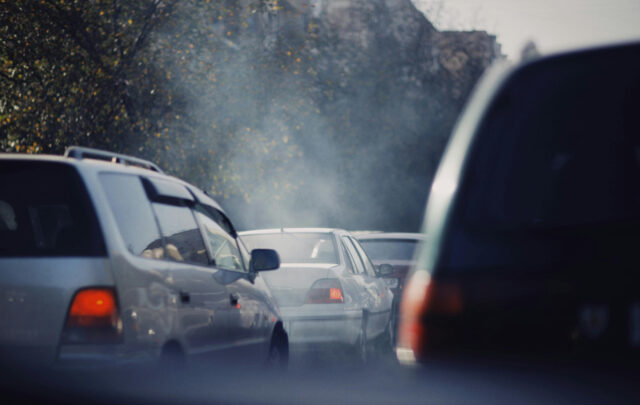
- While filling up the tank, do you sometimes contemplate the destruction wrought by oil wars? (2)
- Beyond the death toll, do you even mourn the opportunities lost to invest in conservation and renewable energy systems? (3)
- Are you well aware that airplanes wreak havoc on the atmosphere and have vowed or contemplated never to fly again? (4) , (5) , (6), (7) , (8)
- Do you get scared and dumbfounded imagining the millions of people to be displaced and probably die as the oceans rise? (9), (10)
- Are you pretty sure the world is at the pinnacle of oil production right about now? (11)
- As the decline sets in, do you foresee price spikes that break the back of the poor and possible government rationing?
- Given all this information, do you believe our hyper-mobile society won’t continue?
- Do you prefer getting over untenable habits rather than justifying your comfort level?
Then read on.
Here’s what happened to me. I needed a plan. Something I could explain to people. And it had got to be better than, “No thanks. I am not coming to your party next week because it involves driving 300 miles round trip and that makes me feel lousy.” The relatives think I am crazy, rude or have joined a cult.
Don’t let this happen to you!
The Solution
I have created the Personal Hydrocarbon Diet (PHD) Program so I now can say, “I can’t join you on that Cancun trip because of my PHD Program.”
Voila! Instead of sounding like a crank, I now sound like a disciplined, ambitious fellow advancing human knowledge for the greater good-which is totally true! And can I please have your support for my education?
So here it is folks. This is THE plan for avoiding all those tempting fossil fuel addicts out there cajoling you to join them in their final joy rides.
And guess what, my friend, I am offering to share it with you at no charge!
Step 1. Get on the scale.
Any good diet plan starts by getting on the scale. For the PHD Program the scale is an inventory of direct and indirect consumption of fossil fuels and resultant release of greenhouse gases. Do a web search with the terms “carbon calculator” or find one appropriate for you here: www.earthfuture.com/climate/calculators/
I have tried several of these. They tend to have similar input factors, but use different units, make different assumptions, and have a range of outputs. (12) Pick one that seems to fit your circumstances and is precise enough so that when you make changes it can register them.
Also, for a broader perspective try an ecological footprint calculator too. (13), (14) It is less precise, but has systemic implications related to embedded energy. (If you don’t know what that means just wait until you’ve been on the plan for a few months).
Step 2. Set a target.
Now that you know your “weight,” how much are you planning to lose?
With respect to climate change, the scientific imperative is to reduce the total, worldwide build-up of greenhouse gases as fast as possible. I live in the U.S. where we use a disproportionate share of the global fuel supply, so we will need to cut back 90% or more on our energy consumption while building a renewable energy base. There is really no time to lose with this challenge. The atmosphere is changing about 1000 times faster than during any period known in Earth’s history. Ice ages and mass extinctions have come and gone with less change to the chemistry of the sky than we are inducing right now. So make that target a big one!
For example, if you are currently responsible for 10,000 pounds of carbon dioxide per year you might want to cut back to 1999 pounds per year within 5 years. That way you can be eligible for the elite “Sub-ton Club.” Or better yet, why not shoot for 999 pounds and join the ranks of the “Mini Troopers.” Afterall, small is beautiful!
Step 3. Make a plan
The carbon calculator will have identified where you can really cut back. Do you fly a lot or have a very inefficient house? Some of these changes can be done readily, perhaps with modest investments and not much alteration of habits. But what if you drive 100 miles a day for your job? At some point most of us are going to face hard choices.
Step 4. Implement the plan
You may be installing insulation in the attic, biking to work, buying local food, and keeping the air conditioner off. Whatever you are doing, measure your progress. It should show up on utility bills or on the odometer in your vehicle.
Perhaps you have set a ration for the number of miles you drive in a year. The PHD Program may appear to restrain you while others are partying on. It may not seem fair. But remember, you are a pioneer. You are learning to do without something that you know is bad for you, like high fructose corn syrup and hydrogenated vegetable oils!
My family has found that by avoiding frequent trips we are doing more around home. We have time to tend a garden and develop relationships with our neighbors. Some things we have given up, but many things are being gained. I wouldn’t say we are less socially connected or less happy than when we traveled more. In fact, I’d say our quality of life has improved. Our actions are more aligned with our values and we don’t need to make lame excuses for ourselves so much. Honesty is refreshing.
Step 5. Monitor
Are you making it? Have you hit a wall somewhere that requires a major life change or a systemic change to overcome? Consider what is at stake, whether you feel better or worse for these changes, and if a revised plan is needed.
Well, that’s the PHD Program, and it’s an important one indeed. Not only does it give us some chance of saving the planet and our own lazy butts, but it will cost you nothing because I am giving it away for free! So pass this around and if enough of your friends, family and neighbors agree to join with you in this special diet we might find that someday soon it becomes more popular than that Atkins craze and everyone can then make the claim, “Yeah, I finished my PHD Program!”
References
(1) www.postcarbon.org/lifeboat/page5.html
(2) http://www.iraqbodycount.net/
(3) http://nationalpriorities.org/index.php?option=com_wrapper&Itemid=182
(4) www.tufts.edu/tie/tci/airtravel.htm
(5) http://www.mnforsustain.org/climate_change_air_travel_and.htm
(6) www.sciencedaily.com/releases/2005/02/050204213009.htm
(7) http://www.grida.no/climate/ipcc/aviation/126.htm#8332
(8) www.grida.no/climate/ipcc/aviation/126.htm
(9) http://www.earthdayenergyfast.org/science.html#SEALEVEL
(10) http://www.earthdayenergyfast.org/science.html
(11) http://www.theoildrum.com/storyonly/2006/3/1/3402/63420
(12) http://www.relocalize.net/node/4552