Click on the headline (link) for the full text.
Many more articles are available through the Energy Bulletin homepage
Rising Levels of Carbon Dioxide Threat to Marine Organisms
Green Car Congress
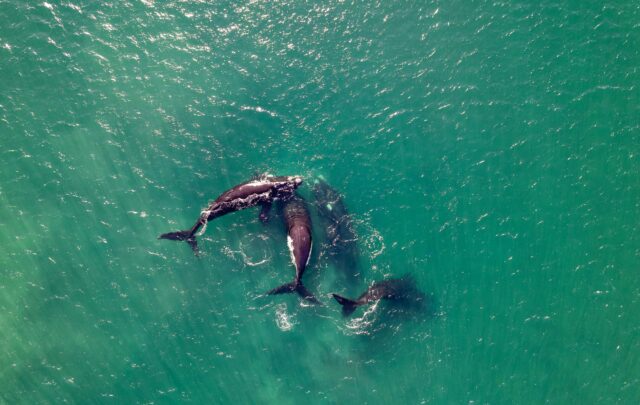
A new report finds that worldwide emissions of carbon dioxide from the combustion of fossil fuels are dramatically altering ocean chemistry and threatening marine organisms—including corals—that secrete skeletal structures and support oceanic biodiversity.
The report—Impacts of Ocean Acidification on Coral Reefs and Other Marine Calcifiers—released today summarizes the known effects of increased atmospheric carbon dioxide on these organisms, known as marine calcifiers, and recommends future research for determining the extent of the impacts.
The report follows a workshop funded by the National Science Foundation and the National Oceanic and Atmospheric Administration, and hosted by the US Geological Survey Integrated Science Center in St. Petersburg, Florida.
Oceans act as a sink for atmospheric carbon dioxide. During the 1980s and 1990s, only about half of the anthropogenic CO2 remained in the atmosphere, with the oceans having
taken up about 30% and the terrestrial biosphere 20%.
Researchers have determined that with emissions of anthropogenic carbon dioxide continuing to rise, the partial pressure of CO2 (pCO2) dissolved in the surface ocean is likely to double its pre-industrial value within the next 50 years. Oceans are naturally alkaline, and they are expected to remain so, but the interaction with carbon dioxide is making them less alkaline and more acidic.
(5 July 2006)
Grain production dropping; fuel thefts rising
Joe Baker, Rock River Times
The world’s grain harvest is expected to be 61 million tons short of consumption, according to Lester Brown of the Earth Policy Institute. Production has failed to meet demand in six of the last seven years. It means the world’s grain stocks will be enough for about 57 days, the shortest buffer amount since the 56-day bottom in 1972 that doubled grain prices.
Carryover stocks of grain—the amount in the bins when the next harvest begins—are the basic measurement of food security. If stocks plunge lower than 60 days’ supply, prices begin to climb. That fact was reflected in the U.S. Department of Agriculture’s June 9 world crop report projection that wheat prices this year will be up 14 percent, and corn prices will rise by 22 percent from last year.
The forecast is based on normal weather during the summer. If the weather is unusually good this year, prices might not be as high as expected, but if the harvest is cut by heat or drought, increases could be well above the projections.
With carryover stocks at the lowest level in 34 years, the world could soon be facing both high grain and high oil prices at the same time. For countries that import both commodities, that is a grim prospect…
It has not been widely reported, but globally farms are being affected by weakening “fuel security”. Skyrocketing diesel fuel prices are having an impact, but so are thieves.
(5 July 2006)
Wildfire Increase Linked to Climate
Robert Lee Hotz, LA Times
Higher temperatures over 34 years — rather than land-use changes — have led to more blazes, researchers say. They’re sure it’s not a fluke.
—-
Rising temperatures throughout the West have stoked an increase in large wildfires over the past 34 years as spring comes earlier, mountain snows melt sooner and forests dry to tinder, scientists reported Thursday.
More than land-use changes or forest management practices, the changing climate was the most important factor driving a four-fold increase in the average number of large wildfires in the Western United States since 1970, the researchers concluded.
The average spring and summer temperatures were more than 1.5 degrees higher in Western states between 1987 and 2003 than during the previous 17 years. In fact, the seasonal temperatures were the warmest since record-keeping started in 1895, the researchers said.
While the researchers stopped short of linking increased wildfire intensity to global warming caused by rising levels of greenhouse gases, they were confident that they had documented a broad climate trend and not a fluke of natural weather variability.
“It all fits together,” said climate researcher Anthony Westerling, who led the research while at the Scripps Institution of Oceanography in La Jolla. “The [fire] seasons do start earlier and run longer. It is consistent with a changing climate.”
Some scientists were more confident that greenhouse gases from industrial activity, cars and pollution were to blame.
“I think this is the equivalent for the West of what hurricanes are for the Gulf Coast,” said fire ecologist Steven Running at the University of Montana in Missoula, who was not connected with the research. “This is an illustration of a natural disaster that is accelerating in intensity as a result, I feel, of global warming.”
All told, the average fire season has grown more than two months longer, while fires have become more frequent, longer-burning and harder to extinguish. They destroy 6.5 times more land than in the 1970s, the researchers found.
(7 July 2006)
Also posted at Common Dreams.
Related story at CBC News.
Climate change making ominous mark on Midwest
Kevin Murphy and Karen Dillon, Kansas City Star
It’s not just warmer winters: The changes could affect the food we eat, the energy we consume and the forests we treasure.
—-
Snow sometimes piled so high in the 1960s and 1970s that Gladstone postman Bob Drayer couldn’t pull his truck up to mailboxes.
In the early 1980s, Mary Beth Kirkham crunched across campus on ice cleats at Kansas State University in Manhattan, where she teaches in the Department of Agronomy.
“I’ve given away my ice cleats; we don’t have those cold winters anymore,” Kirkham said.
Although skeptics say our changing weather is just part of a natural cycle, many scientists say winter’s diminished fury here is the most visible piece of evidence in the Midwest of global warming.
But there are other signs as well.
Wildlife and plants native to the South, such as the armadillo and the southern magnolia, now are thriving here.
Flowers bloom two weeks earlier than usual, bird migration timetables are out of whack, and heat and drought have dropped many area lake and river levels below normal for several years.
(2 July 2006)
Disease, habitat loss and climate change threatens amphibians
Ian Sample, The Guardian
Fifty of the world’s leading conservation experts are calling for an urgent rescue mission to save frogs, newts and other amphibians from extinction. They believe fast action is needed to save the planet’s 5,743 amphibian species after research showing that 32.5% are threatened.
Up to 122 amphibian species have become extinct since 1980. Since the 1960s these vertebrates have gone into sharp decline as humans have encroached on their habitat. Climate change and infectious diseases have also taken their toll.
Writing today in the US journal Science, the conservationists propose a $400m (£217m) initiative, the Amphibian Survival Alliance, to dispatch “rapid response” teams to collect endangered amphibians for captive breeding. The alliance is also to investigate lethal amphibian diseases and environmental changes.
The alliance is expected to become part of the World Conservation Union, which monitors endangered species and which has developed international treaties to urge governments to fund conservation.
Amphibians are considered delicate sentinels of environmental change. Sudden collapses in their populations in the 1980s and 1990s sparked research. Some scientists believe the fungal disease chytridiomycosis, which has spread round the globe, may be to blame in many cases.
(7 July 2006)
Related from SF Chronicle: Extinction Crisis for Amphibians.
Getting Fresh
A chat with freshwater experts Peter Gleick and William K. Reilly
David Roberts, Grist
The world’s freshwater systems are in crisis, beset by everything from global warming to population growth to corruption. Though it doesn’t get the media attention that’s lavished on energy issues, many experts predict that water will be the central resource issue of the coming century. Water, they say, is the new oil.
Few know more about water than Peter Gleick, president and cofounder of the Pacific Institute, an environmental think tank. The 2003 MacArthur Genius grant recipient edits The World’s Water, a comprehensive biennial report on the state of the world’s freshwater.
William K. Reilly — CEO of Aqua International Partners, a firm that invests in innovative water projects in developing countries — knows a thing or two about water as well. Head of the U.S. EPA under the first President Bush (and credited with many of the positive environmental accomplishments of that administration), he is now chair of the board of the World Wildlife Fund.
…Q: Energy and climate issues have recently gripped the popular imagination. But water hasn’t caught on. Why is that?
Gleick: There are a couple of reasons. One is, water problems are often local. Another is, some of the worst water problems are not in the United States, but in developing countries, where basic access to water and sanitation doesn’t exist. There are a billion people who don’t have access to clean drinking water, but they’re somewhere else, mostly.
The other thing is, we don’t import a lot of water, and so the political issues around water — there are many — aren’t typically viewed in the same way that political dependence on oil is viewed.
(30 June 2006)
More of the interview is included with comments on the article.