[ This is the second article by Rob Hopkins looking into question of “What can we learn from innovative approaches to addiction that might prove to be useful tools for weaning communities off oil?” ]
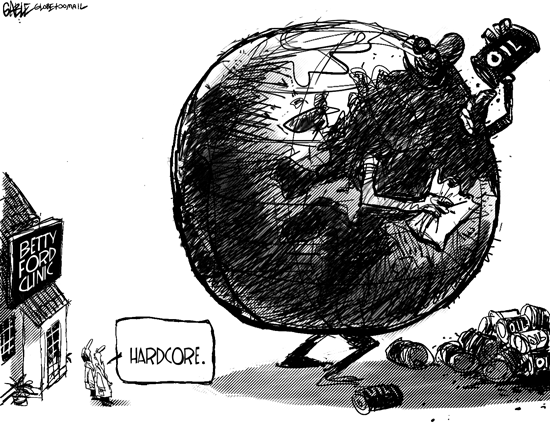
 The recent post exploring whether or not our relationship to oil can be seen in terms of a dependency certainly got you going, and yielded some fascinating comments. Some other discussion boards on the net picked up the article and some people could barely restrain their fury at the notion that we might be addicted to oil. The feedback on Transition Culture was very interesting, a good balance of for and against. I wanted to make a few observations on some of the comments and respond to some of the points they raised.
A number of people raised the point that we are no more addicted to oil than we are to other life essentials. Mike Bendzela thought the comparison to addiction was “overwrought and inadequate”, and that “we are addicted to oil in the same way that we are ‘addicted’ to oxygen”. This is an interesting point, at what stage does our relationship with a or a behaviour become unhealthy? We can wash our hands a few times a day, or we be be obsessive about handwashing. We can eat 3 meals a day or we can have the unhealthy relationship to food that means we have to make ourselves vomit after every meal. I imagine it could be possible to have an unhealthy dependent relationship with oxygen too, if we were to become fixated on the sense of elation caused by breathing in pure oxygen and had to have lots of canisters of it around the house.
I contacted Mary-Jayne Rust, a psychotherapist in London who does a lot of work in the addictions, eating disorder field. She wrote;
“we are dependent on everything we eat, breathe and co-exist with, to stay alive. But in our urbanized and more culturally complex lives, it is often hard to tell the difference between essential dependencies and more recently created dependencies … we have existed for thousands of years without oil, so it is not an essential dependency. Yet if we were to remove oil tomorrow without changing the structure of our society, we would experience total breakdown”.
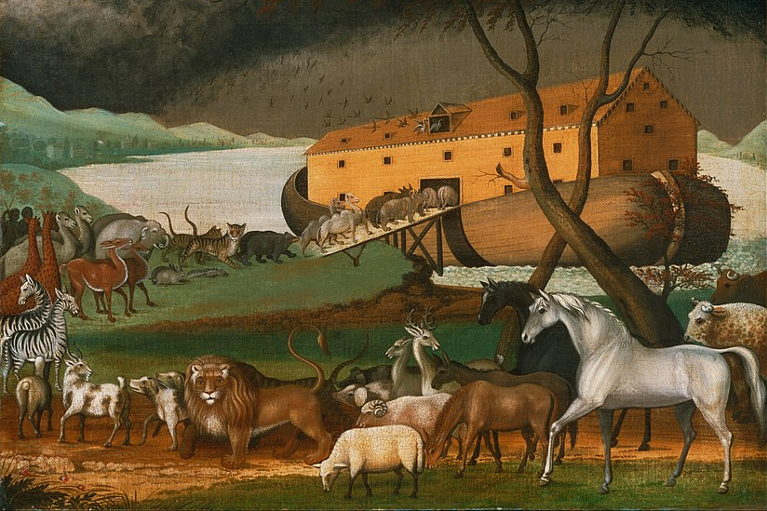
 Oil is not essential to human cultural, spiritual or artistic life. The Book of Kells, Canterbury Cathedral, the work of Leonardo da Vinci, the great philophers, the paintings of Vincent Van Gogh, Shantideva’s ‘A Guide to a Bodhisattva’s Way of Life, the Great Pyramids and much more was created before the Age of Cheap Oil. Sometimes I think we can become blinded to remembering that life did exist before oil, and it did have some good things going for it. Not to over-romanticise it at all, but if we assume that life before oil was pure drudgery and misery, we close ourselves off to the great thinking, art, adaptability and resourcefulness that existed then. Books such as ‘Larkrise to Candleford’ paint a great picture of what was also positive about our pre-oil existence.
I think we could say that we are dependent on oxygen, food, and each other, but it is a healthy dependency. Our dependency on oil which has riven our communities with asthma, tarmac, destroyed forests with acid rain, polluted seas with tanker spills, changed our climate almost irrevocably, and created a system which keeps most people in the West three meals away from starvation, is not healthy dependency. Doly Garcia asks “are we addicted to living in houses?”
 Again, no, but some people who house themselves in a way that is injurous to others, way beyond their actual needs, could be said to have an unhealthy dependency on their houses, I would argue. I am reminded on the final scene in ‘Bowling for Columbine’ where Michael Moore visits Charlton Heston (hissss) at home, a huge vast rambling house, surrounded by fences and extensive lawns in which, in the film, he appears to live alone. In a town where many people are homeless, that might be argued to be an unhealthy dependence on housing.
Some people made the point that it is a societal addiction, not a personal one. This led some to say that we have no control over the process, as it is Governments and societies that call the shots, not individuals. As individuals, they argue, there is only a certain amount we can do. If there is no tram or bus system, we have to drive to work, either that or kiss our job goodbye. Cindy however, responds to that point thus, “society does not force us to burn up absurd amounts of fossil fuels… when we deny our individual choices, we give up our responsibility, and then you have the absurd situation we have today”.
 For me, I find myself midway between the two here. Yes, we do have responsibility here, we cannot on our own totally divorce ourselves from the fossil fuel economy overnight. Bill Mollison once said, “I can’t save the world on my own, I think it might take at least three of us”, or words to that effect. Energy Descent Action Planning is a tool whereby individuals can pull together with friends, neighbours, their community, and design a collective way down from the peak. It acknowledges that we can’t do this on our own, but that Governments and corporations aren’t going to do it for us either. It is a positive collective response.
Others assume that the process of moving away from oil will not have the same unpleasant aspects as a chemical withdrawl. JMG argues “if we’re addicted to oil it’s a strange addiction, because its the first one where we will feel better throughout the withdrawl and subtitution process”. I have to say I strongly disagree with this. The withdrawl process from oil will not be pretty, will not be smooth, and will be very hard work. It is of course, as I argue repeatedly here at Transition Culture, the hope that at the end of this process, if we’ve done it right, we will be living richer, more abundant lives than at present.
However, I think that in many ways our process of weaning a society off fossil fuels will have parallels to individual withdrawl. We only have to look at the 3 day truck drivers strikes in the early 90s in Britain to see how sudden and profound the withdrawl symptoms could be. There will be denial about the problem, an enforced reduction in consumption, and then a reduced supply which , unless we are ready, is going to be very hard. For me, I struggle to see a way in which we will be able to ‘feel better’ during the withdrawl process. It will be a huge shock to the system.
 Mike Bendzela writes that “all the therapy, counselling and group work is irrelevant to peak oil”. He may be right. However, my feeling is that what we are looking at here is the need for what Lester Brown calls a “wartime mobilisation”, or what the Hirsch Reportcalls a “crash programme”, initiated at least 10 years ahead of peak in order to have any chance of a gentle descent. That’s a tall order. We are also presenting people with a scary scenario and asking them to change, where many studies on sustainable consumption have shown that the more information you give people about environmental issues, the more informed they become, but also the more their sense of hopelessness grows. We have to engage people in this process as it being a great transition, a call to power, an invitation to be a part of The Great Turning. David Korten in The Post Corporate World sees our role in this transition as “a dual role, hospice and midwife”. Sharif Abdullah writes that;
“our role is to compassionately assist in its death process, trying to ease the burden and pain of its passing. This includes restraining the impulse for revenge among those who see their foundations undermined by the new. For the emerging … society, our role is to compassionately assist in the birth of a new way of acting in the world. As with any birthing process, there will be some pain and trauma associated with the … birth. Our role is to minimise the pain and nurse the new society to full health”.
My sense is that people will need helping through this, and that counselling and group work may well have a role to play. The dialogue I am having with people in the addictions and change field (more on that soon) are very interesting, and could be very fruitful. I would again recommend Chris Johnstone’s book ‘Find Your Power’ in that context.
So, to wrap up, and at risk of sparking more furore on discussion forums across the web, I have to say that I feel the dependency (as opposed to addiction) metaphor holds, and offers some fascinating insights into the nature of our relationship with fossil fuels. Ultimately it is of little more than intellectual interest unless we actually can make use of those insights to shape some kind of practical response, which is what I am working on at the moment (again, more on that soon). On one discussion forum, Jellric (why don’t people use their real names on these forums?!) responded to the question “perhaps you could come up with a new term that would better encapsulate Peak Oil?” with “civilization and the oil industry live in a ultimately destructive co-dependent relationship”. I thought that summed it up rather nicely.