
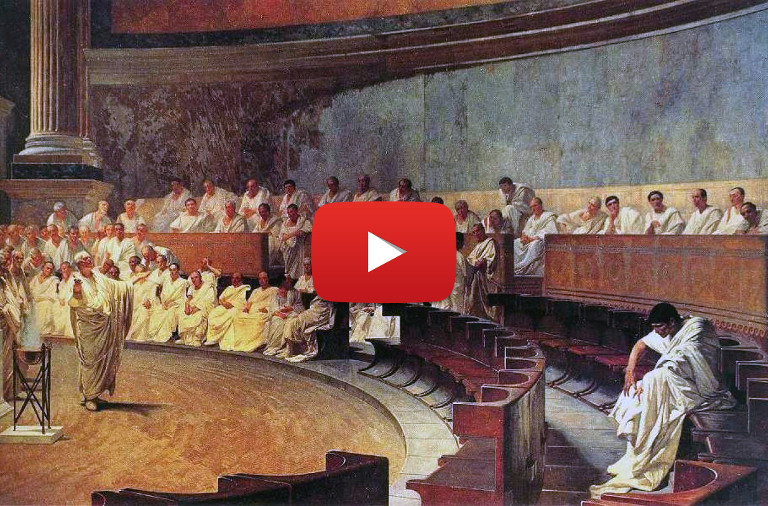
Every society has institutions for making decisions and allocating resources. Some anthropologists call this the STRUCTURE of society. Every society also has an INFRASTRUCTURE, which is its means of obtaining food, energy, and materials. Finally, every society also has a SUPERSTRUCTURE, which consists of the beliefs and rituals that supply the society with a sense of meaning.
How do these three systems interact with one another, and which is most important?
Here, Richard Heinberg explores how our current systems of political and economic management — the things that we tend to think of as the driving forces behind the way our society works — are actually a byproduct of our interaction with the physical world, especially our sources of energy. And we’ll explore very briefly explore what a shift to different energy sources might mean for the politics and economics of future societies.
This is the sixth video in our 22-part online course “Think Resilience: Preparing Communities for the Rest of the 21st Century,” which explores how communities can build resilience in the face of our intertwined sustainability crises. The series is intended for students and concerned individuals of all ages.
View Chapter 3: Population & Consumption
New chapters will be rolled out on a regular basis over the coming weeks, but you can also sign up to view all the videos right away.

Image Credits
- Kalahari hunters: Papa Bravo/Shutterstock.com
- Kalahari tribe on the move: lumen-digital/Shutterstock.com
- Kalahari gathering: franco lucato/Shutterstock.com
- Rome lending: Public Domain
- Rome war: Public Domain
- Rome negotations: Public Domain
- Rome law making: Public Domain
- Early agricultural machinery: Public Domain
- Ben Campbell steamship: Library of Congress
- Early industrial machinery: Richard Hartmann/Public Domain
- Coke ad: Coca Cola Company
- Mercury Cougar ad: care of 95octane.com
- Immigrants ferried from Ellis Island: Everett Historical/Shutterstock.com
- Immigrants newly arrived: Everett Historical/Shutterstock.com
- British flag: NirdalArt/Shutterstock.com
- US flag: charnsitr/Shutterstock.com
- USSR flag: VectorPlotnikoff/Shutterstock.com
- London at night: pisaphotography/Shutterstock.com
- Crowded Melbourne: Nils Versemann/Shutterstock.com
- Medical lecture in Warsaw: Tomasz Bidermann/Shutterstock.com
- Microchip factory: 06photo/Shutterstock.com