Samuel Alexander

Dr. Samuel Alexander, co-director of the Simplicity Institute, is a lecturer at the Office for Environmental Programs, University of Melbourne, Australia, teaching a course called ‘Consumerism and the Growth Economy: Critical Interdisciplinary Perspectives’ into the Master of Environment. He is also a Research Fellow with the Melbourne Sustainable Society Institute. He is author of eighteen books, including Degrowth in the Suburbs: A Radical Urban Imaginary (2018), Art Against Empire: Toward an Aesthetics of Degrowth (2017), Just Enough is Plenty: Thoreau’s Alternative Economics (2016), Prosperous Descent: Crisis as Opportunity in an Age of Limits (2015), Sufficiency Economy: Enough, for Everyone, Forever (2015), and Entropia: Life Beyond Industrial Civilisation (2013), and he is editor of Voluntary Simplicity: The Poetic Alternative to Consumer Culture (2009) and co-editor of Simple Living in History: Pioneers of the Deep Future (2014). A full publication list is available here.

As well as his academic work, in recent years Sam has been working on a ‘simpler way’ demonstration project which became the subject of a documentary, ‘A Simpler Way: Crisis as Opportunity‘. He is also founder of the Simplicity Collective, a website and social network dedicated to exploring the relationships between voluntary simplicity, energy descent, and post-growth / degrowth economics.  Dr. Alexander’s PhD thesis, conducted through Melbourne Law School, is entitled “Property beyond Growth: Toward a Politics of Voluntary Simplicity”.
bookcover

SMPLE-KOIN A Buddhist Cryptocurrency Optimised for Material Sufficiency within Game Theory Dynamics

SMPLE-KOIN will be introduced in this essay as a spiritual ‘thought experiment’ with economic implications, one designed to facilitate a real-world revaluation of how important material and financial wealth is to human prosperity.

January 13, 2026

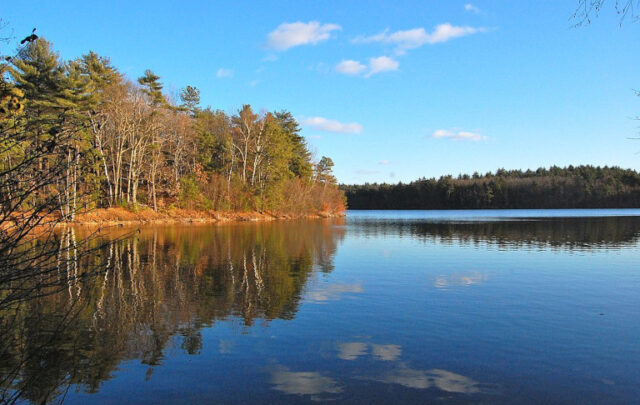
Walden Pond

Wild Civilization and the Poet-Farmer

The archetypal, self-governing citizen in SMPLCTY is the poet-farmer (or poet-carpenter, etc.), who lives simply in a material and energetic sense, contributes to necessary economic production and community governance in non-hierarchical conditions, and who otherwise explores the good life through creative activity and aesthetic experience.

July 3, 2025

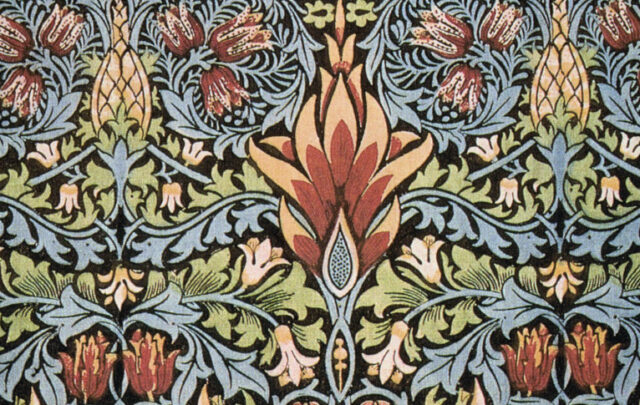
William Morris wallpaper

Homo Aestheticus: Philosophical Fragments on the Will to Art: Excerpt

This is an original book only in the sense that it weaves together other people’s ideas and perspectives in novel ways. I believe the result is something new, but more importantly, I think it offers a necessary counter-narrative to the disenchanted materialism that defines modernity.

June 30, 2025

bookcover

S M P L C T Y: Ecological Civilisation and the Will to Art: Excerpt

To speak of the Will to Art is to interpret the world as having an underlying tendency toward artistic and aesthetic flourishing, even though the outcome of this evolutionary process, due to its indeterminate nature, is unknowable in advance.

September 19, 2023

Where Nietzche got the idea for Zarathustra

The Apocalyptic Sublime

Thus, in the face of extreme pessimism, which in the past has tempted me to despair, I can now offer readers an aesthetic justification for existence, which I believe is both coherent, compelling, even hopeful – despite everything.

August 17, 2023

bookcover

Do You Want to Know the Truth?

Do you really want to know the truth; are you really willing to let it in, to be changed by it? My hope is to demonstrate that the answer must, simply must, be: Yes.

November 15, 2022

Load More

Leave a Comment