

Mike Simpson is a visiting Fulbright scholar at the University of Minnesota researching pipeline conflicts in North America.
'SELECT SQL_CALC_FOUND_ROWS wp_posts.ID
FROM wp_posts INNER JOIN wp_postmeta ON ( wp_posts.ID = wp_postmeta.post_id )
WHERE 1=1 AND (
wp_posts.ID NOT IN (
SELECT object_id
FROM wp_term_relationships
WHERE term_taxonomy_id IN (47485,47486)
)
) AND (
(
( wp_postmeta.meta_key = \'the_author\' AND wp_postmeta.meta_value = \'3468858\' )
OR
( wp_postmeta.meta_key = \'secondary_author\' AND wp_postmeta.meta_value LIKE \'{f4663baf2585fd294a877bf3fe44fdeeb109ee0d9421576bb4936c0588503018}\\"3468858\\"{f4663baf2585fd294a877bf3fe44fdeeb109ee0d9421576bb4936c0588503018}\' )
)
) AND wp_posts.post_type = \'post\' AND ((wp_posts.post_status = \'publish\'))
GROUP BY wp_posts.ID
ORDER BY wp_posts.post_date DESC
LIMIT 0, 6'
Lessons from the Front Lines of Anti-Colonial Pipeline Resistance
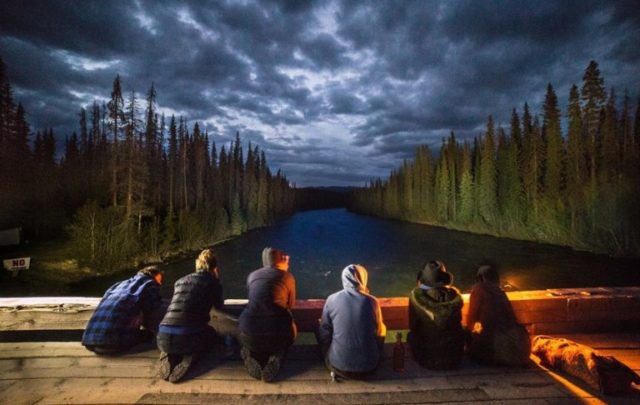
The Standing Rock standoff over the Dakota Access Pipeline was a reminder that colonization, and resistance to it, both exist in the present tense. Fossil fuel pipelines that despoil indigenous lands and waters have become key flashpoints in long-standing anti-colonial resistance. An important precursor and inspiration for the Standing Rock camp is an indigenous occupation in northern British Columbia, Canada.
October 17, 2017

