

Assistant Professor / Agricultural Entomologist, University of Delaware
'SELECT SQL_CALC_FOUND_ROWS wp_posts.ID
FROM wp_posts INNER JOIN wp_postmeta ON ( wp_posts.ID = wp_postmeta.post_id )
WHERE 1=1 AND (
wp_posts.ID NOT IN (
SELECT object_id
FROM wp_term_relationships
WHERE term_taxonomy_id IN (47485,47486)
)
) AND (
(
( wp_postmeta.meta_key = \'the_author\' AND wp_postmeta.meta_value = \'3506752\' )
OR
( wp_postmeta.meta_key = \'secondary_author\' AND wp_postmeta.meta_value LIKE \'{c362d4e90e40ec8722049e16a7783f24a19936600f3acc1e157180857def01ba}\\"3506752\\"{c362d4e90e40ec8722049e16a7783f24a19936600f3acc1e157180857def01ba}\' )
)
) AND wp_posts.post_type = \'post\' AND ((wp_posts.post_status = \'publish\'))
GROUP BY wp_posts.ID
ORDER BY wp_posts.post_date DESC
LIMIT 0, 6'
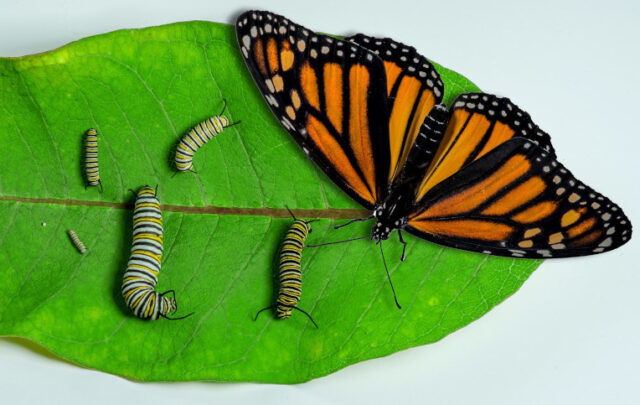
Federal protection for monarch butterflies could help or harm this iconic species, depending on how it’s carried out
We agree with the U.S. Fish and Wildlife Service that monarchs have great value as conservation icons, and that they help build public interest in insects. Our concern is that the public could be encouraged to ignore scientific findings and take actions that may harm these incredible and inspiring insects.
January 8, 2025

