Senior Lecturer in Human Rights, Constitutional Law and Legal Theory, University of Wollongong
'SELECT SQL_CALC_FOUND_ROWS wp_posts.ID
FROM wp_posts INNER JOIN wp_postmeta ON ( wp_posts.ID = wp_postmeta.post_id )
WHERE 1=1 AND (
wp_posts.ID NOT IN (
SELECT object_id
FROM wp_term_relationships
WHERE term_taxonomy_id IN (47485,47486)
)
) AND (
(
( wp_postmeta.meta_key = \'the_author\' AND wp_postmeta.meta_value = \'3468560\' )
OR
( wp_postmeta.meta_key = \'secondary_author\' AND wp_postmeta.meta_value LIKE \'{eca8507b6b049ea050ef23cf518b236a35b93302e3ed99d91c98d7a9f337effb}\\"3468560\\"{eca8507b6b049ea050ef23cf518b236a35b93302e3ed99d91c98d7a9f337effb}\' )
)
) AND wp_posts.post_type = \'post\' AND ((wp_posts.post_status = \'publish\'))
GROUP BY wp_posts.ID
ORDER BY wp_posts.post_date DESC
LIMIT 0, 6'
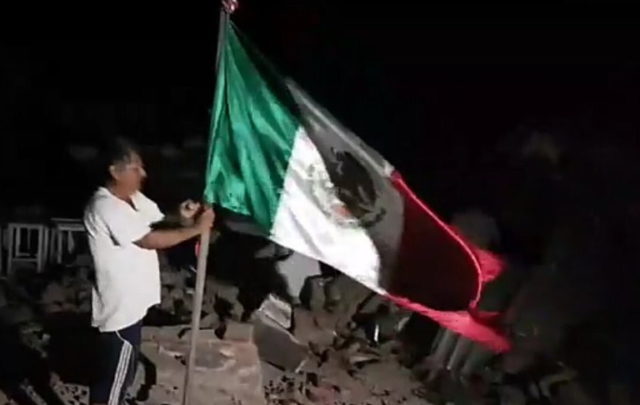
Twin Earthquakes Expose Mexico’s Deep Inequality
Unequal development in Mexico is an ongoing challenge. A recent report from the Bank of Mexico showed that during the second trimester of 2017, the Mexican economy grew in north (0.9 percent), center-north (1.2 percent) and central zones (0.7 percent). If there’s a silver lining to these twin earthquakes, it’s that the post-disaster recovery analyses have finally shed some light on the historical neglect of Chiapas and Oaxaca, together home to around nine million Mexicans.
September 22, 2017