

Kari Marie Norgaard (non-Native professor of sociology and environmental studies at University of Oregon) has engaged in environmental justice policy work with the Karuk Tribe since 2003. Kari is also the author of “Living in Denial: Climate Change, Emotions and Everyday Life” and other publications on gender, race, and the sociology of emotions. Learn more about the ongoing work of the Karuk Tribe in relation to wildfire and climate change.
'SELECT SQL_CALC_FOUND_ROWS wp_posts.ID
FROM wp_posts INNER JOIN wp_postmeta ON ( wp_posts.ID = wp_postmeta.post_id )
WHERE 1=1 AND (
wp_posts.ID NOT IN (
SELECT object_id
FROM wp_term_relationships
WHERE term_taxonomy_id IN (47485,47486)
)
) AND (
(
( wp_postmeta.meta_key = \'the_author\' AND wp_postmeta.meta_value = \'3478905\' )
OR
( wp_postmeta.meta_key = \'secondary_author\' AND wp_postmeta.meta_value LIKE \'{859d173018aa7f77d4cdfbed0b47852cf3f289d768b98ff6a02d354f0535e804}\\"3478905\\"{859d173018aa7f77d4cdfbed0b47852cf3f289d768b98ff6a02d354f0535e804}\' )
)
) AND wp_posts.post_type = \'post\' AND ((wp_posts.post_status = \'publish\'))
GROUP BY wp_posts.ID
ORDER BY wp_posts.post_date DESC
LIMIT 0, 6'
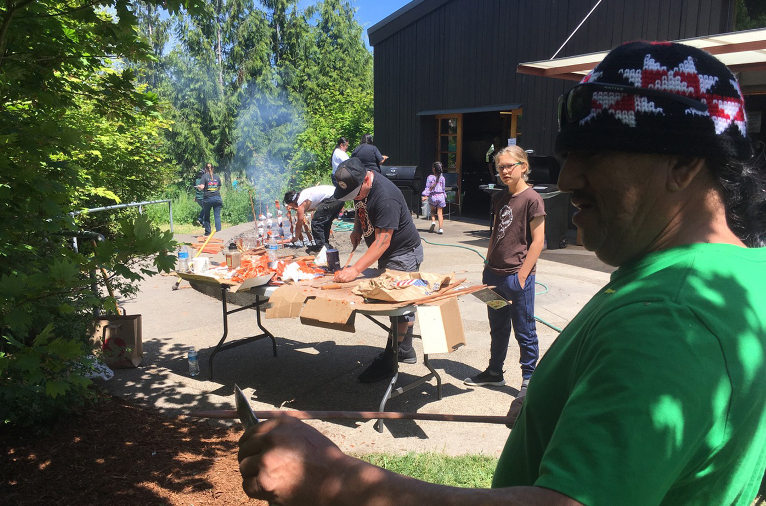
Colonization, Fire Suppression, and Indigenous Resurgence in the Face of Climate Change
One of the key tools the Karuk have long used to maintain this natural wealth is fire, something I’ve learned about in my time as a research collaborator and consultant working for the Karuk Tribe. Indeed, fire records obtained from studies in California clearly indicate that Native land management has shaped the evolutionary trajectory of the region for at least 12,000 years.
October 29, 2019

